Is Crazing on Dishes Dangerous? What You Need to Know
The short answer: usually no. Crazing on dishes is a network of hairline cracks in the glaze — the glassy outer skin of a ceramic piece — and in most cases it is a cosmetic condition rather than a safety problem.
But "usually" is doing real work in that sentence, because there are two cases where crazing deserves a second look: a plate with a porous body holding tomato sauce, and an unmarked vintage piece from before lead glaze rules tightened. Let's sort out which is which, because the internet is uselessly dramatic about this topic. Roughly a third of the top results are content farms telling you to throw your dinnerware away immediately, which is both bad advice and terrible for a landfill.
I have a stack of plates that have crazed over years of daily use, including one from a New England farmhouse flea market. Nothing dramatic happened with any of them. Here's what's actually going on.
What crazing on dishes actually is
Every glazed ceramic piece is two materials bonded together: a clay body that provides structure, and a glaze that melts at temperature and fuses into a glassy coating. Think of it as a coat of glass on a piece of fired clay. The coat is thin — usually somewhere between 0.1 and 0.5 mm, roughly the thickness of a couple sheets of paper.
Crazing happens when those two materials don't agree about how much they want to expand. Glazes typically have a higher thermal expansion rate than the clay bodies they're applied to. As the piece cools in the kiln, the glaze tries to grow more than the body underneath it. Since glaze is rigid once fused, it ends up stretched and sitting under tension — permanently.
Glass under tension is fragile. Give it a nudge and it relieves itself by fracturing into a network of cracks. That's crazing.
Here's the part that surprises people: those cracks are not empty. When a glaze crazes during cooling, a small amount of glassy material flows into the fissures and forms hair-thin fibrils that bridge them. In technical ceramics the pieces are often still considered structurally sound because of that. The crackle network is real damage to the surface, but the plate underneath it is still one solid piece.
That distinction — surface network versus broken body — is the entire ballgame.
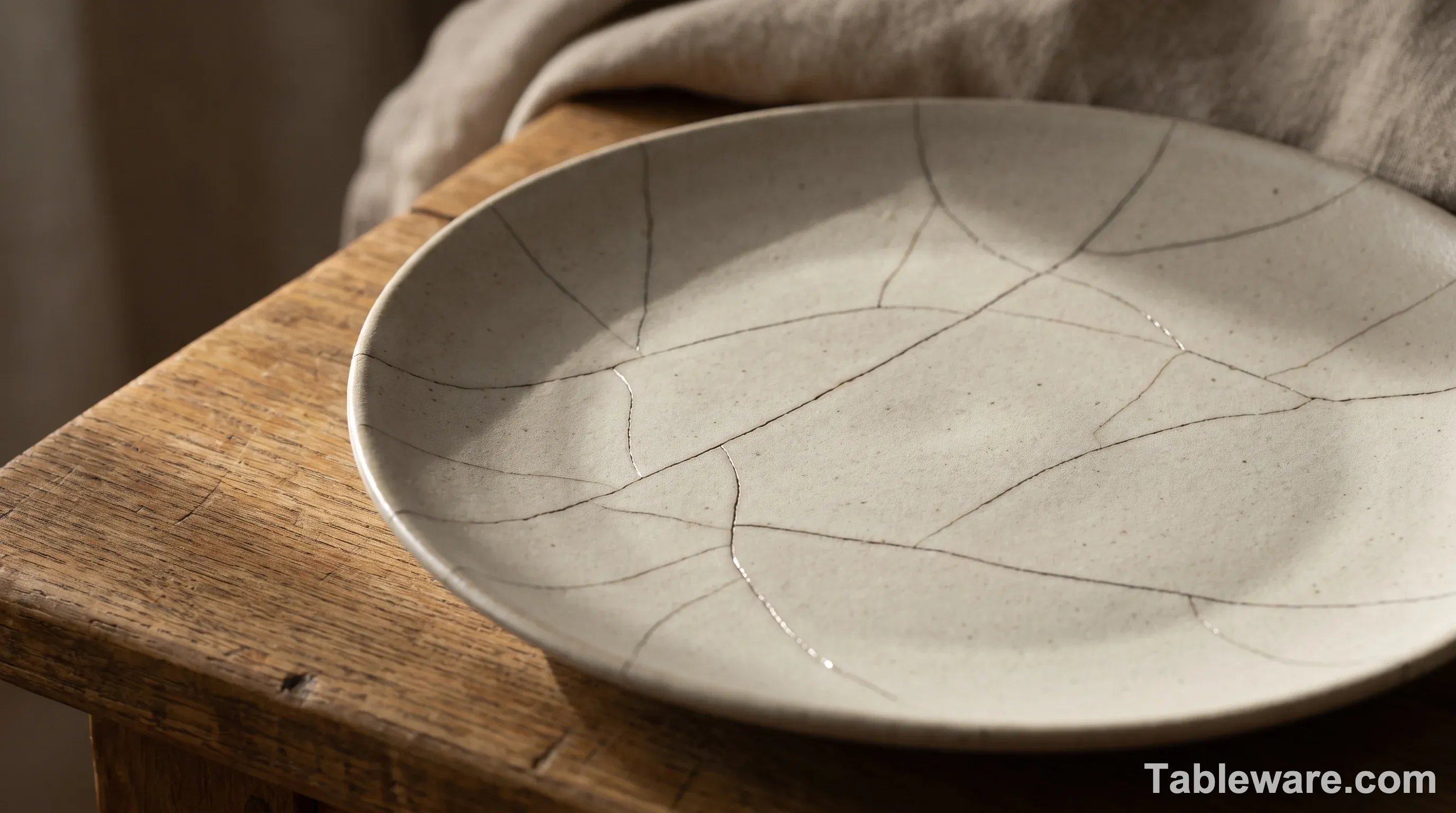
Fig 1. Crazing at the scale it usually shows up: a fine web of hairlines that only reveals itself when light rakes across the surface at a low angle.
Crazing vs cracking on a ceramic dish
This is where most of the panic comes from, because people use the two words interchangeably. They are not the same thing, and telling them apart takes ten seconds.
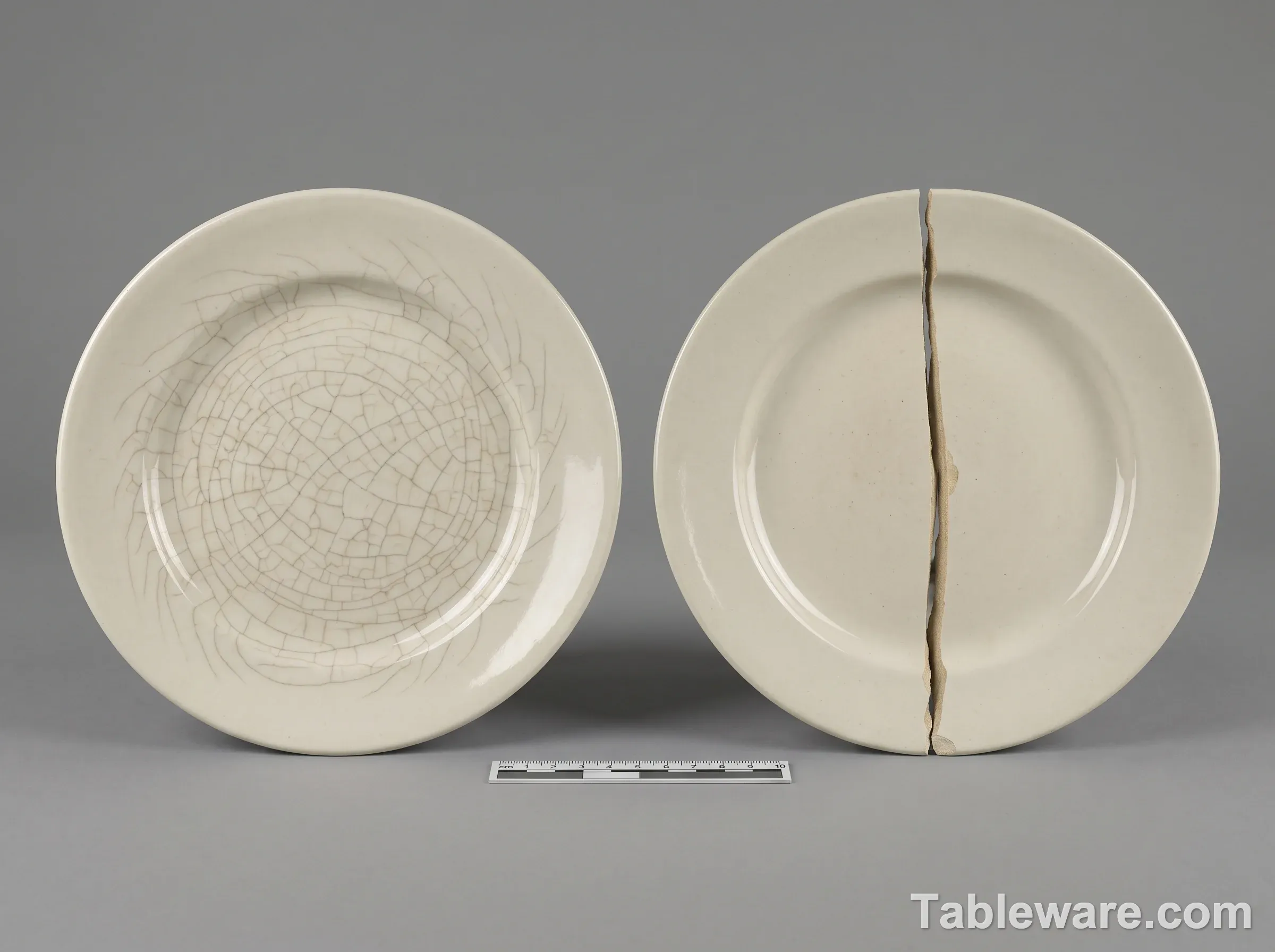
Fig 2. Crazing on the left — a dense hairline network confined to the glaze. Cracking on the right — one deep fracture that splits the body itself.
| Crazing | Cracking | |
|---|---|---|
| Where it lives | Glaze layer only | Through the clay body |
| Shape | Network, spiderweb, mosaic | One line, or a few |
| Fingernail test | You can't feel it | Sometimes you can catch it |
| Feel | Smooth, maybe a faint texture | A real groove or chip |
| Sound when tapped | Normal ring | Dull or dead |
| Structural integrity | Intact | Compromised |
Ceramic conservators and archaeologists lean on exactly this split when identifying worn pottery, which tells you how well established it is. Archaeologists have used crazing patterns as a dating clue for years, since manufacturers changed glaze formulations on a recognizable schedule.
If you can run a fingernail across the line and feel a groove, stop using the piece for anything structural — a serving platter you intend to lift, a bowl that has to hold a hot casserole. That's a crack, not crazing. A crazed plate still handles a slice of pizza like nothing is wrong with it, because it is.
What crazing looks like
On a matte glaze, crazing shows up as a visible web even on a brand-new plate. On a glossy white porcelain, it can stay invisible for years. The cracks are there, but a smooth glassy surface reflects light back at you and hides the pattern.
Then one day you put tomato soup on it and the whole web shows up in red.
Oil, coffee, wine, and tomato sauce are what reveal crazing in practice, because those liquids wick straight into the crack lines and stain them. The craze network is also the reason crazing seems to appear all at once on a piece you've had for a decade. Nothing structural changed. The stain just made it visible.
There's a quick test worth knowing. Rub a little cooking oil or a black felt-tip marker into the surface, then wipe it off. If a dark web appears, it's crazing, and it was always there.
Decorated glazes show it more readily than plain ones, because the decorative layer usually has a different fit than the base glaze underneath it. Reds, oranges, and deep blues are the usual offenders.
Why does my plate craze?
Four causes, and only the first one is really the root of the problem. The other three are triggers.
Thermal expansion mismatch between glaze and body. This is the mechanism described above, and it's the reason a given glaze-body combination crazes at all. A piece can come out of the kiln with craze lines already in it. Most manufacturers test their glaze fit specifically to avoid this, which is why cheap dinnerware crazes far more often than expensive dinnerware from a factory that runs fit tests.
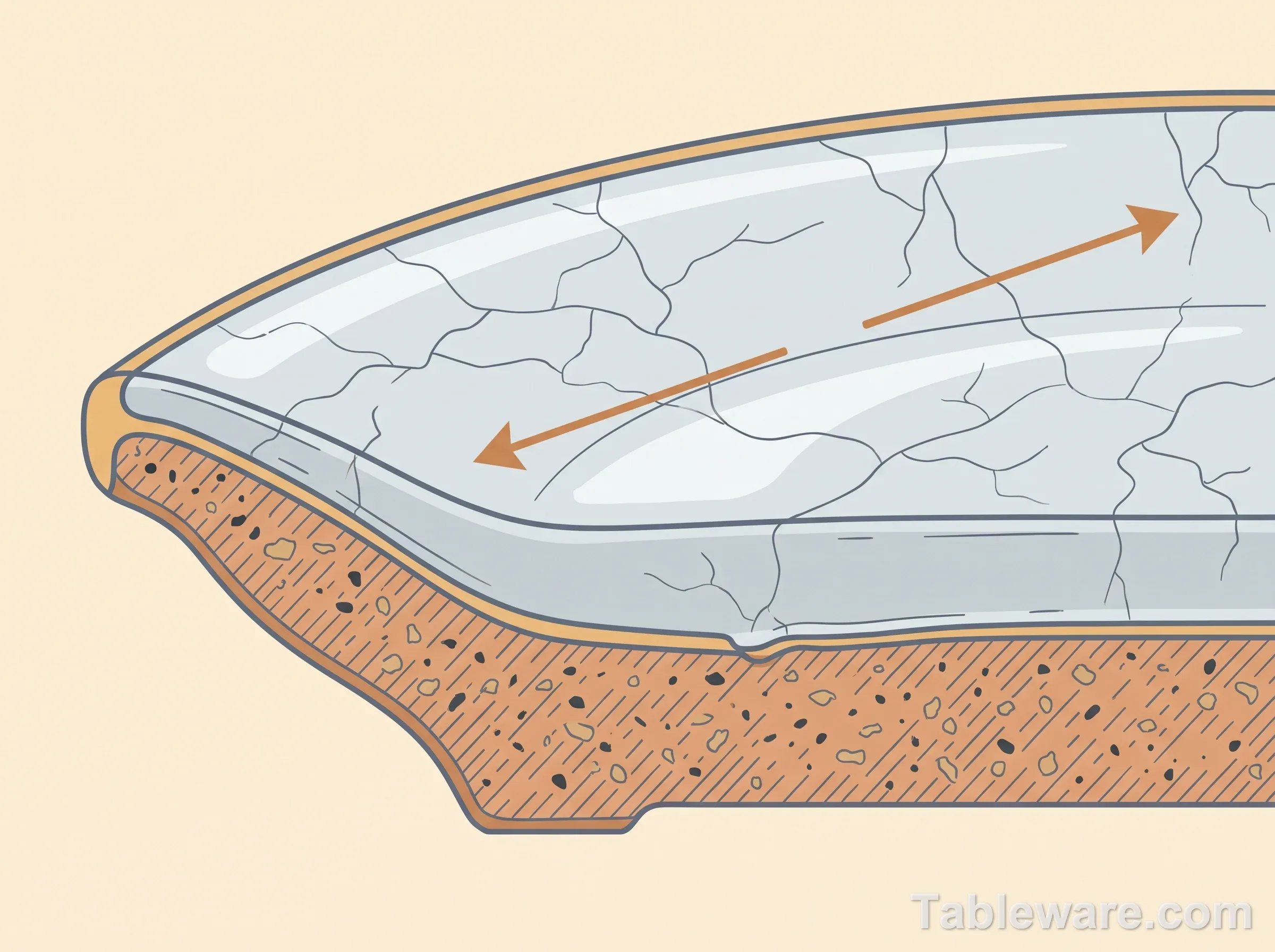
Fig 3. The glaze expands more than the body it's bonded to, ends up in tension, and cracks. The body below never moves.
Thermal shock. A hot dish hitting cold water expands the outside far faster than the inside, or vice versa. This is the classic scenario: plate straight out of a hot oven onto a wet countertop, or into a sink of cold tap water.
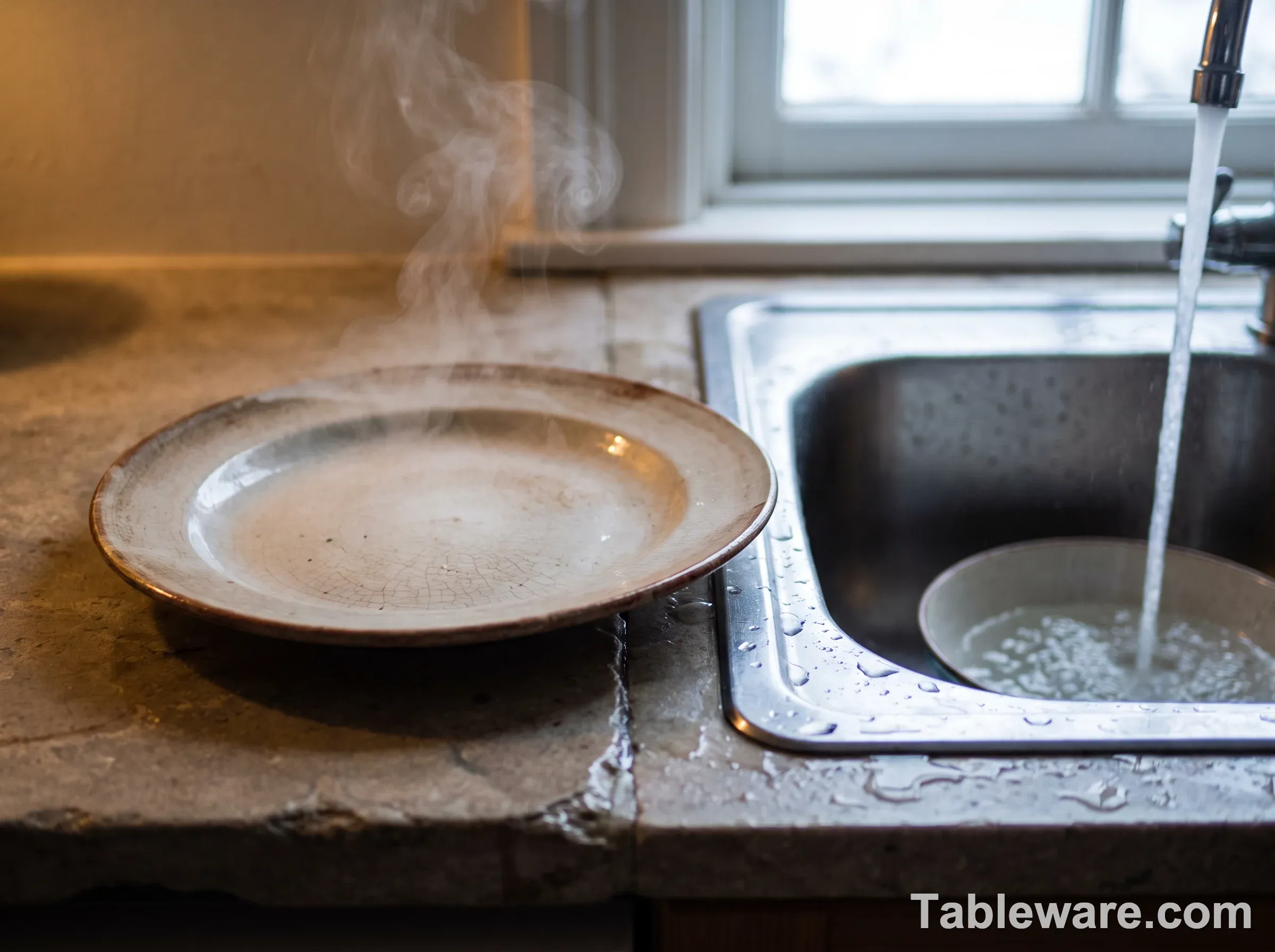
Fig 4. Thermal shock doesn't usually create crazing on its own. It takes a piece that was already marginally fragile and finishes the job.
Moisture in porous bodies. Low-fired earthenware absorbs water — between roughly 5% and 12% of its dry weight. That water goes in and out over years of dishwashing, and every cycle swells the body a little. A glaze that started slightly in tension gets pushed harder each time. This is why crazing often shows up on earthenware years after you bought it, with no obvious incident to point at. Our earthenware guide covers the body types in more depth.
Alkaline dishwasher detergent. Dishwasher powders run at a high pH, often around 9 to 11. Over hundreds of cycles that slowly etches a glaze, thinning it and weakening it. Weak glazes craze more readily and shed more. This is the real reason dinnerware care matters more for a piece that's already crazed.
Does the dishwasher cause crazing?
Dishwasher crazing is slow accumulation, not a single dramatic event. Most people blame the afternoon the plate came out looking wrong, and it's almost never that afternoon — the etching started a hundred cycles earlier. If crazing turned up a year into owning the set, and you run the dishwasher most days, that's the likeliest explanation.
Hand-wash anything that's already crazed and it holds where it is instead of spreading.
Which materials craze the most
Porous to dense, roughly in the order you'll find it:
- Earthenware — porous, soft, high expansion. Crazes most. Our earthenware guide covers the material itself, and where it fits on an actual table covers the other half of the picture.
- Stoneware — moderately porous, fired above 1200°C. Crazes sometimes, often from dishwasher exposure.
- Bone china — trickier than most people expect. Crazing in bone china usually traces back to the bone ash content, which pushes the body's thermal expansion up and makes fitting a glaze to it genuinely difficult. Fired and glazed correctly, bone china is very stable. Mismatched, it crazes readily. More on bone china.
- Porcelain — vitrified and non-porous, so it resists moisture cycling. Crazing here is usually a glaze-fit or thermal-shock issue.
- Corelle's three-layer Vitrelle — the famous exception. That material is famous specifically for not crazing, which is a large part of why it survived households that killed their heavier dinnerware. Worth reading if you're tired of this problem; the Corelle review covers the durability claims in detail.
Is crazing on dishes dangerous?
Here's the honest, graded answer instead of the internet's yes-or-no panic.
Low risk: a crazed plate you eat off of dry food and wash right after. If the body underneath is vitrified — porcelain, stoneware, well-fired bone china — there is no porous surface for food to lodge in, and the fibrils I mentioned earlier close most of the network. Crazing on its own is not a food safety violation, and it does not automatically mean a dish is contaminated.
Moderate risk: crazed earthenware or any piece with a chalky, unglazed, or underfired foot ring. Here the crazing may have opened a path into a porous body, and residue can lodge in the network where a dishwasher doesn't fully reach.
Higher risk: anything holding liquid or acidic food for a long stretch. Tomato sauce, citrus, vinegar, wine. These don't just sit on the surface — they wick into the craze lines, and acid is exactly what pulls metals out of glaze.
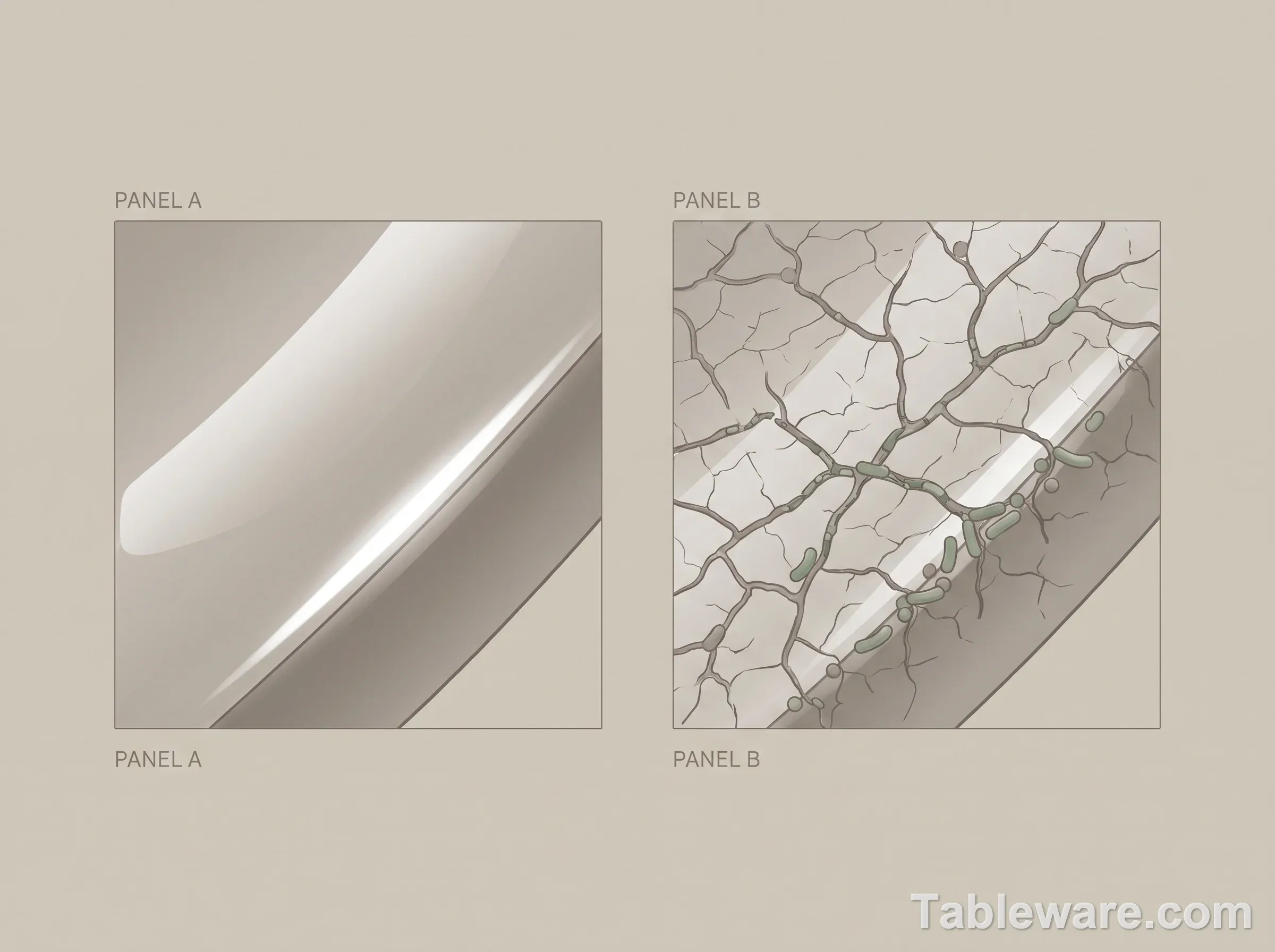
Fig 5. The hygiene concern is about residue lodging in the crack network, not about crazing itself releasing anything. Cleanliness and the body's porosity are the real variables.
You'll see claims floating around that crazed dishes harbor Salmonella or E. coli. I'd treat those carefully. The mechanism is plausible — narrow crevices are harder to sanitize — but there isn't strong published evidence that a crazed but otherwise sound piece transfers pathogens in everyday use. The honest framing is that crazing makes thorough cleaning harder, which matters more for vulnerable people than it does for a healthy adult who runs a dishwasher cycle.
If someone in your house is pregnant, immunocompromised, or an infant eating from these dishes, use the graded answer as a floor rather than a target. Retire anything in the moderate and higher-risk categories for them, no argument.
The one rule that decides it
Wet and acidic food decides most cases.
If food touches the piece dry and briefly, then it gets washed, crazed ware is normally fine. If something wet or acidic sits on it for any length of time, the piece comes out of rotation for food and becomes decor. That single habit covers most of what crazing risk actually is.
Does crazing mean lead can leach into food?
Different question, and it deserves a different answer.
Lead in ceramic glazes is a genuine hazard, and it has been the subject of real regulation. The FDA caps leachable lead at 3 µg/mL for plates and 0.5 µg/mL for cups, mugs, and pitchers — stricter on hollowware because liquids sit against the glaze far longer than dry food does. The agency splits hollowware further by capacity, which is worth knowing if you own a big serving bowl: 1.0 µg/mL applies to large hollowware other than pitchers, and 2.0 µg/mL to small hollowware other than cups and mugs.
What crazing does is weaken the barrier. Those fine cracks create more surface area and more pathways, and acidic food accelerates metal migration into it. So the mechanism is real.
What crazing is not: a lead test result. Crazing tells you nothing about whether your glaze contains lead, and nothing about how much. A crazed piece from a modern factory and a crazed piece from a 1940s novelty bowl are the same crack pattern with completely different risk underneath.
The high-risk group is well documented: pre-1970s American production, metallic decoration, decals and hand-painted designs applied under the glaze, and imported pottery with brightly colored reds, oranges, and yellows. If you have a piece from that era and you're unsure, our lead and cadmium guide goes into the testing and identification side in detail.
A note on the home test swabs sold at hardware stores: they're a qualitative screen at best. They can produce false positives on colored glaze and decorative metallic decoration, and they cannot detect lead that's locked into a properly fired glaze. Useful for ruling a piece out, useless for certifying one in. Professional leach testing at an accredited lab runs roughly $50 to $200 per piece, which is worth it for something you plan to eat off daily and not worth it for a decorative plate.
How to fix crazing on a dish
Straight talk: you cannot fix crazing. The cracks are in fused glass. Nothing you do at home will make the glaze un-craze. Anyone promising that is selling you something.
What you can fix is the staining, which is usually the actual problem people notice.
Baking soda paste for mild cases. Mix baking soda with a little water into a paste, work it over the surface with a soft cloth, let it sit ten minutes, rinse. No abrasives, and never steel wool — you'll strip glaze and make things worse.
Hydrogen peroxide for deeper stains. A 3% solution is what you have in the bathroom cabinet and it handles most tea and coffee lines. For dark, set-in staining, a higher concentration from a hardware store works better. Put the piece in a container, cover it with peroxide, and leave it for several hours or overnight. This is the method that shows up consistently in both the how-to guides and the advice from working potters.
Bleach, decorative pieces only. A dilute bleach solution will lift stubborn stains, but it can dull a glossy glaze over time. Fine for a display plate. Not worth it on something you serve food on.
Cold glaze sealant for antiques and sentimental pieces. A clear glaze sold for pottery can seal a crazed surface so stains stop wicking in. This is a mitigation, not a repair. Do it only if the piece matters more than its function.
One more thing: a silicone or rubber ring on a storage container leaves a ring that looks remarkably like a craze line but washes off. Check there before you assume the worst.
Preventing crazing on the dishes you still have
You can't stop what already crazed, but crazing on dishes spreads for a handful of predictable reasons, and you can cut most of them off.
Air-dry instead of stacking wet. Water sitting between two glazed surfaces for hours is the single most common accelerant.
Hand-wash crazed pieces and stop soaking them. Alkaline soak is exactly the chemistry that keeps weakening a compromised glaze.
Never put a hot dish on cold stone, and never move glass or ceramic from the oven straight to the sink. Set it on a dry towel or trivet for a minute first.
Let microwave-heated ware cool briefly before handling it. Microwave heating is uneven, which means localized thermal stress.
Skip abrasive cleaners entirely. Baking soda if you need something, nothing rougher.
Stacking is fine if nothing is wet, but put a cloth or paper between pieces whose glaze is already compromised. Friction plus a soft glaze equals wear.
And if you're replacing pieces, buy a full-glaze piece. A plate with an unglazed foot ring looks handsome and is more vulnerable to moisture cycling than a fully glazed one.
Crackle glaze vs crazing: when the cracks are intentional
Here's the twist that makes this topic more interesting than it sounds. A potter can cause crazing on purpose, using the same physics, and call it crackle glaze or craze glaze. Raku firing leans into it hard — that's covered in more depth in the raku firing history.
The tell is always the same: a maker cracks the exterior deliberately but puts a sound, well-fitted glaze on the surface that touches your food. Decorative crazing is a texture choice. Accidental crazing is a manufacturing defect. They look similar and mean opposite things.
If you're shopping for handmade pottery and see crazing on the outside of a serving bowl, that's a feature. If you see it on the inside of your everyday dinner plate, that's a warranty complaint. The reactive glaze chemistry piece covers what makes those outer surfaces behave the way they do.
Quick answers to common questions
Is crazing on dishes dangerous? Usually not. On a vitrified body with dry food and normal washing, it's cosmetic. Retire anything holding liquid, acidic food, or belonging to someone vulnerable.
Can I eat off a crazed plate? Yes, if the body beneath is vitrified and you avoid storing wet or acidic food on it.
Can I fix crazing? No, but you can remove the staining with baking soda, hydrogen peroxide, or — on decorative pieces — a clear glaze sealant.
Does crazing mean the plate is breaking? No. Crazing stays in the glaze. If you can feel a groove with a fingernail, that's a crack, and the piece is compromised.
Will the dishwasher make it worse? Yes. Alkaline detergent slowly thins a compromised glaze. Hand-wash crazed pieces.
Is crazed dinnerware still worth using? For everyday dry food, yes. If you love a piece, use it and manage it. If you don't, a crazed plate is also a perfectly good garden marker.
Should I throw away a crazed plate? No, not for the reason most people think. It won't poison you because it crazed. Throw it away because of what's under the glaze, or because you're done with it.
The thing to remember
Crazing is a materials engineering outcome, not a verdict on your dinnerware. A craze line tells you the glaze and body disagreed about thermal expansion. That's all it tells you.
The two questions worth asking are what's under the glaze, and what you're planning to put on it. Answer those and you'll never need to read another article screaming at you to throw the plates away.