Earthenware is one of the oldest and most universal materials used by humankind. It is the foundation upon which the entire history of ceramics is built. As the most porous and lowest-fired form of pottery, earthenware possesses a unique warmth, a varied history, and specific material properties that distinguish it from its denser counterparts, stoneware and porcelain.
This wiki entry delves into the science, history, and practical applications of earthenware, providing a comprehensive understanding of this essential material.
1. Definition and Core Characteristics
At its simplest definition, earthenware is clay fired at relatively low temperatures—typically between 1,000°C (1,830°F) and 1,150°C (2,100°F).
Unlike stoneware or porcelain, earthenware does not reach the point of complete vitrification (the process where clay particles melt and fuse into a glass-like, non-porous substance). Because the clay particles do not fuse completely, the finished body remains microscopically porous.
Key Material Properties:
- Porosity: The defining characteristic of earthenware. If left unglazed, an earthenware pot can absorb water (typically more than 5% water absorption by weight). This is why a simple terracotta flower pot "breathes" but will leak if filled with water. To make it functional for tableware, earthenware must be glazed.
- Opaque Body: The clay body is opaque and does not transmit light, even in thin sections.
- Color Palette: Depending on the iron content and other impurities in the local clay source, raw earthenware can range from creamy white, buff, and pale yellow to deep red, terracotta orange, and brown. The ubiquitous "terracotta" red comes from high iron oxide content in the clay which oxidizes during firing.
- Softness and Durability: Compared to high-fired ceramics, earthenware is relatively soft. It is easier to scratch with a steel knife and has lower mechanical strength, making it more prone to chipping than stoneware.
- Thermal Shock Resistance: Due to its porous structure, earthenware generally handles gradual temperature changes well (like slow cooking in a clay pot), but it is susceptible to cracking under sudden, extreme temperature shifts (thermal shock).
2. Historical Significance: The Dawn of Pottery
Earthenware is not just a type of ceramic; it is the first ceramic. Its history is synonymous with the dawn of human civilization.
Before humans learned to build high-temperature kilns capable of producing stoneware, they used open bonfires or simple pit kilns. These primitive firing methods could only achieve the lower temperatures required for earthenware.
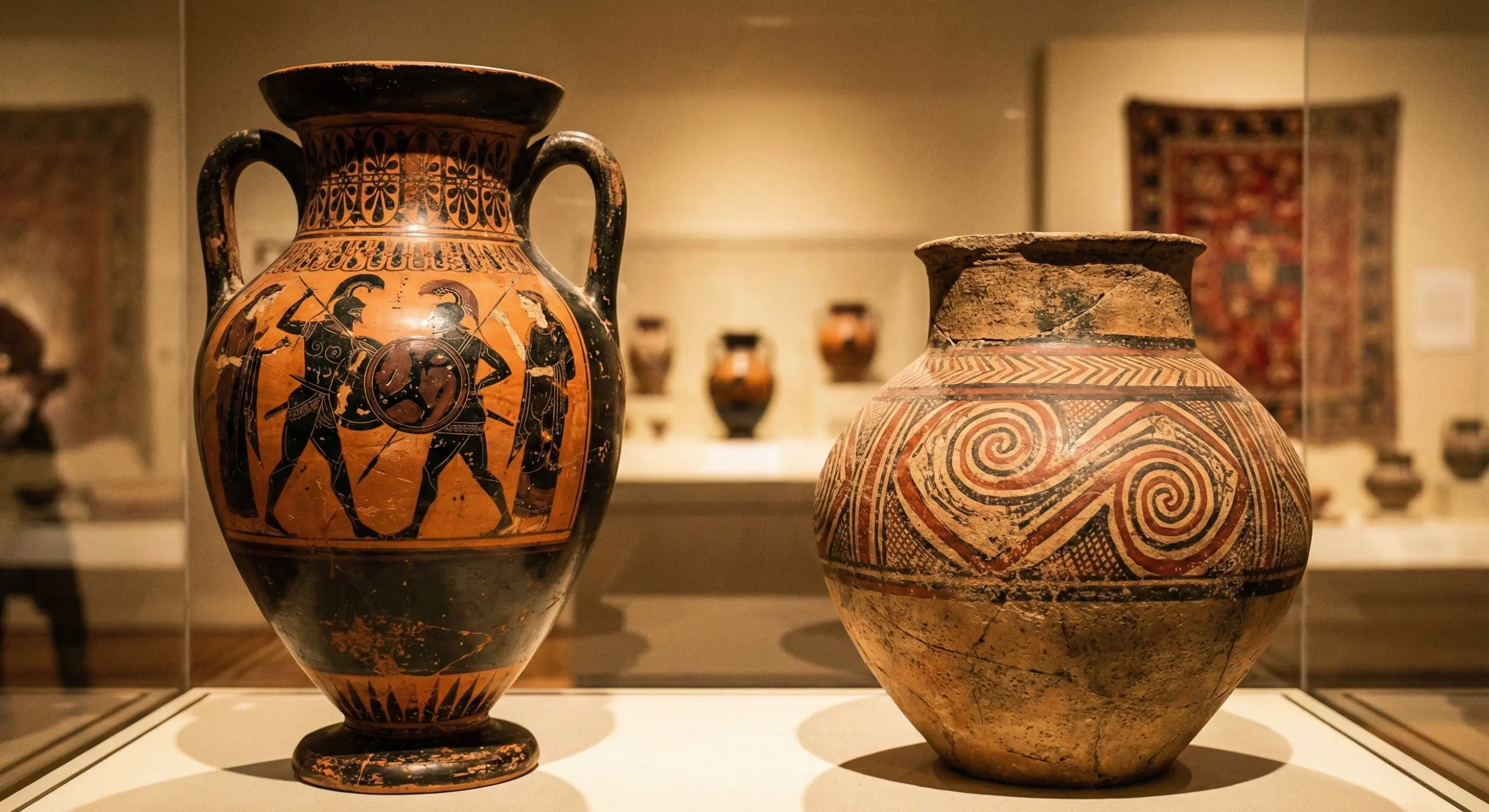
Fig 1. Ancient earthenware forms showing diverse cultural expressions, from refined Greek painting to Neolithic geometric designs.
Global Development:
- Neolithic Era: The earliest pottery found across the globe—from the Jōmon pottery in Japan to the Yangshao culture's painted pottery in China (c. 5000–3000 BCE)—is all earthenware. These vessels were crucial for storing grain, carrying water, and cooking, fundamental shifts that supported the transition to agrarian societies.
- Ancient Mediterranean: The classical world is paved with earthenware. The countless amphorae used by Greeks and Romans to transport olive oil and wine across the Mediterranean were terracotta earthenware. The renowned Greek Red-figure and Black-figure vases are sophisticated examples of slip-decorated earthenware.
- The Islamic Golden Age & Europe: In the 9th century, Islamic potters developed Tin-Glazing (锡釉). By adding tin oxide to a lead glaze, they created a opaque, brilliant white canvas that hid the reddish clay body underneath, mimicking the prized Chinese porcelain. This technique spread to Europe, evolving into Italian Majolica, French Faience, and Dutch Delftware. These vibrant, painted earthenware traditions became central to European decorative arts for centuries.
3. Earthenware vs. Stoneware vs. Porcelain
Understanding earthenware requires contextualizing it within the broader ceramic spectrum. The primary differences lie in the clay composition, firing temperature, and resulting density.
| Feature | Earthenware (陶器) | Stoneware (炻器/石器) | Porcelain (瓷器) |
|---|---|---|---|
| Firing Temp | Low (1000°C - 1150°C) | Mid to High (1200°C - 1300°C) | Very High (1300°C - 1400°C+) |
| Porosity | High (>5% absorption). Porous unless glazed. | Low (<1-2% absorption). Vitrified or semi-vitrified. | None (<0.5% absorption). Completely vitrified. |
| Body Color | Terracotta red, brown, cream, buff. | Often grey, tan, or brown tones. | Pure white. |
| Translucency | Opaque. | Opaque. | Translucent when thin. |
| Durability | Less durable, prone to chipping. | Very durable, hard, chip-resistant. | Extremely hard and durable, but brittle. |
| Sound (Tap Test) | Dull "thud" sound. | Clear, ringing tone. | High-pitched, bell-like ring. |
Note: This table provides general guidelines. Modern hybrid clays and firing techniques can sometimes blur these boundaries.
4. Common Types of Earthenware
Earthenware appears in many forms, depending on the clay used and the glazing technique applied.
4.1 Terracotta (素烧/赤陶)
Italian for "baked earth." This is the most recognizable form of earthenware. It refers to unglazed, fired clay, usually reddish-brown due to high iron content. It is widely used for flower pots, architectural roofing tiles, bricks, and sculptures. Because it is unglazed and porous, it is rarely used for dining surfaces today.
4.2 Tin-Glazed Earthenware (锡釉陶)
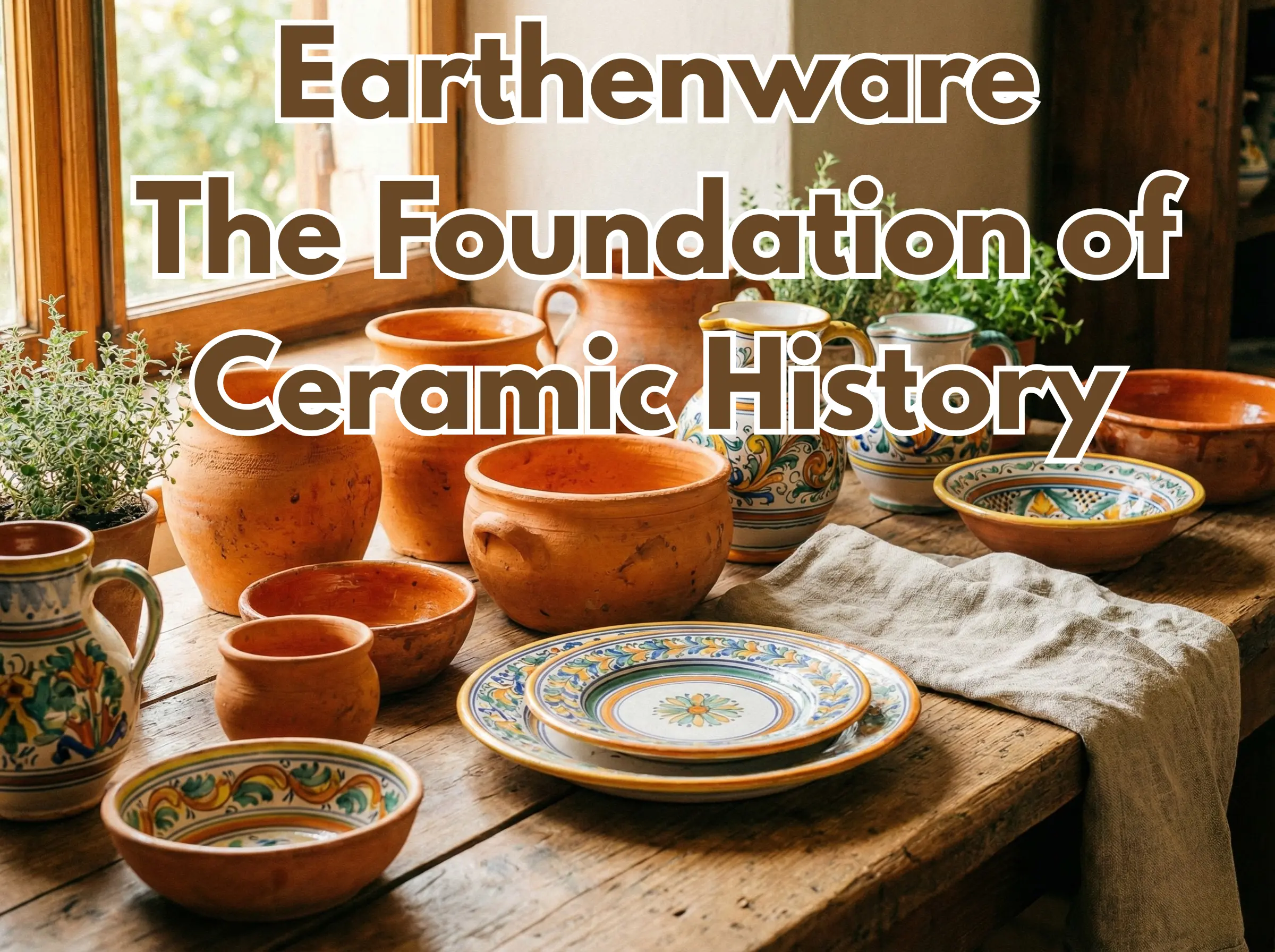
As mentioned in the history section, this category includes Majolica, Faience, and Delftware. It is characterized by a reddish or buff clay body covered by a thick, opaque white glaze, which serves as a base for colorful painted decorations. The glaze gives it a smooth, hygienic surface suitable for tableware.
4.3 Creamware and Queen's Ware (乳白陶)
Developed in 18th-century England, most notably by Josiah Wedgwood. Potters refined earthenware clays, removing impurities to create a lighter, cream-colored body. When covered with a clear lead glaze, it resembled porcelain more closely than coarser earthenware. It became an affordable, refined alternative to expensive imported Chinese porcelain and laid the foundation for the modern British ceramic industry.
5. Earthenware in the Modern Home: Pros and Cons
Today, earthenware remains a popular choice for tableware, though it occupies a different niche than stoneware or bone china.
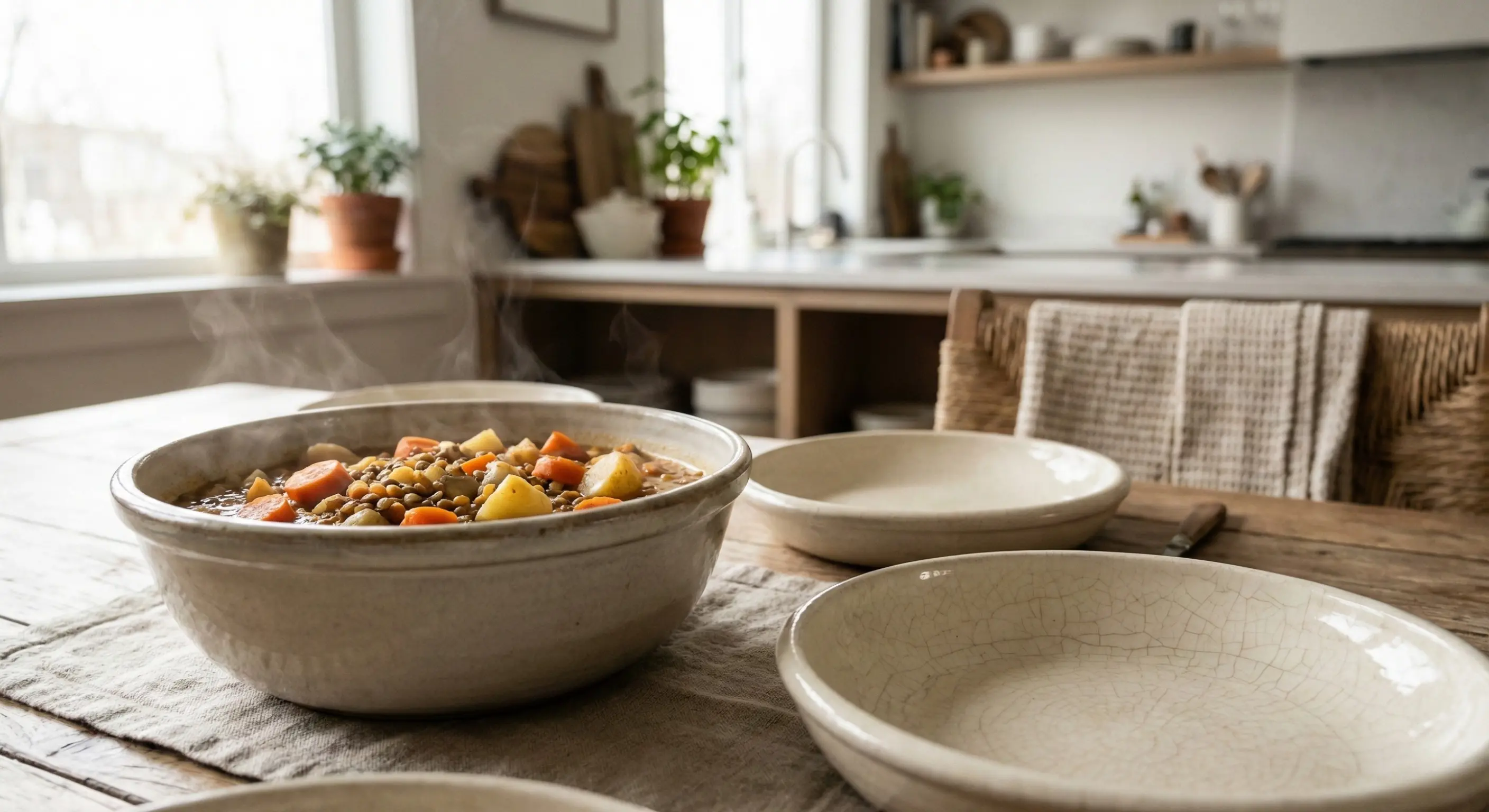
Fig 2. Modern earthenware is prized for its rustic aesthetic, thick walls, and warm appeal in contemporary kitchens.
The Appeal (Pros):
- Aesthetic Warmth: Earthenware has a distinct "feel." It is often thicker and heavier than porcelain, conveying a sense of rustic comfort, warmth, and handmade charm that high-tech ceramics cannot replicate. The colors of the glazes often appear softer and deeper.
- Design Versatility: Because it is fired at lower temperatures, a wider range of colorful glazes and decorative pigments remain stable during firing, allowing for incredibly vibrant designs (like classic hand-painted Italian pottery).
- Cost-Effective: Generally, the raw materials are more abundant and the firing costs are lower, making earthenware an affordable option for everyday use.
The Considerations (Cons):
- Chip Resistance: It is softer than stoneware. Earthenware plates are more likely to chip on the rims if knocked against each other in the dishwasher or cupboard.
- Crazing (开片): Over time, the glaze on earthenware may develop a network of fine cracks, known as "crazing." This happens because the clay body and the glass glaze expand and contract at slightly different rates over years of thermal cycling. While some find this aesthetically pleasing (wabi-sabi), severe crazing can compromise hygiene if food particles get trapped in the cracks.
- Microwave and Dishwasher Safety: Most modern, industrially produced earthenware is dishwasher and microwave safe. However, handmade or older artisan earthenware may absorb water through unglazed "feet" (the bottom ring) in the dishwasher. If a waterlogged plate is put in the microwave, the internal water turns to steam and can crack the plate. Always check the manufacturer's guidelines.
Conclusion
Earthenware is the humble ancestor of all ceramics. While it may lack the sheer strength of stoneware or the ethereal translucency of porcelain, its historical depth, aesthetic warmth, and vibrant decorative potential ensure it remains a beloved and essential material in the world of tableware. Understanding earthenware is understanding the very roots of human craftsmanship.