Bone China is often regarded as the crown jewel of the ceramic world. Synonymous with British luxury, royal banquets, and heirloom collections, it represents the pinnacle of ceramic refinement.
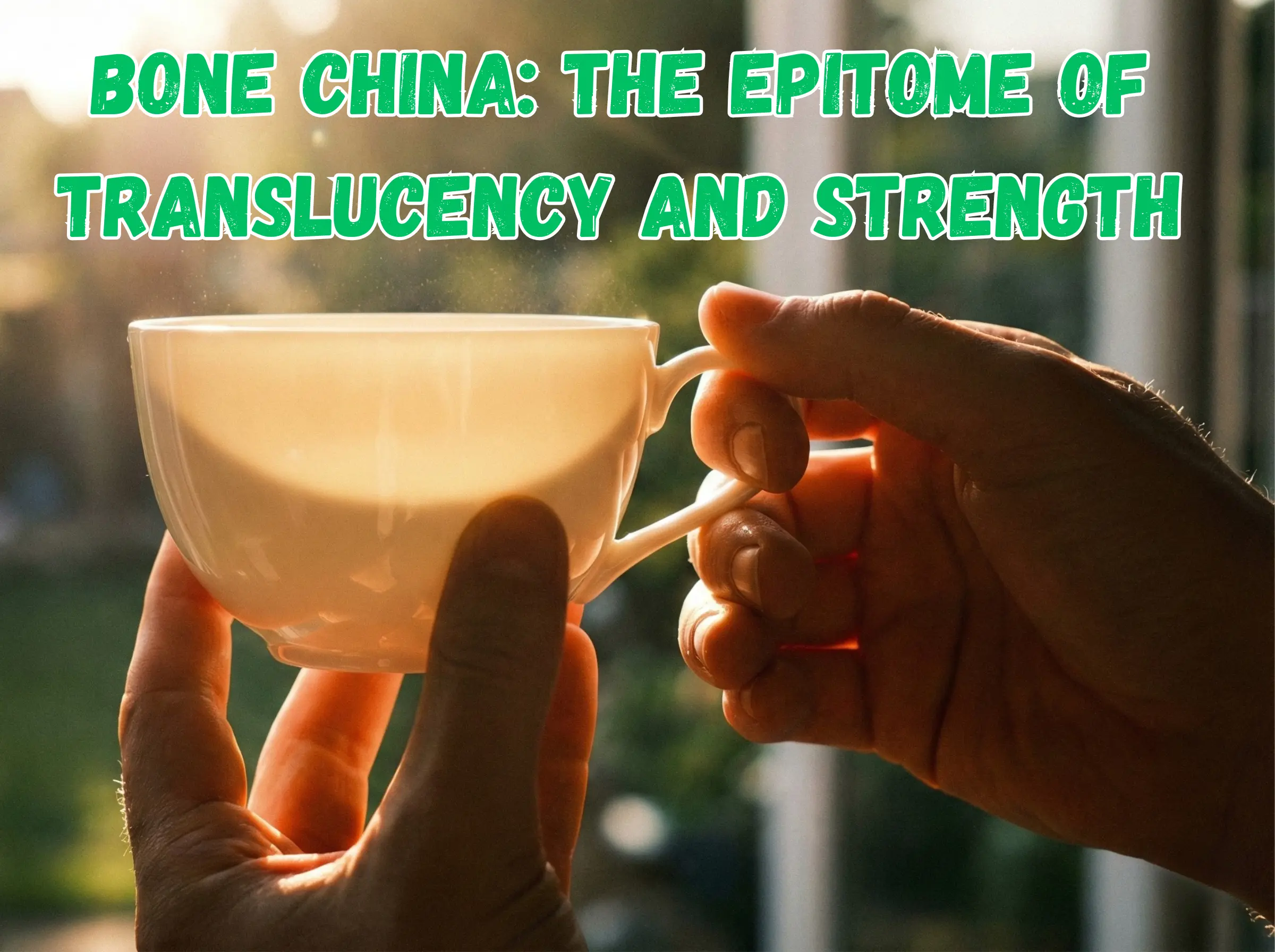
To the uninitiated, bone china presents a paradox: it appears incredibly delicate, often thin enough to see light through, yet it is chemically and physically the strongest type of porcelain ceramic known to man. Its defining characteristic—a warm, creamy whiteness and unrivaled translucency—sets it apart from the colder, greyish tones of standard hard-paste porcelain.
This encyclopedia entry explores the unique chemistry, the fascinating history of industrial espionage and innovation, and the practical realities of owning and caring for bone china today.
1. Definition and Chemical Composition
What exactly makes "Bone China" different from "Fine China" or "Porcelain"? The answer lies in a specific, somewhat macabre ingredient: calcined animal bone ash.
The Formula
Standard porcelain is made from a mix of kaolin (clay), feldspar, and quartz. Bone china modifies this recipe significantly. A traditional high-quality bone china formula consists of:
- 25% Kaolin (China Clay): Provides plasticity for shaping.
- 25% Cornish Stone (Feldspathic rock): Acts as a flux to lower melting temperatures.
- 50% Bone Ash (Calcium Phosphate): The defining ingredient.
The Role of Bone Ash
The bone ash is derived from cattle bones (specifically oxen) that have been calcined (heated) to high temperatures to remove all organic collagen and tissue, leaving only the mineral structure. When ground into a fine powder and added to the clay body, the calcium phosphate in the ash reacts during firing to create anorthite and beta-tricalcium phosphate.
This chemical reaction does three things:
- Translucency: It creates a glass-like network within the ceramic that allows light to diffuse through it warmly.
- Whiteness: It neutralizes the iron impurities in clay that usually turn ceramics grey or brown, resulting in a pure, warm milky white.
- Strength: It fuses the material into a incredibly dense, non-porous body that is chip-resistant, allowing potters to make plates and cups thinner than ever before without sacrificing durability.
Note on Standards: In the United Kingdom, a product must contain at least 30% bone ash to be legally labeled "Bone China." High-end brands (like Wedgwood or Royal Worcester) often use 40-45% to achieve maximum translucency. In other parts of the world, regulations may be looser, leading to variation in quality.
2. History: The English Quest for "White Gold"
The invention of bone china is a story of British determination to crack the secret of Chinese porcelain.
For centuries, China held a monopoly on porcelain. European attempts to copy it (Soft-paste porcelain) were beautiful but frustratingly weak; they cracked if you poured boiling water into them.
The Pioneers: Thomas Frye and Josiah Spode
In 1748, Thomas Frye of the Bow Porcelain Factory in East London took out a patent for a porcelain containing bone ash. However, his formula wasn't commercially perfect.
The true revolution happened in Stoke-on-Trent in the 1790s. Josiah Spode (the Second) is widely credited with perfecting the formula. He abandoned the complex calcining of glass used by others and simplified the recipe to the 50% bone ash, 25% stone, 25% clay ratio that is still standard today.
Spode's invention was a game-changer. It was whiter than the French soft-pastes, stronger than the German hard-pastes, and cheaper to produce than importing from the Orient. By the early 19th century, "English Bone China" had become the world standard for fine dining, gracing the tables of monarchs and czars.
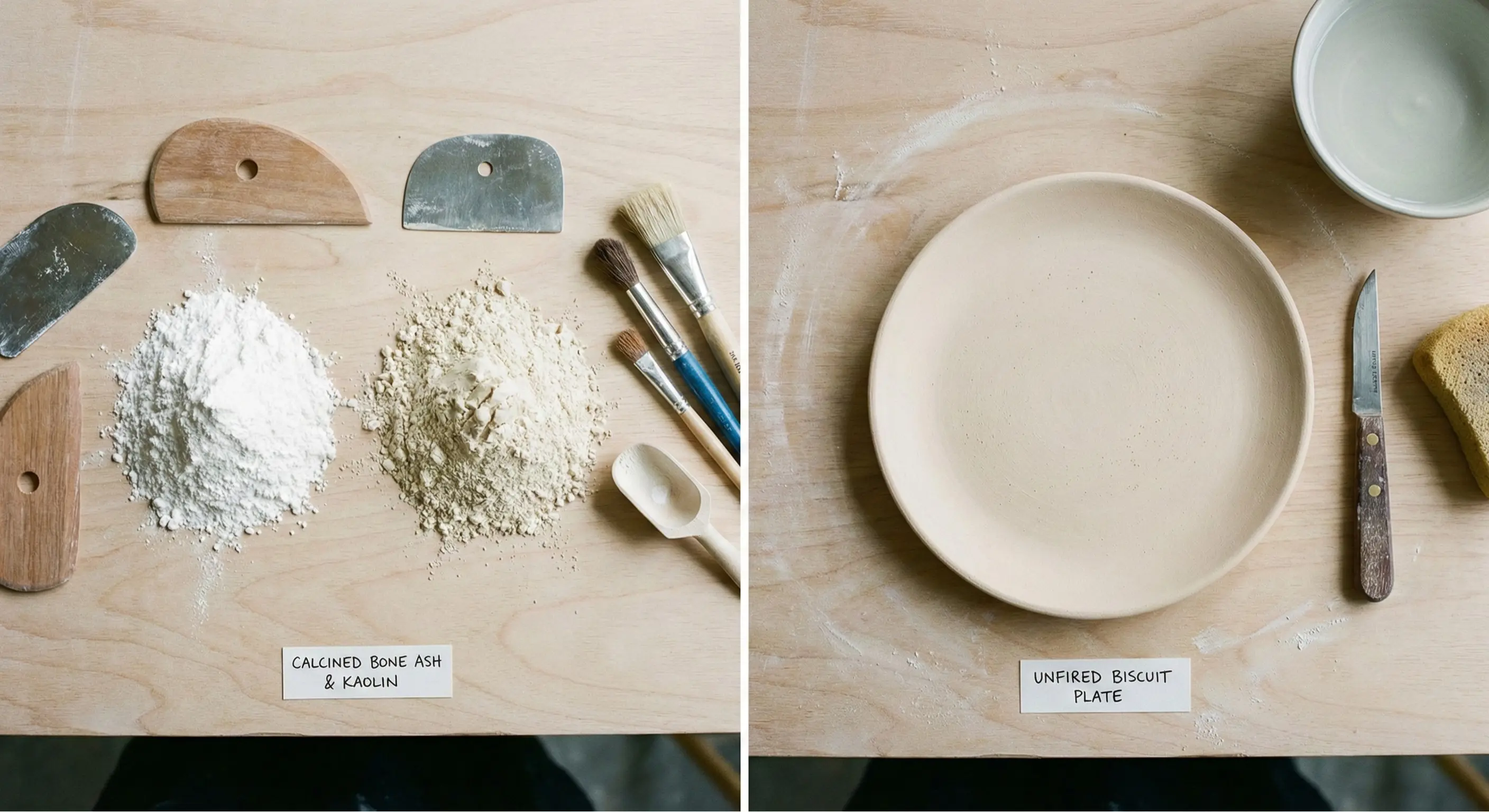
Fig 1. The alchemy of bone china begins with mixing refined bone ash with kaolin clay.
3. Identification: How to Spot Real Bone China
When shopping for tableware, distinguishing between Bone China, Fine China, and Porcelain can be difficult visually. Here are the professional tests used by collectors:
The Light Test (Translucency)
Hold the plate or cup up to a strong light source (like a window or a phone flashlight).
- Bone China: You should see your hand's shadow clearly through the body. The light passing through should have a warm, orange-yellow or ivory tint.
- Hard Porcelain: It may be translucent, but the light usually appears cool, blue-grey, or white.
- Stoneware/Earthenware: Completely opaque. No light passes through.
The Sound Test (The "Ping")
Gently tap the rim of the plate with a fingernail or a pen.
- Bone China: Produces a long, clear, bell-like ring that resonates for seconds.
- Porcelain: Produces a higher-pitched ring, but often shorter.
- Earthenware: Produces a dull "thud."
The Weight Test
Pick it up. Bone china feels surprisingly light for its size. Because the material is so strong, manufacturers can mold it into thinner silhouettes than stoneware.
4. Bone China vs. "New Bone China"
In recent years, a marketing term called "New Bone China" (新骨瓷) has flooded the market. It is crucial for consumers to understand the difference.
- Bone China: Contains actual animal bone ash. Expensive to produce.
- New Bone China: Contains NO bone ash. Instead, manufacturers use chemical substitutes (like calcium oxide or jade powder) to mimic the whiteness and translucency of true bone china.
While "New Bone China" is a durable and affordable material (and suitable for vegetarians/vegans who object to the use of animal bones), it lacks the extreme strength-to-weight ratio and the deep, warm luster of the genuine article. It is essentially a high-quality whiteware, not true bone china.
5. Usage and Care Guide
Despite its delicate appearance, bone china is meant to be used, not just admired in a cabinet.
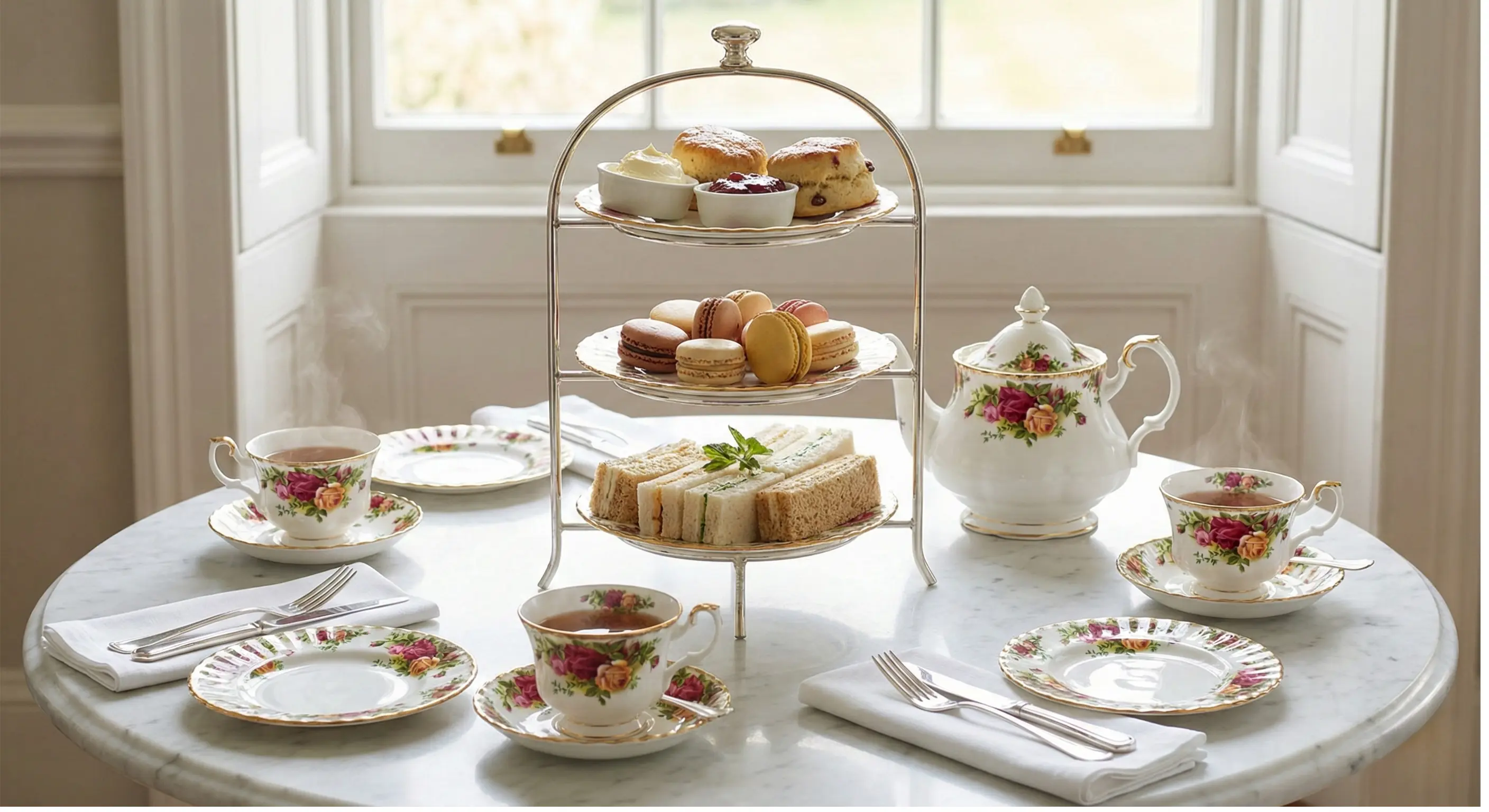
Fig 2. Bone china elevates the dining experience with its refined aesthetics, perfect for high tea.
Dishwasher Safety
- Plain Bone China: Generally dishwasher safe. The material itself is non-porous and highly durable. Use a gentle cycle and avoid high-heat drying.
- Decorated/Gold Rim: If your bone china has gold or platinum bands, hand washing is recommended. Dishwasher detergents are abrasive and can scrub the precious metals off over time. However, some modern "dishwasher-safe gold" exists—always check the backstamp.
Microwave Safety
- Gold/Platinum Rims: NEVER put metal-rimmed bone china in the microwave. It will spark and ruin the plating.
- Plain White: Usually microwave safe, but be careful. Because the body is thin, the food can heat the plate rapidly.
Storage
Because bone china is harder than the glaze on most plates, stacking them directly can cause scratches.
- Best Practice: Place a felt divider, a napkin, or a paper plate between each bone china plate when stacking them.
- Cups: Do not stack cups more than two high to prevent rim damage.
Staining
Tea and coffee tannins can stain the inside of cups over years. Because bone china is non-porous, these stains are usually surface-level. They can be easily removed with a paste of baking soda and water, or a specialized mild abrasive cleaner.
6. Conclusion: Is It Worth the Investment?
Bone china commands a premium price, often 2 to 5 times the cost of standard porcelain. Is it worth it?
For those who value the sensory experience of dining, the answer is often yes. Drinking tea from a thin-lipped bone china cup is fundamentally different from drinking from a thick ceramic mug. The material holds heat well, feels elegant on the lips, and brings a brightness to the table that other materials cannot match.
Whether you are looking for a wedding registry set that will last 50 years or a single teacup to enjoy your morning ritual, bone china represents the perfect marriage of art and engineering—a material that looks like glass but wears like iron.