Tin-Lined Copper Cookware: 5 Things to Know Before You Buy
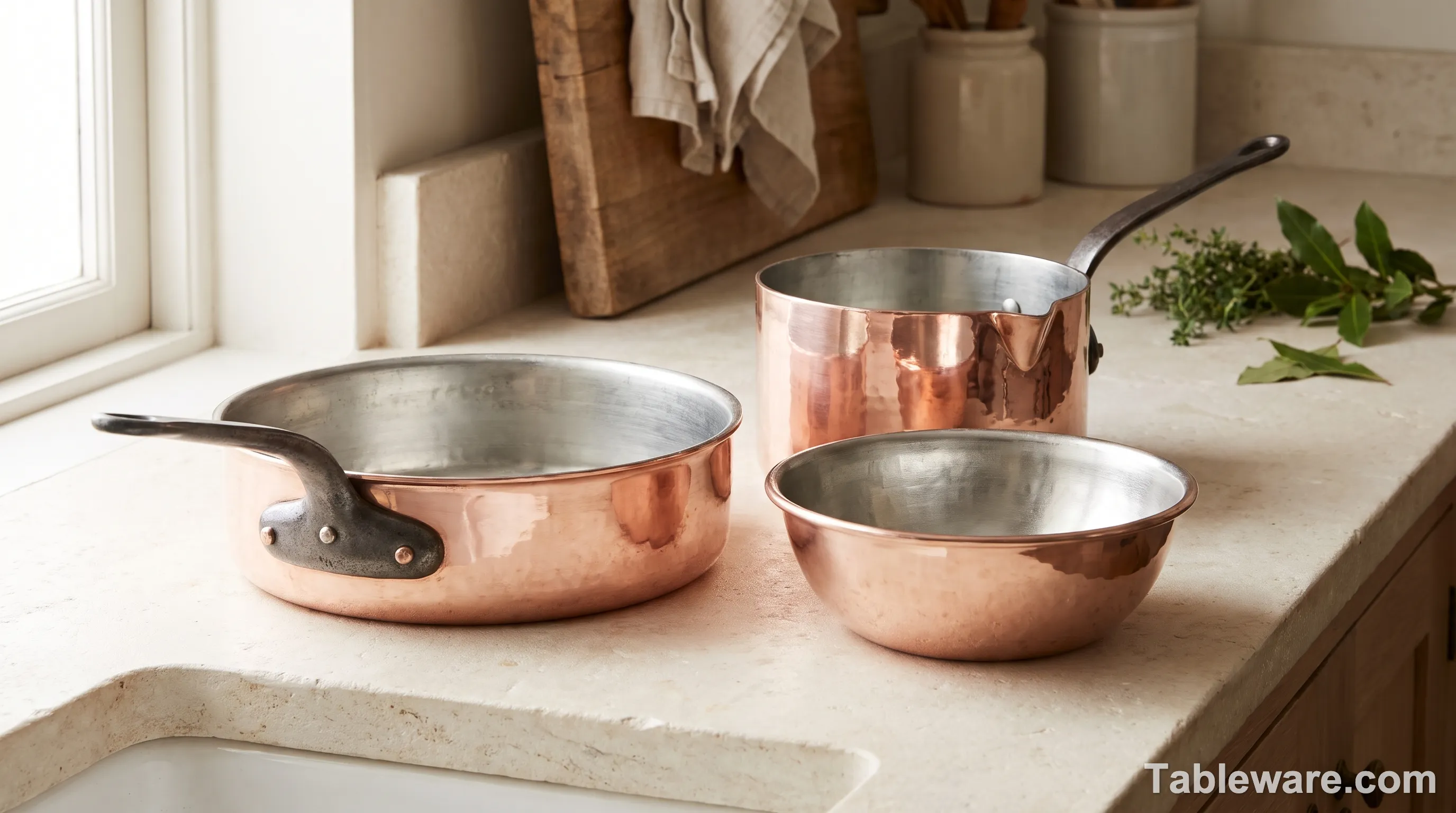
Fig 1. Three pieces, one construction: thick copper walls, a silver-white lining, and iron or steel handles riveted through the wall. The color on the outside is the marketing. The metal on the inside is the reason you would pay $400.
I bought my first tin lined copper cookware set three years ago, and I still have a complicated relationship with it.
The searing is unreal. A scallop in that pan gets a crust you can hear. Sauce temperature control is genuinely better than anything else I've cooked on, including the expensive clad stainless stuff I've owned. I've made a proper hollandaise in it that I'd previously only managed once.
And I have never once put it in the dishwasher, because I know better now. Which is exactly the problem. Copper doesn't fit into a normal kitchen life. It demands a separate set of habits, and the price tag demands a separate budget.
Before you spend anything, here's the five things that actually matter. Not the history of the material, not the prestige of the French name on the bottom. The five decisions you'll make and the money each one costs you.
Why Is Copper Cookware Lined With Tin?
Because bare copper is chemically reactive, and because a pan that reacts with tomato sauce is a pan you'll end up throwing away.
Most people meet tin lined copper cookware in a restaurant kitchen long before they ever buy it. Copper sits in the middle of the reactivity table. It doesn't dissolve in water the way aluminum does at high pH, but it will happily form compounds with acidic food. Tomatoes, red wine, vinegar, citrus, and anything with a bit of acid in it will bite into bare copper. Over time you get a metallic off-taste and, in extreme cases, a green-blue stain where the copper has oxidized.
Legally it's simpler than that. FDA rules require that copper in contact with food be lined with a food-safe material. Unlined copper is allowed in one narrow case: copper bowls for beating egg whites, where the copper ions stabilize the foam and give you a meringue with real volume. That's the whole legal exception. You cannot cook a tomato sauce in bare copper. Don't look for the loophole.
So you get a liner. And that lining choice is where most of the real decisions in tin lined copper cookware are made.
Copper's reason for existing is heat. Pure copper conducts heat at about 401 W/m·K. Aluminum manages 237. Stainless steel manages roughly 16. Copper moves heat nearly twenty-five times faster than the stainless steel in your sink, and that's why a copper pan responds to a flame adjustment almost instantly while a stainless pan keeps cooking where it was long after you turned the knob down.
Fast conduction also means fast cooling. Copper has low thermal mass. Drop a cold stockpot into it and the whole pan drops with the food. Compare that to cast iron, which is the opposite on both counts — sluggish to heat, stubborn to cool. We went deep on that trade-off in our carbon steel vs cast iron comparison, and copper sits closer to the carbon steel end of the spectrum than most people expect. It's a responsive pan, not a forgiving one.
One more constraint before we get to the linings: tin melts at 449°F (232°C). Copper itself melts at 1,984°F. That 1,500-degree gap is the entire reason a tin-lined copper pan cannot go under the broiler and shouldn't spend an hour at 500°F. Tin softens, loses its bond to the copper, and starts to blister or flake. Most manufacturers cap their tin-lined copper at 500°F (260°C) for short stovetop-to-oven transfers and tell you to keep it off the broiler entirely. If you do a lot of long, high-temperature baking, read the oven-to-table bakeware guide before you commit.
Tin, Stainless, or Bare Copper: Three Linings, Three Trade-Offs
Tin. About 0.5mm of pure tin, applied by hand. The interior is silver-white, slightly soft, and noticeably non-stick compared with stainless steel — not non-stick like Teflon, but noticeably easier to release. It's the classic French and Italian choice. The catch: tin is soft, it scratches, and it wears through eventually. That's where retinning comes in, and we'll price it properly below.
Stainless steel. An 18/10 stainless lining, usually a bit heavier than the tin equivalent. It will basically never wear out. It is more non-stick-resistant, which matters for searing and for anything with sugar. It adds a little thermal mass, so the pan is fractionally less twitchy than the tin version. Most home cooks who want copper would honestly be better served here.
Bare copper. No liner at all. Legally restricted to egg whites, and used in professional kitchens for sugar work where you want the pan itself — not an insert — to control temperature. If a copper pan shows no silver interior, you are looking at a sugar pot, not a sauce pan.
There's a fourth option that isn't really a lining but behaves like one, and it's the one I'd point most people toward. Vitreous enamel, the same glass-over-metal coating on a Le Creuset, is the other answer to "I want a pan that doesn't need retinning." We compared the two philosophies in vitreous enamel vs ceramic, and the trade-off is the mirror image of tin: enamel lasts forever but is less responsive, tin is beautifully responsive but needs renewal every decade or so.
Copper Gauge: Why 2.5mm Matters More Than the Brand
Here's a number that separates real copper cookware from copper-colored cookware: the thickness of the copper in the walls.
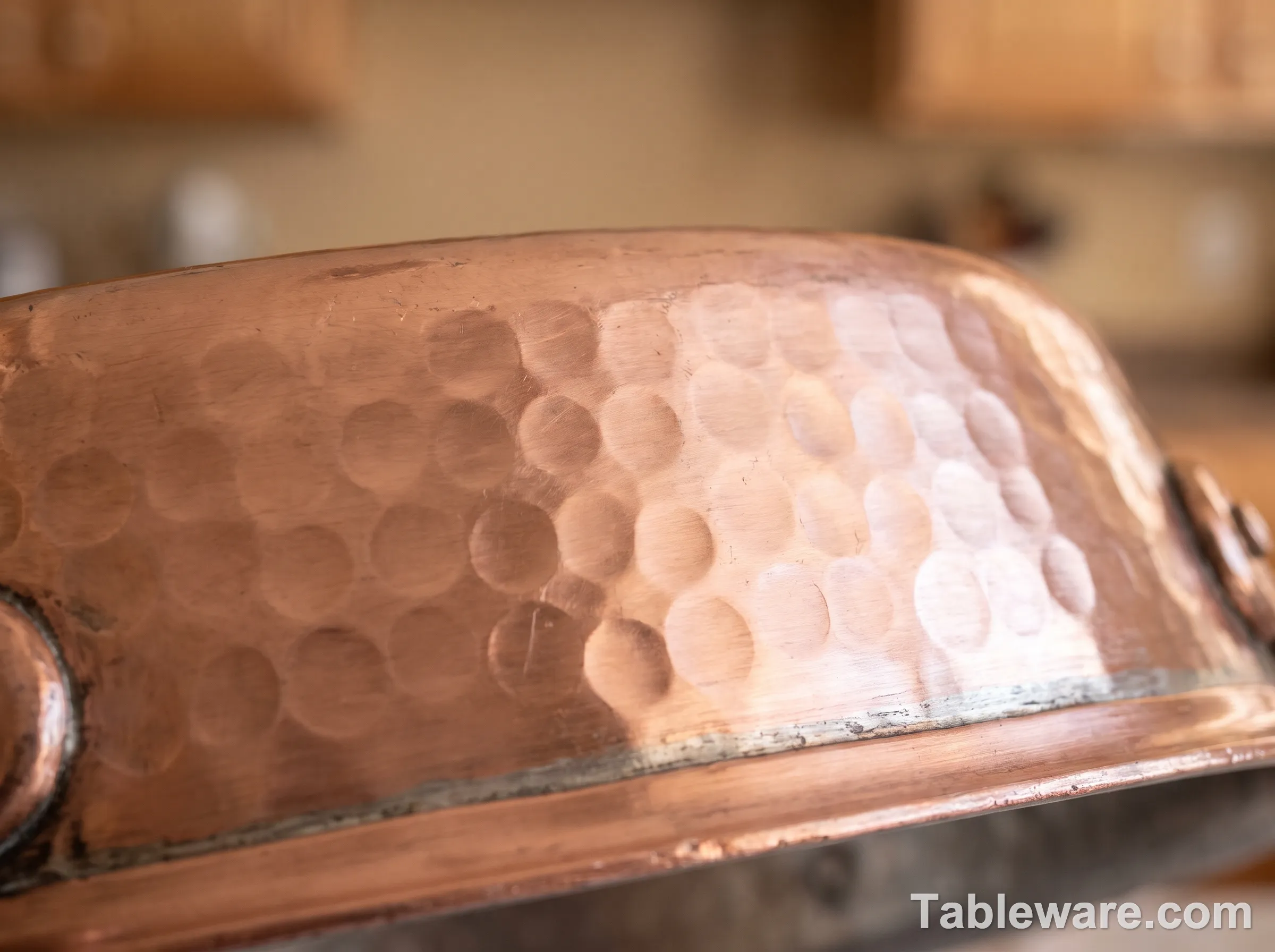
Fig 2. Hammered copper, close enough to count the dimples. Hand-hammering is mostly cosmetic — it stiffens the metal slightly against denting, but it does not change how fast heat travels. Gauge does that.
When you compare tin lined copper cookware across brands, the professional standard is 2.5 to 3mm. Below that you get a thin-gauge pan that warps on high heat and develops hot spots, which defeats the entire point of owning copper. Mauviel's M'Heritage line is the cleanest illustration: the 150B model is 1.5mm and the 200B is 2mm — same family, same price tier, noticeably different cooking behavior. Some of the Turkish and Amazon imports are 1.2mm. Those are decorative cookware.
There's a shortcut for shoppers who don't want to ask awkward questions at a store: lift it. A 10-inch copper sauté pan built to professional spec weighs about 3.5 pounds empty, and heavy copper pans run 4 to 5 pounds. If the pan in your hand feels like a stainless skillet with a copper-colored coating, it isn't copper.
Also worth knowing: the base is usually thicker than the walls, because the base is what takes the burner. The base is where evenness comes from.
What Is Tin-Lined Copper Cookware, Actually?
Now that you've got the reasons out of the way, the definition.
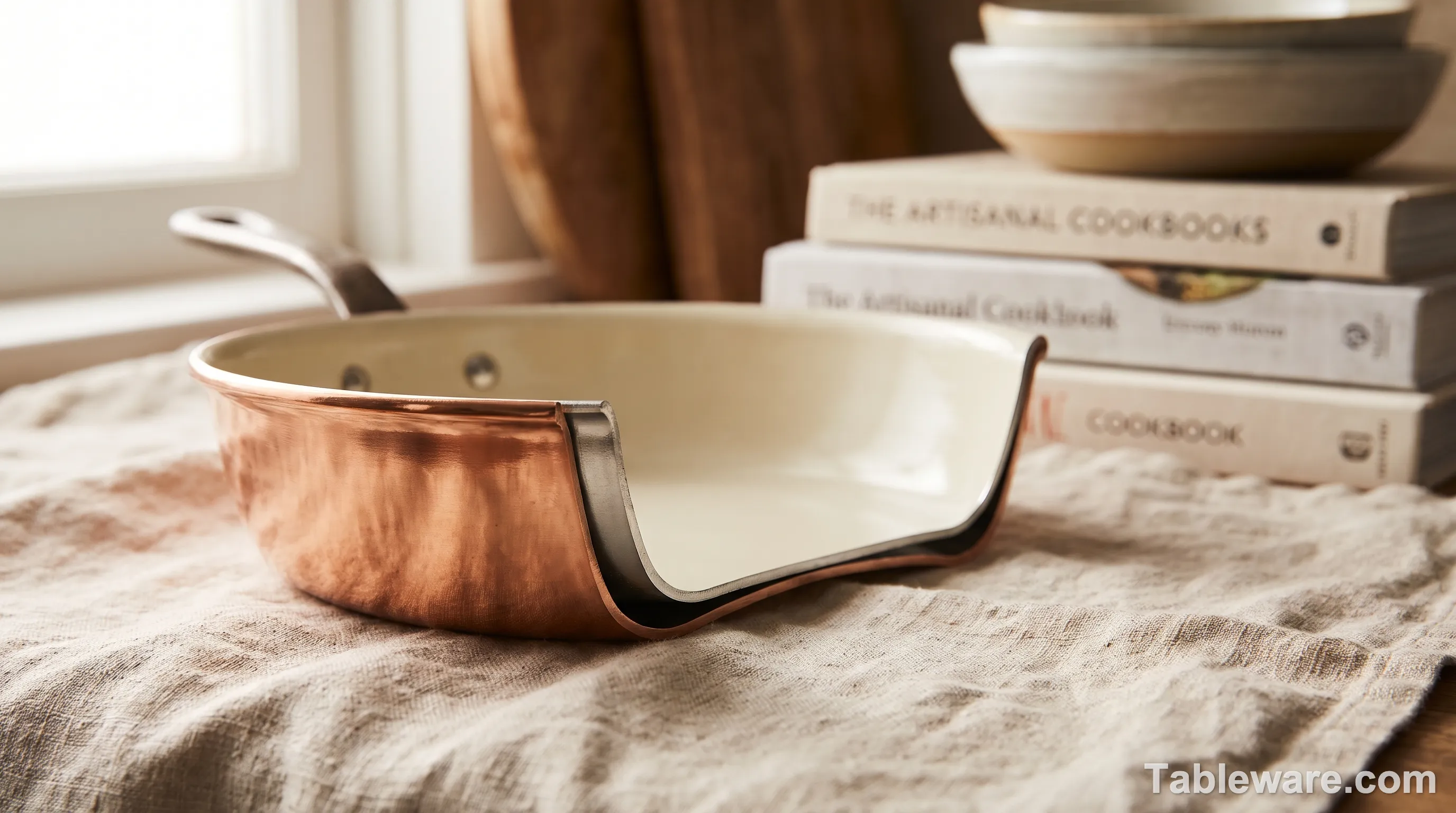
Fig 3. The cross-section that matters. Thick copper conducts, a thin tin layer cooks, and the food never touches the copper at all. Everything else about copper cookware is a variation on this sandwich.
Tin lined copper cookware is a pan with a body of solid copper — 2 to 3mm in the walls, usually more in the base — lined inside with roughly half a millimeter of pure tin. The tin is applied by hand: the interior is prepared, then molten tin is spun or floated across it and rolled smooth. The handle is either cast iron (Mauviel and Matfer's style, breakable but a good insulator) or stainless steel (Ruffoni and Falk's style, nearly indestructible). The two are usually riveted through the wall with three or four rivets, then the rivet heads are sealed.
A few details that get glossed over in product photos:
The lining is the cooking surface. Every claim about copper's cooking performance is a claim about what copper does behind the tin. This is the single most misunderstood thing about tin lined copper cookware: most buyers assume they are cooking on copper. The tin heats, the food cooks on tin, and the copper underneath moves the heat around so the tin never develops a hot spot. The tin is maybe 1/5th the thickness of the copper, which means the whole design is a copper heat-distribution engine with a thin cooking skin bolted to it.
The handles are not food-contact surfaces and follow entirely different rules. Cast iron handles can crack if you drop the pan. Stainless handles can get hot enough to need a mitt, though the metal stays far below cooking temperature.
The rivet count and placement matter for heat: more rivets means less stress on the wall. Cheap pans use two. Mauviel uses three on most pieces.
And the exterior thickness is a lie detector for the gauge. A 1.5mm pan and a 2.5mm pan look nearly identical in a store. They do not weigh nearly the same.
Is Tin-Lined Copper Cookware Safe to Cook With Daily?
Tin lined copper cookware is safe, as long as the lining is intact. Use it daily if you want. The safety story here is much more settled than the marketing suggests.
Pure tin is an inert, food-safe metal. So is 18/10 stainless. Both are approved for food contact. Copper itself is an essential trace nutrient — the recommended daily intake for adults is about 0.9 milligrams — so small amounts of copper in food are entirely normal and not a hazard.
The concern is never "copper is poisonous." It's that a worn lining lets more copper than intended reach acidic food, and that it tastes metallic before it becomes a medical issue. Copper in drinking water becomes noticeably metallic at around 2 to 3 milligrams per liter. That's the flavor threshold, and it's exactly why the first thing you notice in a worn copper pan is that the sauce tastes off.
Copper Leaching, Patina, and When to Worry
Three different things get called "the green stuff," and only one of them matters.
Green or blue on the outside is verdigris — copper carbonate forming where copper reacts with moisture and carbon dioxide in the air. It's cosmetic. It sits on the exterior, doesn't touch your food, and can be removed with a lemon-and-salt paste or a copper polish. Many French chefs treat a patina as a badge of honor. Their preference, not a rule.
Pink or reddish copper showing through the interior is the one to act on. That means the tin lining has worn through to the copper beneath. Stop using that pan for anything acidic. Get it retinned.
Gray, dull, or gray-black interior is a tin lining that has lost its surface but may still be sound. Check for thin spots and flaking around the rim and the shoulder curve, which is where wear happens first, then decide.
Beyond that, be practical. Skip metal utensils. Skip the dishwasher. Skip heating it empty at high flame for ten minutes while you go find a phone charger. None of that is exotic care, but it's care most people aren't willing to give a $500 pan they use twice a month.
Retinning Copper Cookware: What It Costs and When You Need It
Retinning is the thing that makes people either fall in love with copper or walk away from it forever, so let's put real numbers on it.
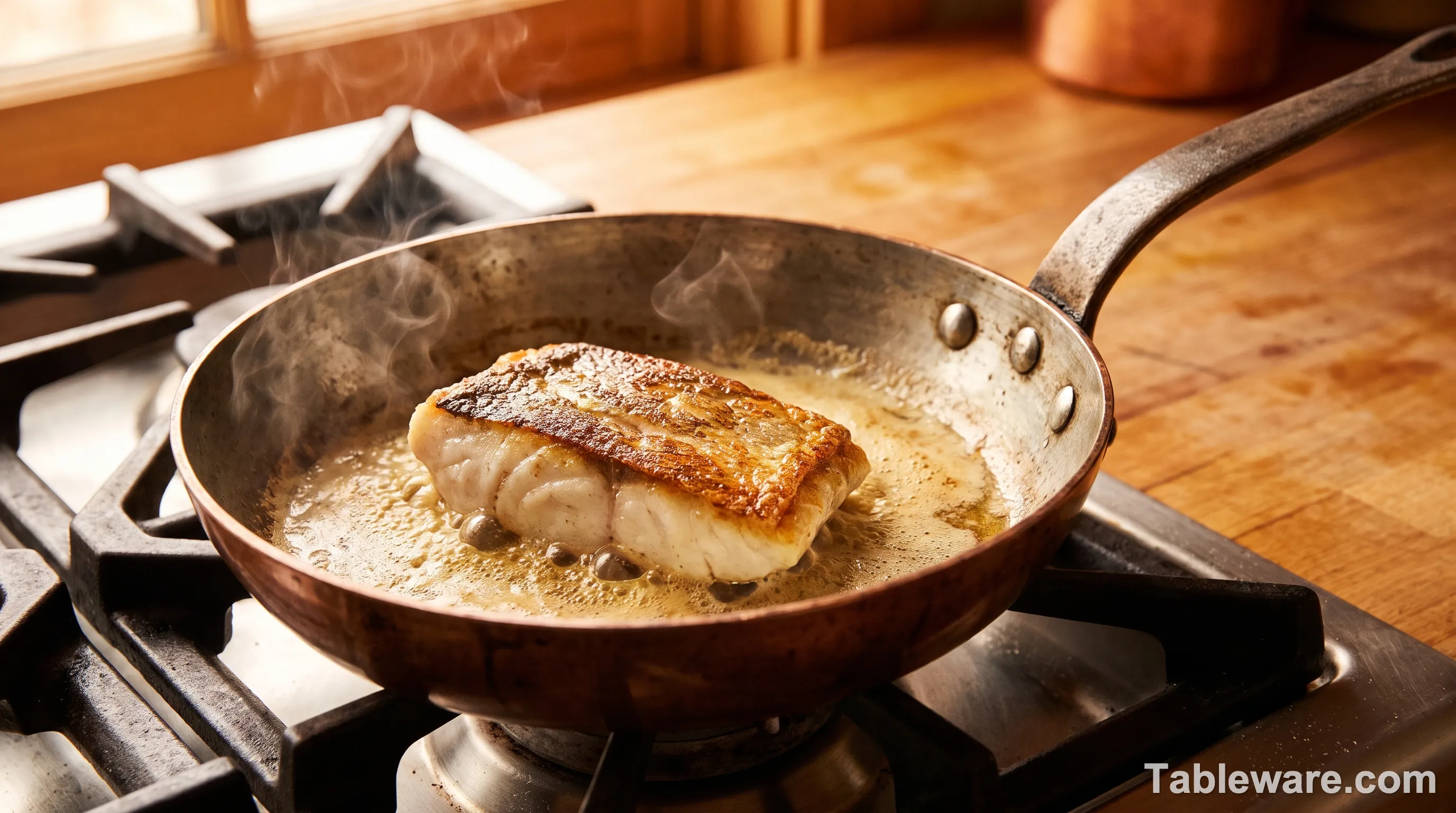
Fig 4. What you're paying for. Copper's whole argument is that it responds instantly to the flame, so a sauce or a sear can be pulled at exactly the right second instead of cooking in a hot spot while the edges cool.
What it costs. Retinning copper cookware runs somewhere in the range of $50 to $150 per pan in the US, with smaller pieces at the low end and large saucier pans at the high end. Getting tin lined copper cookware back into working order is a specialist job, not a kitchen chore, and shipping goes both ways. A full set retinned comes to several hundred dollars. For comparison, a Turkish workshop quoted about 150 lira for a 20cm pan plus international shipping in a recent price list — which tells you the price is partly a labor question, and tinning is genuinely skilled manual work, not a dipping process.
When you need it. There is no schedule, and anyone selling you a "retin every 5 years" rule is selling you something. Retin when the lining tells you to: copper showing through, tin flaking or lifting, deep gouges from metal utensils, or food tasting metallic. A well-cared-for tin lining in normal home use typically lasts 10 to 15 years. Professional kitchens that run pans harder retire them sooner.
What happens in the workshop. The old tin gets stripped, the copper gets polished and sometimes re-tinned by tumbling, the new tin goes on by hand, and the exterior gets repolished. Turnaround is days to weeks plus shipping, and the pan is out of your kitchen the whole time. Most manufacturers — Mauviel, de Buyer, Ruffoni — do not retin for customers as a standing service. You're hiring a specialist, not filing a warranty claim.
Also worth knowing: the copper body itself is essentially permanent. It can be straightened, re-tinned, and re-handled indefinitely. People buy a wrecked copper pan on marketplace for a fraction of the new price and send it out to be rebuilt. The metal doesn't expire.
How to Clean Tin-Lined Copper Cookware
How to clean tin lined copper cookware is the part where people ruin their pans, so it's short.
Hand wash only. Warm water, mild dish soap, a soft sponge or cloth. Dry it immediately on the burner or with a cotton towel — copper and water spots are not friends.
Never, ever, the dishwasher. The combination of high heat and stripping alkaline detergent will thin and strip the tin lining in a single cycle. If you're curious what that label actually guarantees on other pieces, we covered it in the dishwasher safe guide.
No metal utensils. No steel wool. No abrasive powder. A green scrub pad leaves scratches, and scratches are where wear starts.
For the exterior, use a lemon half with a couple tablespoons of coarse salt, or a commercial copper cream. It's a genuinely satisfying five minutes of work and it makes a real difference to how the pan looks. You can skip it if you don't care about appearances — the patina genuinely doesn't affect cooking performance at all.
Inside, just wash it. Don't try to polish the tin. If it goes gray, that's the tin surface changing, and that's the signal to start watching it, not to attack it with steel wool.
Why Chefs Use Copper and Why Most Home Cooks Don't
Copper accounts for less than 2% of cookware sales. That number is the entire story of this section.
In a professional kitchen, copper does a specific set of jobs extremely well. Sugar work is the famous one: caramel and candy need exact, even temperature control, and copper's combination of fast conduction and fast response lets a cook pull the sugar off the heat at precisely the right moment. Hot spots cause grainy, seedy candy. Copper doesn't have them.
Emulsions — hollandaise, beurre blanc, béarnaise — reward the same responsiveness. So does searing: a scallop or a fish fillet in hot fat behaves predictably in copper in a way it doesn't in a clad stainless pan.
Sauce reduction benefits too. Copper's even heat reduces a sauce without scorching the base.
And here's the thing chefs understand that buyers don't: copper makes you cook better, and it makes you work harder. Copper cools fast. It responds instantly. That means nothing happens on its own. You cannot walk away from a copper pan the way you can from a slow, forgiving cast iron pot. Copper demands that you be present, adjusting, watching, listening.
For most home kitchens, that's a bad trade. Here's the honest math:
- A tin-lined copper set runs $400 to $900 depending on size and gauge.
- A 10-inch copper sauté weighs 4 to 5 pounds empty.
- Copper isn't induction-compatible unless it has a bonded steel disc, which adds thermal resistance and undercuts the whole point.
- It must be hand-washed.
- Tin lined copper cookware may need retinning in a decade.
Against that: a clad stainless set that will cook the same food for 90% of the people reading this runs a fraction of the price, goes in the dishwasher, works on induction, and never needs a workshop. If your cooking involves a lot of searing and a lot of pasta, a good carbon steel pan is a better buy. We have opinions on that in the carbon steel vs cast iron piece.
Copper is for the person who makes one thing that really needs it, maybe two times a month, and wants that thing to be excellent.
Which Copper Cookware Brands Are Worth the Premium
If you've decided you want tin lined copper cookware, here's the actual field, roughly in order of what you'd be paying.
Mauviel — the French reference point, made in Villedieu-les-Poêles in Normandy. Their M'Heritage line is the clearest gauge lesson on the market: the 150B is 1.5mm, the 200B is 2mm, and thicker versions sit above them. The M'Heritage is cast iron handled and tin-lined, and Mauviel's warranty is famously long — though the warranty covers the copper, not the retinning. Expect to start around $300 for a single sauté pan.
de Buyer — also French, from Saint-Vincent-de-Mercuze, known for the Materiel and Prima Materiel lines and for their Belle Argent hammered copper. Typically 2mm to 2.5mm. Very good reputation for build quality and a natural overlap with Mauviel on price.
Ruffoni — Italian, the other half of the tin-lined tradition, with hammered finishes that are genuinely decorative rather than just a texture. Their copper runs slightly thinner than Mauviel's at comparable price points, which is the trade.
Falk Copper Co — American, made in Rhode Island, and the outlier in the best way: heavy gauge, hand-hammered, and actually repairable, with copper repair kits sold for the small dings. If you want to buy one copper thing that you keep forever, this is the one I'd look at.
Hestan NanoBond — Northern California, 2.5mm copper, and they also offer a ceramic nonstick interior option on the same platform. Expensive, and the ceramic version behaves nothing like tin, but the copper platform is excellent.
Matfer Bourgeat — French, known for genuinely heavy gauge and cast iron handles. Heavy in the good way, if you don't mind the weight.
And the budget end, where I want to be blunt: a copper-look pan on Amazon is colored aluminum, not copper. There's a real distinction between a Turkish hammered import with an authentic tin lining at 1.2 to 2mm — genuine copper, thin — and a "copper" nonstick pan that is a stamped aluminum disc with a copper-colored coating. Know which one you're buying.
Copper-Clad Stainless: The Compromise That Never Needs Retinning
Here's the option I think most people should actually buy.
Copper-clad stainless — also called copper-core or copper-bonded stainless — sandwiches a thin copper or aluminum-copper layer between stainless steel layers. All-Clad's Copper Core line is the famous one, with a 2.5mm copper core bonded between two layers of stainless. Demeyere's copper-clad lines are the European equivalent. There are also all-aluminum-core clad pans (the Williams-Sonoma mainstays, All-Clad's D3) that are arguably better for general cooking because aluminum core moves heat faster than copper.
What you get: a pan that will never need retinning, works on induction, mostly survives the dishwasher, and costs roughly a third of what tin-lined copper costs.
What you give up: some of the responsiveness. The stainless layers add thermal mass and damp copper's response a little. The whole design point of solid copper is lost to some degree.
It's a real trade. But "never needs retinning, works on induction, costs less, dishwasher safe" wins for about nine out of ten kitchens. Solid copper wins for the one kitchen in ten that makes candy, or sauces, three times a week. Our tableware engineering review covers the same material-science ground for dinnerware if you want the underlying physics.
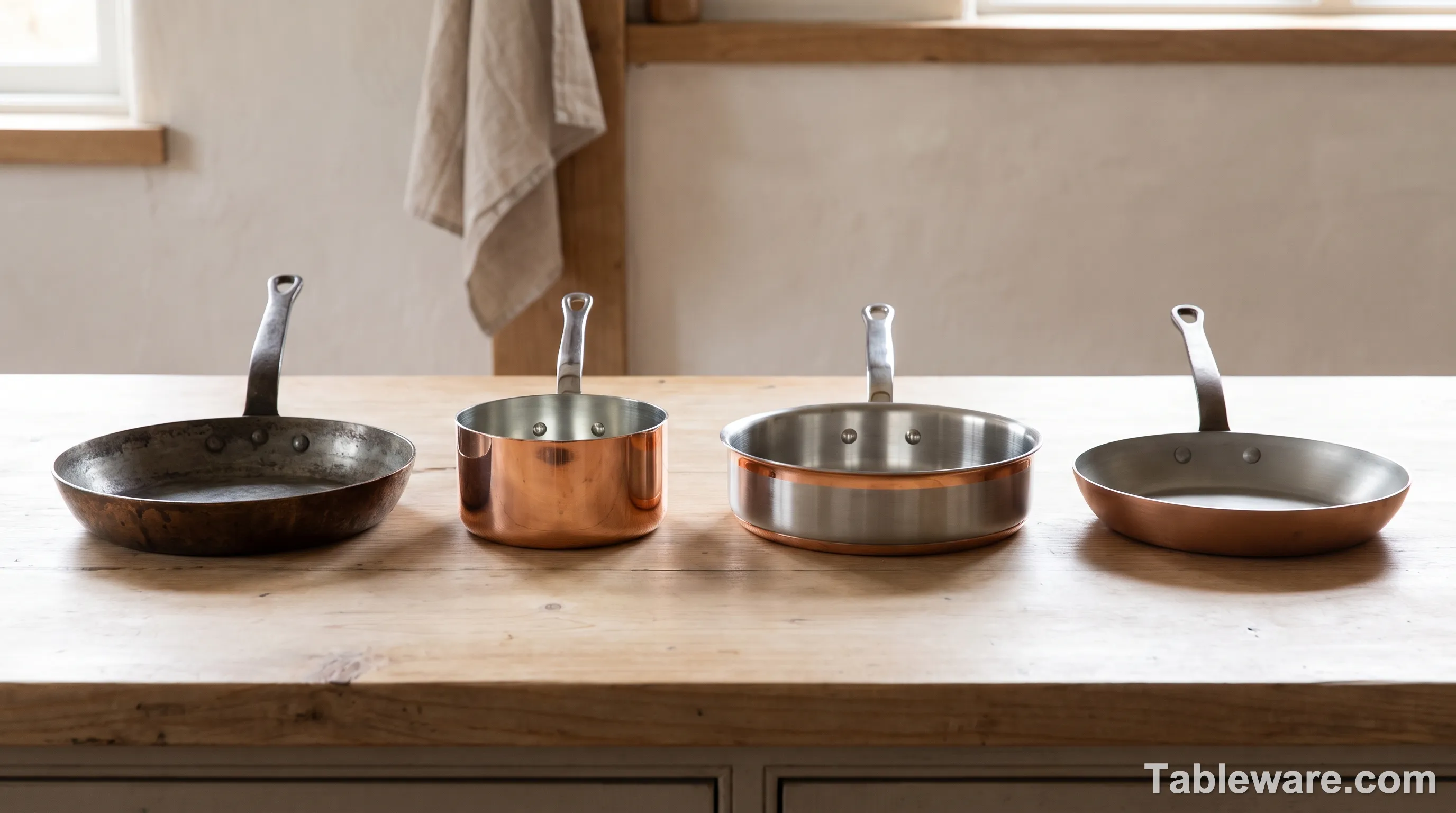
Fig 5. Four pans, four price tiers. From left: bare copper worn to a dark patina, tin-lined copper with a bright silver interior, copper-clad stainless with a copper band, and a matte copper-clad build. The two on the right are the ones most people picture when they picture "copper cookware."
Is Copper Cookware Worth It? Your Questions Answered
Do I actually need copper cookware? Almost certainly not. Buy it if you make sugar, emulsions, or delicate sauces more than once a month and you want them to be as good as they can be. Otherwise a copper-clad stainless set will do 90% of the work for 30% of the price.
Is it safe for everyday cooking? Yes, with an intact lining. It's regulated for food contact precisely because the tin barrier works. The only reason to worry is a lining that's worn through, and that's visible and fixable.
Does it work on induction? Standard copper does not — copper isn't magnetic. Some manufacturers now add a bonded steel base disc, which makes it work but slows the response and defeats much of the point. Copper-clad stainless works natively.
Can I put it in the dishwasher? No. Hand wash only. This is the rule people break most often and it's the fastest route to a ruined lining — and the most common reason tin lined copper cookware ends up in a junk drawer.
How long does a tin lining last? 10 to 15 years with reasonable care in a home kitchen. Longer if you cook in it twice a year. Condition, not calendar, tells you when.
What's the smartest first copper purchase? A 10- or 12-inch tin-lined copper sauté pan, from a brand that states the gauge. Skip the full set until you know you like living with it.
Should I polish it? Only if you care how it looks. The patina doesn't affect cooking at all.
So what's the actual verdict?
Copper is the best heat-distribution material ever put in a cooking pan, and the gap between it and everything else is real. But the pan you're paying for is mostly a lining wrapped around a copper engine, and that lining is consumable. That's the whole proposition.
If you want the engine, buy the engine, and buy one piece from a brand that tells you the gauge. If you want a great pan for most of your cooking, buy clad stainless and put the difference into good ingredients.
Either way, don't buy a copper-colored pan and think you got copper.