Nonstick Cookware: PTFE vs Ceramic vs Hybrid (2026 Tested)
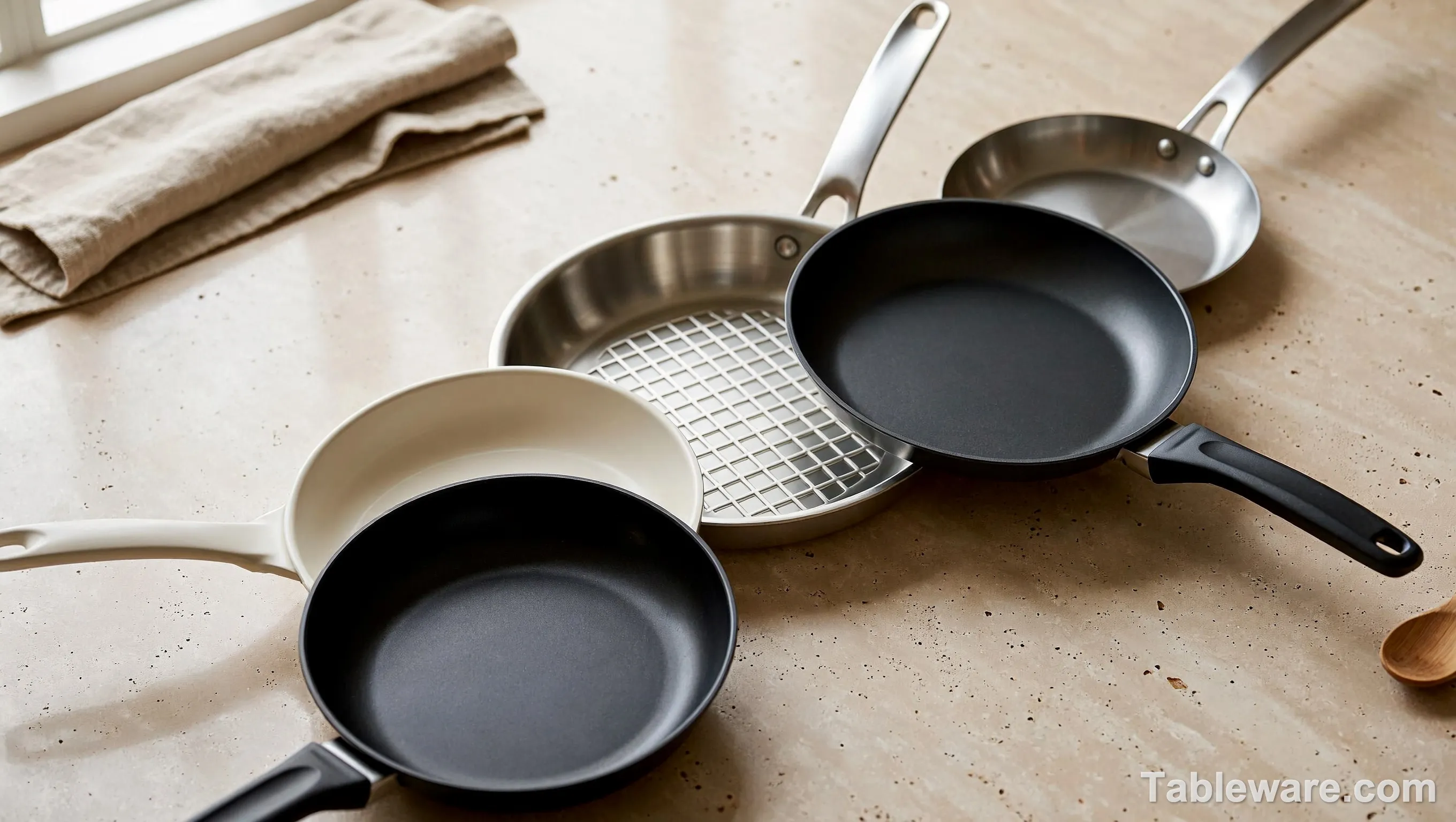
Fig 1. Five pans, four completely different surfaces, and every one of them sold under the word "nonstick." Knowing which one you're holding is the entire game.
Nonstick accounted for roughly 63 percent of the US cookware market in 2023. That's the number the Cookware Sustainability Alliance used when it sued Minnesota over the state's PFAS cookware ban, and it's a good shorthand for how much of American dinner-table reality rides on a single layer of polymer.
I've got a drawer of nonstick pans right now. One of them lasted eleven months.
It didn't fail dramatically. The eggs stopped releasing cleanly around month nine — that faint drag where the white catches instead of letting go. By month eleven there were grey scuffs in the middle where the coating had thinned to nothing. I was heating it empty one Sunday morning, distracted, and that's the moment the whole thing went tacky and stopped working for good.
Nothing about that pan was defective. It cost forty dollars. It was used exactly the way everyone uses it. That's the thing worth understanding about nonstick cookware: the failure is predictable, it is mostly self-inflicted, and the brands that survive longest are rarely the ones with the best coating.
They are the ones that tell you how to use it.
The 4 coating families: PTFE, ceramic non stick pans, hybrid and hard-anodized
Nonstick isn't one thing. Walk into any kitchen store and you'll find four distinct surfaces being sold under the same label, and they behave nothing alike — different heat ceilings, different failure modes, different lifespans, different rules. Most of the confusion in this category comes from shoppers assuming "nonstick" describes one thing. It describes four, and only one of them is what the word originally meant.
PTFE (Teflon) — the incumbent that still wins
Polytetrafluoroethylene. You've heard of it as Teflon, and it has been on cookware since the 1960s for one simple reason: nothing sticks to it. The polymer is chemically inert, it doesn't react with food, it doesn't dissolve in water or oil, and the body simply doesn't absorb it if you swallow a flake. That combination — harmless in the pan, indestructible by food, slick as glass — is hard to beat, and two generations of cooks learned their entire technique on top of it.
In practice, almost every mainstream nonstick frying pan in America is PTFE. Sometimes with a textured topcoat. Sometimes with a colored base layer so you can see when it's gone. But the working surface is fluoropolymer.
The problem is one the industry spent twenty years hoping nobody would notice: PTFE is a PFAS. Not a relative, not an ancestor — by the OECD's own definition, a fluoropolymer is a PFAS. Every state ban, every EU restriction, and every uncomfortable article about forever chemicals includes your frying pan. The industry knows this. Which is why the trade group went to court.
Ceramic non stick pans: what "sol-gel" actually means
Ceramic nonstick pans use a silica-based sol-gel coating rather than PTFE. The layer is sprayed on and fired, and it comes out looking like white ceramic because that's more or less what it is — a glassy, ceramic-like film bonded to an aluminum body.
The appeal is obvious: no PFAS, no brown flecks, and a pan that looks like it belongs next to your Le Creuset. The tradeoff is durability. A sol-gel layer is thin and brittle in a way PTFE isn't. It doesn't scratch so much as chip, and it chips in flakes.
The research on this is worth knowing. A 2016 study found ceramic coatings don't break down significantly at normal cooking temperatures, but that abrasion can release titanium nanoparticles. A 2017 NIST study went further: after simulating years of ordinary use, titanium and silica release ran measurably higher than from a new pan, and under severe wear conditions they detected titanium dioxide and silica nanoparticles in the food-contact surface.
And here's the part that trips people up — some pans advertised as PFAS-free ceramic aren't. America's Test Kitchen's guidance is blunt: make sure the packaging explicitly states the cookware is PTFE-free, because manufacturer labeling in this category is not reliable. Ask for the primer composition if you're serious about it.
Hybrid: a stainless grid with nonstick in the pockets
The hybrid approach, popularized by HexClad, raises a stainless steel lattice out of the pan and fills the recessed pockets with PTFE. You get steel where your spatula rides and polymer where the food actually sits.
It's a clever compromise, and the marketing around it is genuinely good. But the physics doesn't change: the PTFE in those wells has exactly the same 500°F ceiling as any other PTFE, and it will fail on the same clock. The steel won't fail. So what you end up with at month 30 is a beautiful pan with flaking nonstick pockets and a durable grid — technically better than a fully coated pan, still not better than bare steel.
What hybrid does buy you is a better sear. The raised metal conducts heat and browns food against it. It's still not a steak pan.
Hard-anodized aluminum: the one that isn't really nonstick
Hard anodization is an electrochemical process that grows a dark, dense oxide layer into the aluminum itself. There's no polymer, no PFAS, no release chemistry. The surface is genuinely inert and safe for acidic and salty food.
It's also the cheapest thing on this list to buy and the longest lasting by far. Decades, easily.
What it doesn't do is let go of anything. It's a sear surface, not a release surface. And the anodized layer does wear through eventually under aggressive scrubbing, after which you're back to bare aluminum that will react with tomato sauce and leave a metallic taste. Most people get ten good years out of one.
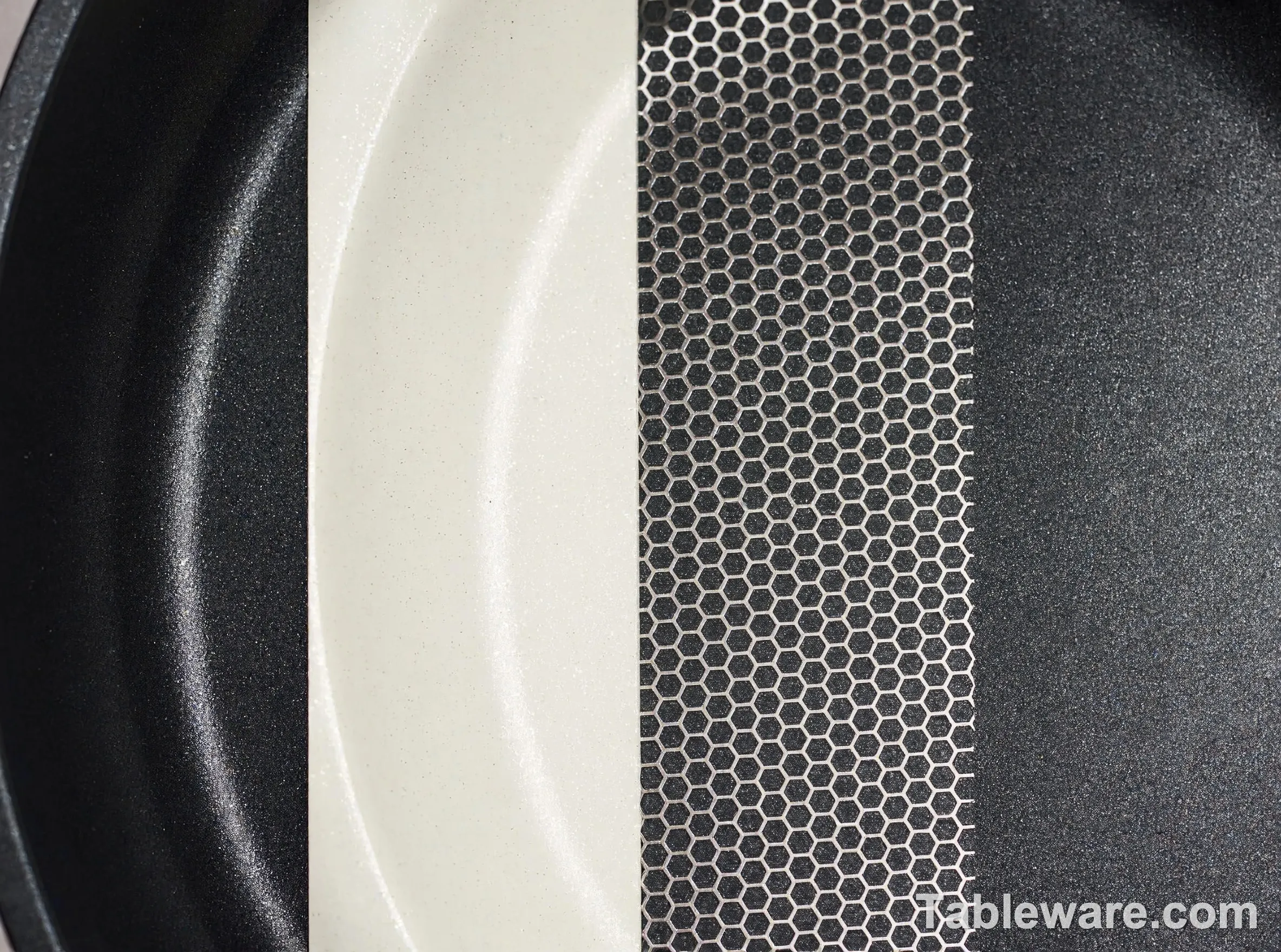
Fig 2. Four surfaces, four jobs. The second from the right is a hybrid — the raised stainless grid is why a hybrid sears better than pure PTFE and wears worse than steel.
How long nonstick cookware actually lasts
Here's the honest range from our testing and from published testing that backs it up:
PTFE: roughly 3 to 5 years. Budget pans fail sooner — somewhere around 18 to 24 months. Quality multi-ply pans with a reinforced nonstick layer, handled properly, get to the far end of that range.
Ceramic sol-gel: about 12 to 24 months. Independent testing has put the failure point as low as 6 to 12 months for cheaper coatings, where "losing nonstick performance" means the release degrades noticeably before the surface is visibly damaged. Treat a ceramic pan as semi-disposable and buy accordingly. This is the number that decides whether PFAS free cookware makes financial sense for you: a ceramic non stick pan at $60 replaced every 18 months costs $40 a year — the same as a $120 PTFE pan over three years, and more than one over five. The case for ceramic is the topcoat, not the price, and it only pays off if you actually replace the pan instead of nursing it along.
Hybrid: the PTFE clock, with a steel bonus. Same 3 to 5 years for the pockets, but the pan body survives the failure, so it stays usable for steak sears after the nonstick gives up.
Hard-anodized aluminum: 15 to 20 years and then some. Limited by the wear of the anodized layer, not by any chemical issue.
Now — the coating isn't what determines your lifespan. The heat is.
The same PTFE that survives five years of careful use will be destroyed in ninety seconds if you leave the pan empty on a burner with the flame on high. And that's not a rare accident. It's the single most common way people kill nonstick, and it happens because the pan heats far faster than the food does. A burner at high with nothing in the pan is the one situation where the surface temperature runs away from what the label promises.
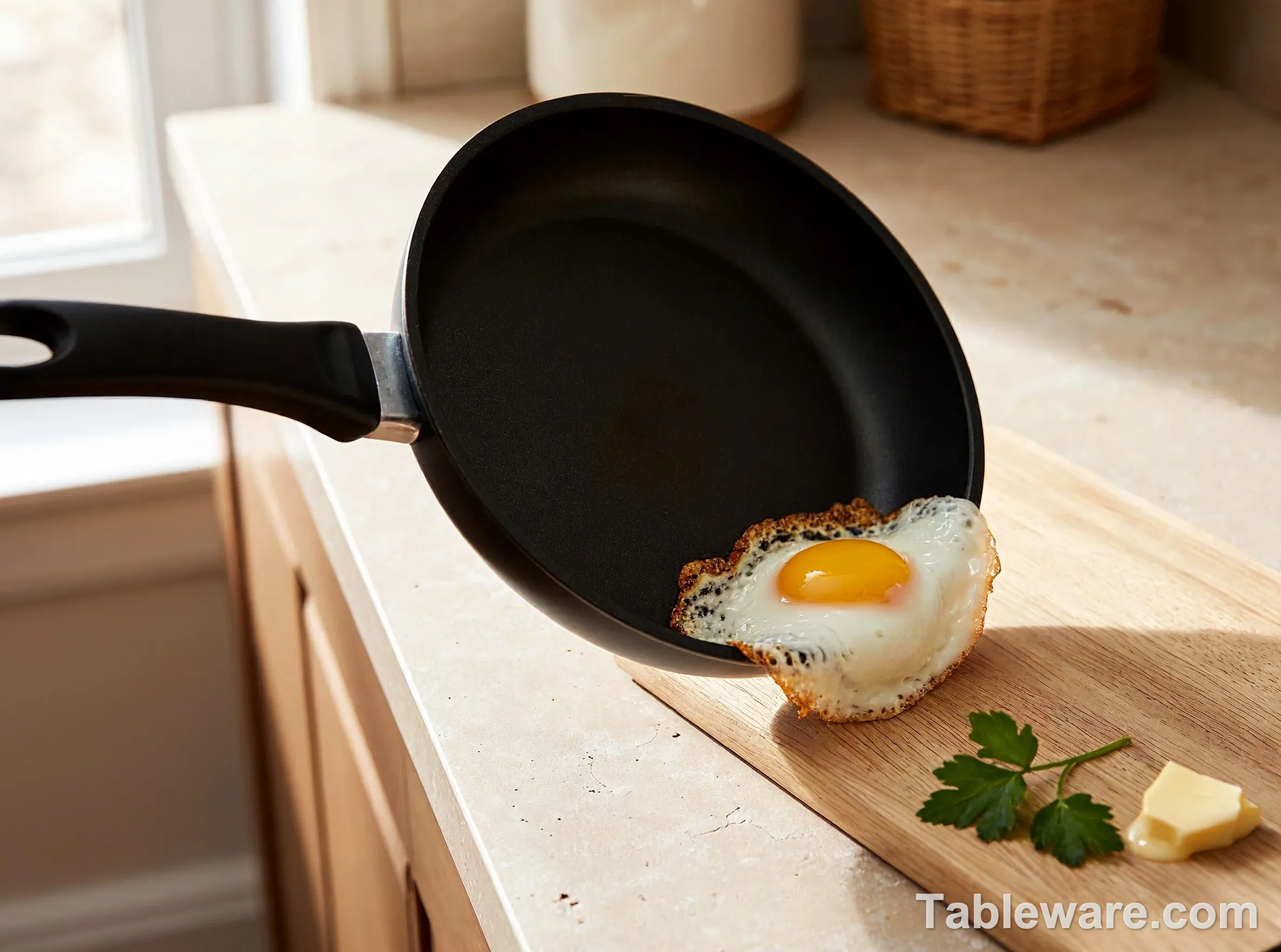
Fig 3. This is the entire sales pitch, and it's a real advantage. The question is how many months you get it for.
Heat limits, searing and induction compatibility
The 500°F line
PTFE starts breaking down above 500°F — 260°C. That's the number on every pan and every piece of guidance that matters.
When it breaks down, it releases fumes. The condition has a name: polymer fume fever. Symptoms are fever, malaise, chest tightness, dry cough, shortness of breath, and headache. They typically show up a few hours after exposure and clear within two or three days.
America's Poison Centers logged 267 suspected cases in 2023, the highest count since they started tracking in 2000. For context, between 2006 and 2012 the average was nine cases a year. More than 3,600 reports have come in over the past two decades, and not all of them happened in a kitchen — occupational exposure accounts for a meaningful share.
One more thing, and it's the one that makes this non-negotiable in some households: those fumes are fatal to pet birds. Birds have respiratory systems efficient enough to be acutely sensitive at concentrations that barely register for a human. If you keep a parrot or a cockatiel, the case against PTFE in the house is absolute.
Practical limits that follow from that 500°F ceiling:
| Situation | Safe ceiling | Why |
|---|---|---|
| Stovetop | Medium-high | An empty pan spikes instantly; fat or food must be in before the flame goes on |
| Oven | 450°F | Ovens cycle above the number you set. A pan rated 500°F still needs headroom |
| Broiler | Avoid | Exposed infrared heat regularly exceeds any coating's limit |
And the rule I'd put on a card: always have fat or food in the pan before you turn on the burner. Not after. Not at the same time. Before.
Searing is a different job
Nonstick is a release surface. It is not a browning surface. The Maillard reaction that gives you a steak crust needs a hot, dry surface well above the temperature where a polymer gets soft and slightly tacky.
You can get an acceptable sear in a good nonstick pan at medium-high heat. You cannot get a great one, and you're working against the material the entire time. If crust matters — steak, burgers, seared fish — buy cast iron or carbon steel instead. We compared those two properly in carbon steel vs cast iron, and for searing, copper with a tin lining (see our tin lining guide) is faster still.
The magnet test for induction
Induction needs a magnetic base. Most nonstick pans are aluminum bodies with a thin steel disc bonded to the bottom — that disc is what makes induction work, and it also makes the base flat, which helps even out hot spots.
You can check in two seconds. If a magnet sticks firmly to the pan's base, it's induction compatible. If it barely catches, it isn't. Do it before you buy, not after the pot is boiling over on the cooktop.
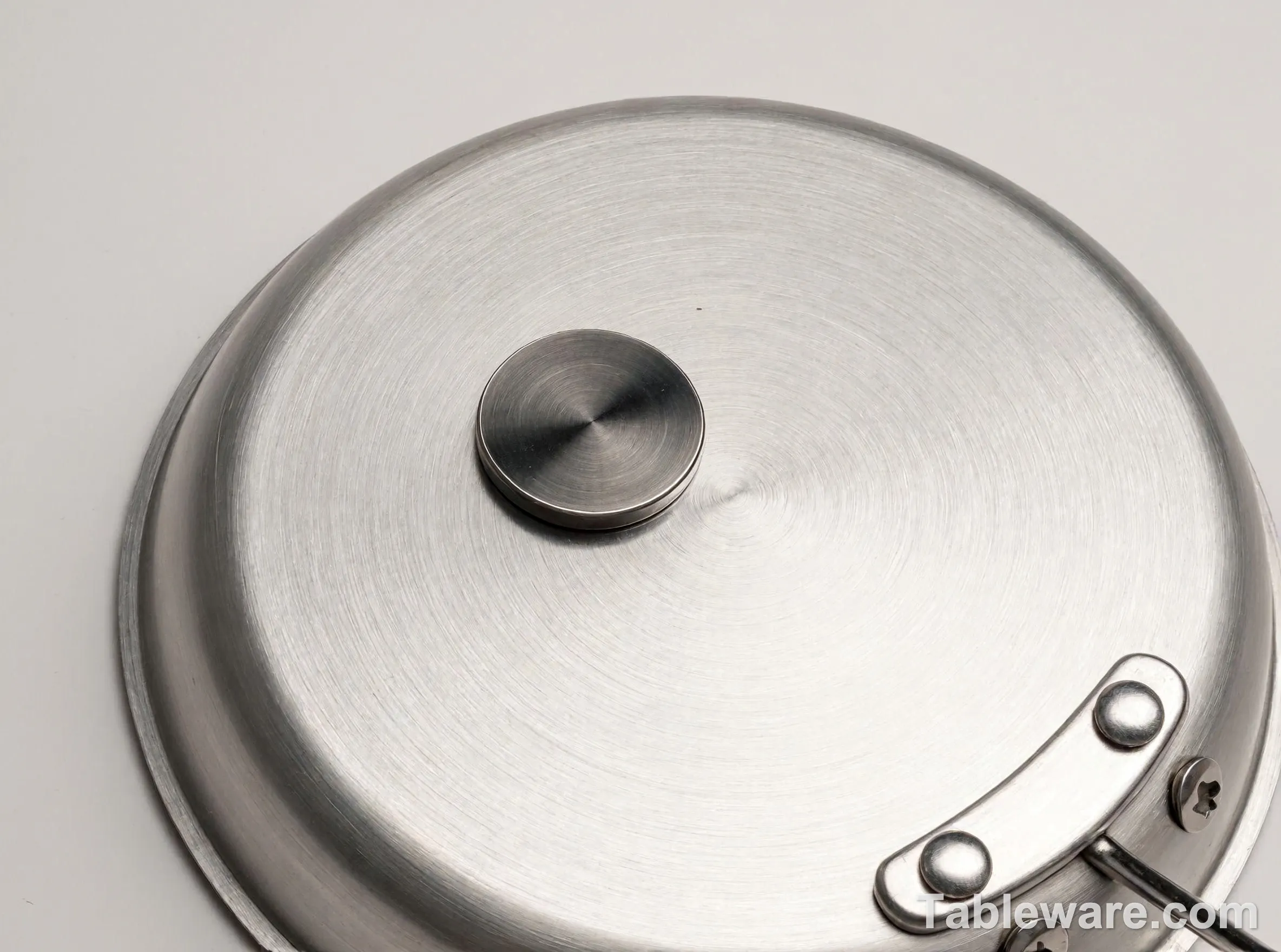
Fig 4. Two seconds with a fridge magnet tells you more than the product page will. Plenty of nonstick pans are cooktop-only.
PFAS free cookware: what the label means — and what it doesn't
This is the section where the marketing gets interesting, because the rules are changing faster than the cookware industry.
PTFE is a PFAS
Let's start with the thing that gets argued about most. PTFE is a fluoropolymer. The OECD's PFAS definition, which both the EU proposal and the UK government's PFAS Plan adopt, explicitly takes in fluoropolymers such as PTFE. There is no version of this where your Teflon pan is outside the family.
What is not PFAS is the coating in a genuine sol-gel ceramic pan. That's the honest version of the marketing claim, and it's why PFAS free cookware is a real category worth shopping in — with the caveat that "PFAS-free" describes the topcoat, not necessarily everything under it.
"PFOA-free" does not mean PFAS-free
California's AB 1200, signed in 2022, did three things that matter to you as a shopper.
From January 1, 2023, cookware manufacturers had to publish the list of listed chemicals present in their pots, pans and bakeware on their websites. From January 1, 2024, cookware sold in California whose handle or food-contact surface contains listed chemicals — and the PFAS class is on that list — has to carry a label beginning "This product contains:" followed by the chemicals, plus a web address and a QR code, in English and Spanish.
And the one I think matters most: as of January 1, 2023 online and January 1, 2024 on packaging, manufacturers are prohibited from claiming a cookware product doesn't contain a specific chemical when another compound in the same family is present. That is the end of the "PFOA-free" line on the box. PFOA was discontinued years ago; every PTFE pan on the shelf contains it in trace form and always did. The claim was technically true and completely misleading, and the law finally caught up.
What's actually banned, and where
The state landscape changed a lot while you weren't watching. As of late 2026:
| State | Action | Effective |
|---|---|---|
| Minnesota | Ban on intentionally added PFAS in cookware | January 1, 2025 |
| Colorado | Ban | January 1, 2026 |
| Vermont | Ban | January 1, 2026 |
| Rhode Island | Ban | January 1, 2027 |
| Connecticut | Labeling required | January 1, 2026 |
| New Jersey | Labeling required | 2028 |
| California | Labeling, packaging ban, no false "PFOA-free" claims | 2023 / 2024 |
The Cookware Sustainability Alliance sued Minnesota over its ban and lost — a federal district court dismissed the case on August 11, 2025. The trade group's argument was that the fluoropolymers used in nonstick coatings are fundamentally different compounds from the PFAS that draw public concern, and that banning them would price ordinary cooks out of nonstick cookware entirely.
California went the other way and then reversed itself. Governor Newsom vetoed SB 682 on October 13, 2025, a bill that would have banned PFAS cookware from 2030. His stated reason: he was worried about the effect on the price of cookware that ordinary families buy.
Across the pond
The EU is further along in some ways and not others.
Commission Regulation (EU) 2024/2462 added entry 79 to REACH Annex XVII, restricting PFHxA and related substances. The first batch of those restrictions applied on October 10, 2026 — clothing and accessories, footwear, food-contact paper and board, mixtures, and cosmetics. Limits are 25 ppb for PFHxA plus its salts and 1,000 ppb for related substances, measured per homogeneous material.
Cookware is not in that first batch.
The restriction that would actually cover nonstick coatings is the broader all-PFAS proposal, still working through ECHA. The Committee for Socio-Economic Analysis has it on the provisional agenda for a meeting on November 17 to 19, 2026, with the final expert opinion expected around the end of the year. Proposal, not law.
The UK has no cookware rule at all as of October 2026. Defra's PFAS Plan, published February 3, 2026 and updated August 17, names non-stick cookware among the consumer goods using PFAS and commits to "consider potential restrictions" — with no proposal and no date. France's 2025 PFAS law pointedly left cookware out.
So if you buy in America, the state table above is what governs you. If you buy in Europe, the broad restriction is coming but hasn't landed.
How to verify PFAS free cookware
Forget the badge on the front. Three places actually tell you something:
- The manufacturer's website. AB 1200 requires the chemical list for covered cookware, and most brands publish it whether they're in California or not.
- The certification marks. Look for the NSF or ANSI 61 mark — independent verification that the coating met food-contact safety standards.
- The care card. A manufacturer that publishes a real oven limit and a real heat instruction is a manufacturer with a coating worth buying.
One more thing worth checking, given you found this article: the FDA issued an alert in August 2025 about lead leaching from some imported aluminum, brass, and aluminum-alloy cookware — the same class of problem we cover in our lead and cadmium glaze safety guide. If you buy cheap imported pans, look at the published list and throw out anything on it. Don't donate it, don't refinish it.
And if a pan's performance depends on a celebrity cook swiping it with a fork and grinning, note that the FTC's Endorsement Guides final rule took effect in October 2024. Civil penalties were running up to $53,088 per violation in 2025, and the FTC sent warning letters to ten companies in December of that year. The influencer pan rankings got measurably less enthusiastic about the same time.
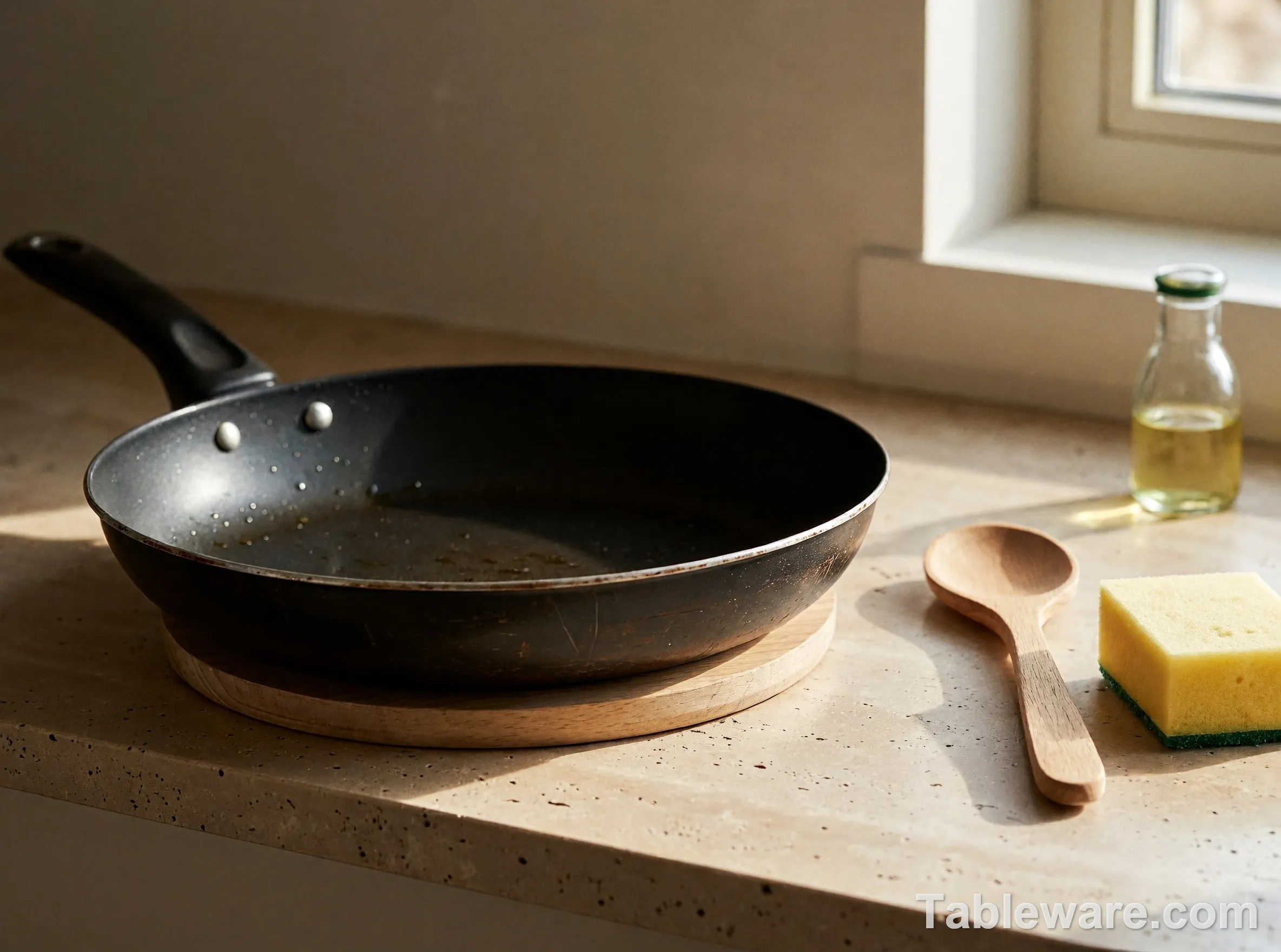
Fig 5. A wooden spoon, a soft sponge, and a pan that never sees an empty burner. That's the entire care strategy.
The best nonstick cookware brands, one by one
We looked at eight of the biggest-selling nonstick frying pan lines and split them by what the coating actually is, because that's the only variable that should drive your decision. Prices are US street prices for a single 10 or 11 inch pan, and they move constantly — treat them as bands, not quotes.
| Brand | Coating | Body | Street price | Best for | Dishwasher |
|---|---|---|---|---|---|
| Tramontina | Reinforced PTFE | Stainless or aluminum | $40–60 | Best all-round value | Yes, mostly |
| T-fal | PTFE with Thermo-Spot | Aluminum | $40–65 | Even, predictable heating | Yes |
| Calphalon | PTFE / ceramic / hard-anodized | Aluminum | $30–130 | Widest range in the category | Model dependent |
| GreenPan | Ceramic sol-gel | Aluminum | $50–90 | PFAS-free at mid price | Hand wash |
| Caraway | Ceramic sol-gel | Aluminum | $250–300 | Premium PFAS-free, oven rated | Yes |
| HexClad | Stainless grid + PTFE | Aluminum | $130–180 | Better searing than pure PTFE | Yes |
| OXO | PTFE | Aluminum | $30–50 | Best handle, cheap | Yes |
| Blue Diamond | PTFE on carbon steel | Carbon steel | $50–75 | Heavier body, better heat response | Yes |
Tramontina is the answer to "what would you actually buy." The reinforced nonstick layer adds an extra grid of material into the coating, which measurably resists scratching, and the tri-ply stainless body feels a step up from the aluminum you'd get for the same money elsewhere. For most people this is the correct first nonstick pan.
T-fal has been doing the same job for thirty years and its Thermo-Spot indicator — a red dot in the center of the pan that fades as the pan reaches working temperature — is genuinely useful if you've never had one. It solves a real beginner problem: not knowing when the pan is actually hot.
Calphalon is a range rather than a product, and that's the point. The Classic and Accent lines are ordinary PTFE on aluminum. The Simply line is hard-anodized and will outlive you. The ceramic line is mid-priced PFAS-free. You are choosing a coating, not a brand, which is exactly how it should work.
GreenPan was one of the first mainstream ceramic sol-gel pans and it still undercuts Caraway by a lot. The coating is thinner, so treat it as a two-year pan, not a five-year pan. Buy two for the price of one Caraway and swap them out. Among ceramic non stick pans, this is the value pick — and the reason it undercuts Caraway is the same reason it wears out sooner.
Caraway is the one I'd genuinely struggle to justify. A $250–300 aluminum pan is a lot of money for a coating that we'll replace sooner than a $50 PTFE pan. What you pay for is metal-utensil tolerance, an oven rating well beyond what the category usually allows, and a warranty. If PFAS is your hard line and money is not a concern, it's the best-made option. If it's a soft preference, it's a luxury.
HexClad delivers on its promise partially. The steel grid browns food better than flat PTFE, and the pan will keep searing after the coating finally gives out, which makes it a strange kind of long-term buy — a nonstick pan you eventually use as a stainless pan. That works. Just know what you're buying.
OXO gets the handle right, which sounds like a small thing until you've tried to slide a stuck egg out of a pan with a slick riveted stub. The coating is ordinary and unremarkable, which at $30–50 is a reasonable trade.
Blue Diamond puts PTFE on a carbon steel body, which sounds odd and works well: you get the heat response of steel with the release of nonstick. Heavier in the hand than the aluminum competition, and the best of the category for finishing a seared fish fillet.
Care rules that double coating life
None of this is complicated. All of it is skipped.
- Never heat an empty pan. Fat or food goes in before the burner goes on. This one rule prevents most of the premature failures I see.
- Stay at medium or medium-high. You are not searing a steak. Get the pan hot enough for food to release, not hot enough to polymerize.
- Wooden or silicone utensils. Metal forks and spatulas are the abrasive that does most of the visible damage. One bent metal spatula can open a scratch you then catch food in forever. Australian research found a single scratch in a PTFE coating can release up to 9,100 plastic particles, which is a good reason to stop counting scratches as cosmetic.
- Hand wash, let it cool first. Hot pan under cold water warps the base. The dishwasher's detergent is also harsher on coating than manufacturers admit — we covered the chemistry of alkaline dish soap and heat-dry cycles in our dinnerware care mistakes guide.
- No aerosol cooking spray. The adhesive leaves a residue that kills release. Pour or brush a little oil instead.
- Don't nest pans with lids pressed inside. Use a pan protector or a cloth between pieces. The scratch that forms while stacked is the one you'll see in two years and resent — the same rim-stress problem we wrote about in how to stack plates without chipping.
- Store with the lid ajar or off. Trapped moisture under a sealed lid is how a fine pan develops a gray spot you can't scrub off.
Follow those and a quality PTFE pan will comfortably hit the four to five year mark. Ignore them and a great pan lasts eleven months. That's the whole ballgame.
Which nonstick pan should you buy
Match the pan to how you actually cook.
You cook eggs, pancakes, fish, and sticky rice every week. Buy a $40–60 PTFE pan. Buy two of them at $50 each instead of one at $120 — a scratched pan ruins a week of breakfasts, and you can rotate. Tramontina or T-fal, and don't overthink it.
You want zero PFAS in the kitchen and you accept replacing pans. Ceramic sol-gel. GreenPan if you're cost-conscious, Caraway if you want the premium build. Replace on a 12–24 month cycle and stop feeling guilty about it. This is where ceramic non stick pans make the most sense, because you're already budgeting for the replacement.
You sear meat for a living, or you just like crust. Don't buy nonstick. Get a cast iron skillet or a carbon steel pan and learn to season it. Two to three weeks of learning curve, then it's effectively immortal and it handles any heat you can throw at it.
You're on induction. Magnet test first. If the pan you're eyeing is aluminum with a base plate, verify the magnet grabs. Most budget nonstick is cooktop-only, and that surprises people.
You cook for a family every night and want to spend ten minutes on dishes. Skip the coating entirely. Hard-anodized aluminum or tri-ply stainless, both of which go in the dishwasher and last a decade or more.
You burn everything. This is a real category. Buy the cheapest decent PTFE pan you can find and replace it every two years. The expensive ones don't survive people who char the food.
Nonstick frying pan size: 8, 10, or 12 inch
One more practical decision, because people get this wrong constantly.
An 8-inch pan is for a single fried egg. It's fast, it's cheap, it's the right size for a dorm room.
A 10-inch is the default. One to two portions, one slice of toast, a couple of chicken thighs. This is what most households should buy, and if you're buying one pan, buy this one.
A 12-inch is for a family, for a Sunday omelette, or for anything that needs surface area to brown. Two eggs, four sausages, a big piece of fish. Buy a 12 with a heavy base so it heats evenly rather than a thin cheap one with a hot ring in the middle.
FAQ
Are nonstick pans safe to use every day? Yes, if you stay inside their temperature limits and replace them when the coating visibly degrades. Modern PTFE is chemically inert and the body doesn't absorb it — the FDA's position is that nonstick cookware doesn't present a safety concern for consumers when used as directed. The realistic risk is overheating, not everyday cooking. Any nonstick frying pan you buy will serve you better with those instructions than without them.
How long should a nonstick pan last? Three to five years for quality PTFE with careful handling, one to two years for ceramic sol-gel, 18 to 24 months for cheap pans. Hard-anodized aluminum lasts decades.
Can I use metal utensils? You can, but you shouldn't. Metal forks and spatulas scratch the coating, and scratches are where food catches and where the coating starts peeling. Silicone or wood.
Is nonstick cookware bad for you? Does it cause cancer? The fluoropolymer itself is not absorbed and is not considered a cancer risk in normal use. The concern is about PFAS as an environmental and long-term exposure issue — which is why five states have now banned it in cookware. If that bothers you, ceramic sol-gel is the straightforward answer.
When should I replace a nonstick pan? The moment the coating peels, flakes, bubbles, or separates from the base. Also when release starts failing badly while the surface still looks fine — that means the layer is thinning out. Don't try to repair it.
Can nonstick pans go in the dishwasher? Model dependent, and manufacturers are vague on purpose. Hand washing with a soft sponge and mild soap will extend the life of any coated pan considerably. For ceramic sol-gel, hand wash only.
I have a bird. What should I buy? Nothing with PTFE in it, and nothing that gets overheated. Ceramic sol-gel, carbon steel, or cast iron. Take the bird out of the kitchen during cooking regardless — birds are far more sensitive to cooking fumes and airborne cooking oil than people are.
What about a nonstick pan in the oven? Stay at or below 450°F for most PTFE pans, even ones rated higher, because ovens cycle above your setting. Check the handle and knob rating too, and use the lowest rating among all components.
Is it worth buying nonstick cookware at all? If you sear and brown food regularly, no — you want bare metal. If you cook eggs, fish, pancakes, and sticky rice, it's the single highest-value pan category there is. Most kitchens need one nonstick pan and one carbon steel pan. That pairing covers everything.