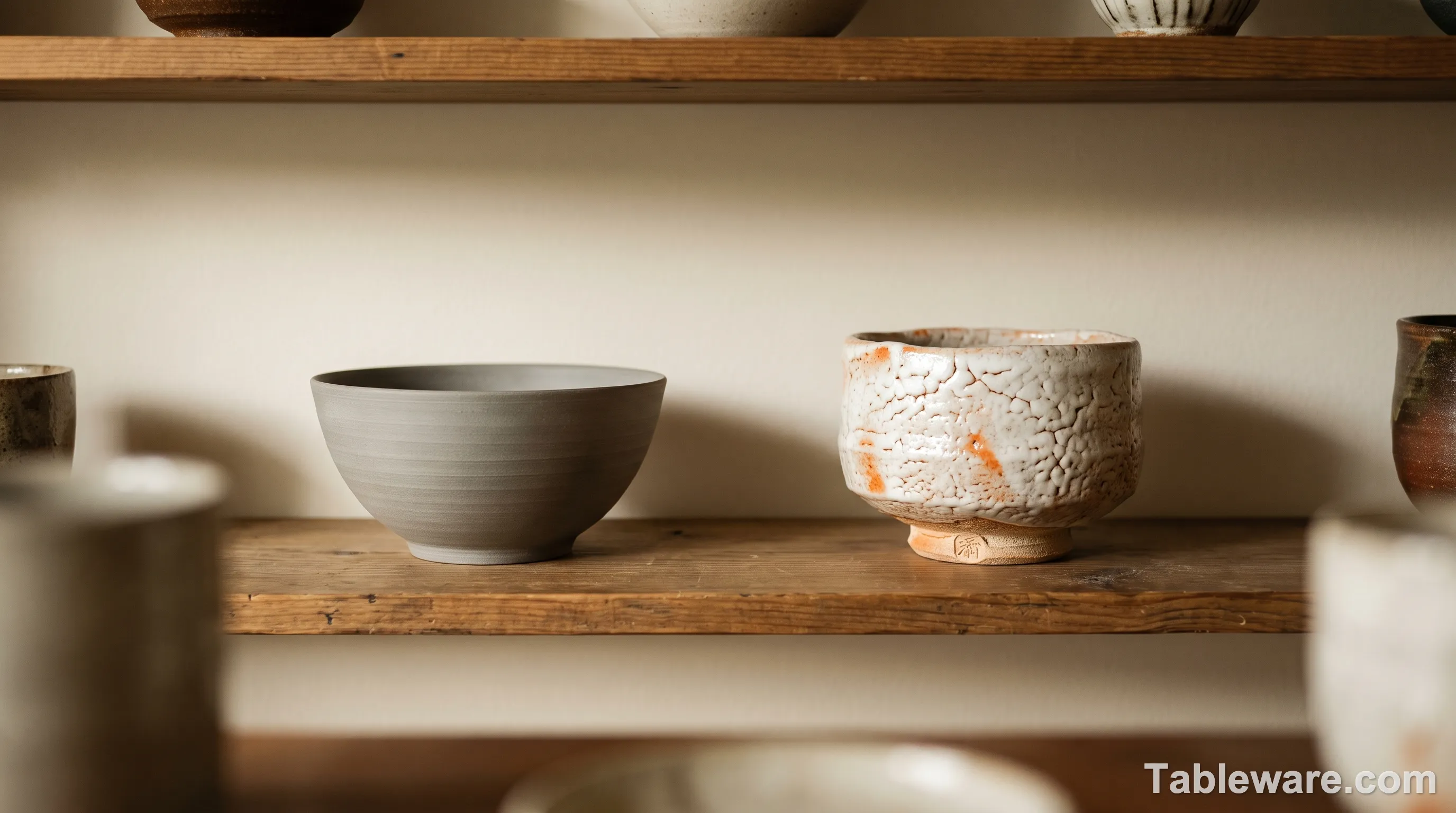
A friend of mine posted a photo on Instagram last month: her grandmother's 1962 Fiestaware red plate, the one with the bright radioactive-orange color, sitting next to a slice of birthday cake. The caption said something like "vintage queen energy, baby." I love the plate. It's gorgeous. I've wanted one since I was twelve. But I also knew that under that exact shade — Fiesta's original "radioactive red" — was a cadmium-selenide glaze that was reformulated in 1986 specifically because the FDA, the State of California, and a handful of consumer-protection groups were worried about cadmium leaching into acidic foods like tomato sauce and orange juice. I sent her a private message about it. She thanked me. The plate is now on a shelf, not in the cabinet.
The thing is, lead and cadmium in ceramic glaze is not a niche concern. It's not a "vintage pottery paranoia" thing. In 2017, the FDA issued import alerts for ceramic ware from six different countries after lab tests found lead and cadmium leaching at levels above US limits. The 2017 Vietnamese recall hit the news. So did the Mexican terracotta recalls. So did the 2019 Pier 1 Imports recall of 9-inch ceramic plates and tumblers sold between 2018 and 2019. So did the November 2023 recall of Dollar Tree ceramic casseroles. There is a real, ongoing, documented safety story here. And the most useful thing I can do for you is walk through it without the marketing copy that surrounds the topic — without the "100% food safe, lead-free, worry-free" labels you see on every Etsy listing.
Lead and Cadmium in Ceramic Glaze: The 2026 Safety Guide
This guide is going to do four things. First, explain why lead and cadmium are still in ceramic glazes at all in 2026. Second, lay out the actual numbers behind the three standards you'll see cited — FDA, California's Prop 65, and ISO 6486 — and tell you which one is the strictest (it's not the FDA). Third, give you the five red flags for vintage or imported pottery. Fourth, walk you through how to test your existing pieces at home, and when it's actually worth sending something to a lab. The short answer to is old pottery safe to use is: usually yes, with five exceptions. We get to those below.
Why Lead and Cadmium Are Still in Ceramic Glaze in 2026
The short version: lead in ceramic glaze is a chemistry problem that hasn't been fully solved by regulation. The FDA first set lead limits in 1971, tightened them in 1992, and has not touched them since. The FDA's 2017 import alerts — testing about 1,200 imported ceramic lots from China, Mexico, Vietnam, and Bangladesh — found roughly 9 to 12% of imported lots exceeded FDA lead limits for ceramic ware. Cadmium was a smaller fraction (about 2 to 4% of lots), but cadmium is more toxic at lower doses than lead, so the implication is similar. That's the operational reality of lead in ceramic glaze enforcement in 2026.
The honest answer is that lead and cadmium are two of the best tools a ceramic chemist has ever had. Lead oxide — PbO, red lead, white lead — produces a low-fire glaze that flows at temperatures between 1020°C and 1140°C. That's about 100°C to 200°C below what a typical stoneware glaze requires. Lower firing temperature means less fuel, smaller kilns, cheaper production. Lead also brightens colors. Copper oxide in a leaded glaze produces a brilliant turquoise that no unleaded glaze can match. Iron oxide in a leaded glaze produces a deep, glowing yellow-orange that potters have chased since at least the eighth century. The glaze is also smoother, glossier, and more durable on the rim than most unleaded glazes. For 1,500 years, leaded glaze was the default. Modern unleaded chemistry is genuinely good now (see our reactive glaze chemistry guide), but lead is still cheaper and brighter, which is why it keeps showing up in poorly regulated imports.
Cadmium plays a different role. It's the only reliable oxide pigment for bright reds, oranges, and intense yellows in commercial ceramic production. Tin and iron oxides can get you to a tomato red, but a cadmium-selenide red (CdS-Se) gets you to a fire-engine red that doesn't fade. The same pigment makes Fiestaware's original "Fiesta red" and "radioactive orange." It makes the deep yellow inside a traditional Mexican Talavera bowl. It makes the orange dots on a Polish pottery plate. Without cadmium, the bright color palette of 20th-century commercial ceramics doesn't exist. (For the full story on how Fiestaware's red was reformulated in 1986, see our Fiestaware color history 1936-2026.)
What's also true is that both lead and cadmium leach under certain circumstances — especially into acidic foods (tomato sauce, citrus, vinegar, wine), at high temperatures (the dishwasher accelerates it), and from chipped or cracked glaze (the exposed body leaches faster than the intact glaze surface). The body of the ceramic is not the issue. The glaze is the issue.
The good news is that since the 1970s, every regulated market — US, EU, UK, Canada, Australia, Korea, Japan — has restricted or banned these in food-contact ceramics. The bad news is that "restricted" is not "banned," and the enforcement gap between "banned for use in food-contact glaze" and "banned for use as a glaze colorant that doesn't touch food" creates some weird loopholes. It also doesn't help that the US FDA limit for lead in ceramic glaze was set in 1992 and has not been updated since — over 30 years of ceramic chemistry advancement, and the regulatory floor hasn't moved. The lead in ceramic glaze story in 2026 is largely a story about that gap.
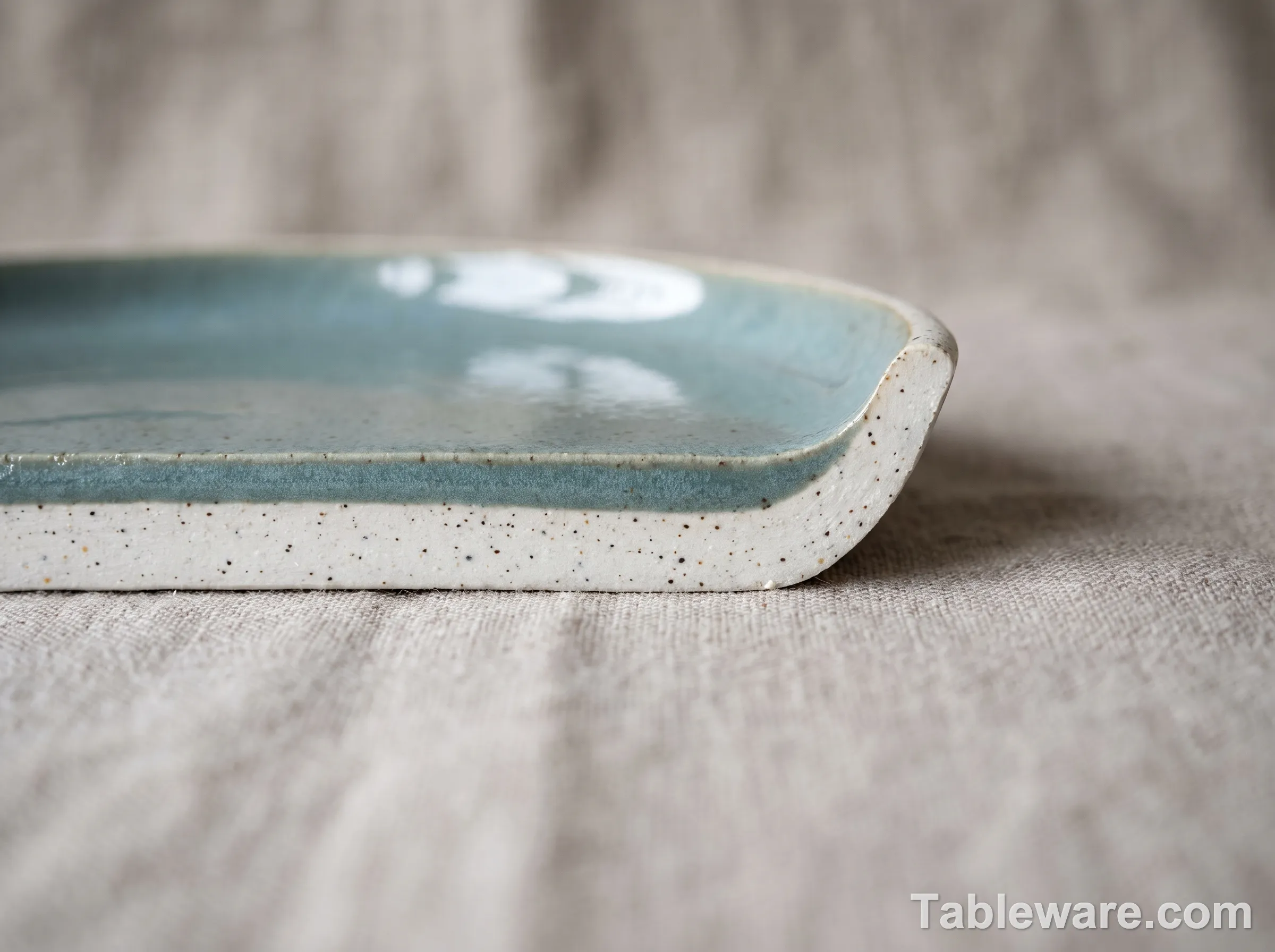
Fig 1. The glaze is the part that touches your food. The body underneath is usually fine — it's the vitreous or semi-vitreous clay that holds the shape. Leaching happens at the glaze surface and through any chips or cracks that expose the body. Lead and cadmium leach fastest into acidic foods (tomato, citrus, vinegar, wine) and at high temperatures (dishwasher, microwave, oven).
Lead in Ceramic Glaze: FDA, Prop 65, and ISO 6486 Limits Explained
Here's where most of the tableware-buying internet goes wrong. People will tell you "FDA-approved" or "FDA-compliant" like that settles the question. It doesn't. Three different standards matter, and they're not the same.
The FDA standard (the one US importers and manufacturers actually have to follow) is set out in the FDA's Compliance Policy Guide 545.500 and 7117.06. These are the FDA lead limits for ceramics that any US-imported or US-made food-contact ware has to meet:
- Lead: 3.0 mg/L leach (flatware) / 2.0 mg/L leach (small hollowware like mugs) / 1.0 mg/L leach (large hollowware like mixing bowls)
- Cadmium: 0.5 mg/L leach across the board
These limits were set in 1992 and haven't been revised. The test method is a 24-hour leach with 4% acetic acid (a stand-in for vinegar/tomato) at room temperature. That's the standard, and it's the one that gets cited on the bottom of every box of dishes you buy in the US.
California Prop 65 is different in two important ways. First, it sets a maximum allowable dose level (MADL) of 0.5 micrograms per day for lead, based on a 70-kg adult. Second, it requires a warning label if a product exposes a consumer to more than that dose — and the burden of proof is on the manufacturer, not the consumer. Prop 65 is not a "ban." It's a "you must warn or prove safe" law. In practice, the Prop 65 limit is about 20 times stricter than the FDA limit for lead, and many products that pass FDA testing still get Prop 65 warning labels.
ISO 6486 is the international standard, followed by the EU, UK, Canada, Australia, Japan, Korea, and most of Latin America. The limits are very close to the FDA — 0.8 mg/L to 8.0 mg/L depending on the category for lead, 0.07 mg/L to 0.3 mg/L for cadmium. The EU's lower limit (0.07 mg/L cadmium for flatware) is stricter than the US.
If you're a regular tableware buyer, the practical takeaway is this: if a piece passes FDA AND ISO 6486 AND carries a Prop 65 compliance statement (or no Prop 65 warning in California), it's about as safe as commercially available ceramics get. If it only passes one or two of these, the gap is worth thinking about.
| Standard | Lead limit (flatware) | Cadmium limit (flatware) | Test method |
|---|---|---|---|
| FDA (US) | 3.0 mg/L leach | 0.5 mg/L leach | 24h in 4% acetic acid, 22°C |
| Prop 65 (CA) | 0.5 μg/day MADL | 4.1 μg/day MADL | Estimated daily exposure |
| ISO 6486 / EU | 0.8 mg/L leach | 0.07 mg/L leach | 24h in 4% acetic acid, 22°C |
The Prop 65 lead limit is the strictest. The FDA lead limit is the loosest. If a brand says "FDA-compliant" but doesn't address Prop 65, you're not getting the full picture.
Is Old Pottery Safe to Use? 5 Red Flags to Know
The honest answer is: most of the time, yes. But there are five specific categories where I would personally be cautious.
1. Pre-1986 Fiestaware red, orange, and yellow. Homer Laughlin's original Fiesta line used a cadmium-selenide pigment for the red, orange, and yellow glazes. Cadmium leach testing in the 1980s showed some pieces leaching above FDA limits. The line was reformulated in 1986 using a different chemistry. Today's Fiesta red is fine — the modern formulation uses cadmium-zirconium ceramic stains with acceptable leach rates. Pre-1986 pieces are not a death sentence if you use them as display. I would not eat off them regularly. I would not serve acidic food on them.
2. Mid-century American "kitsch" ceramics with bright orange or yellow interiors. McCoy, Pfaltzgraff, and a handful of other US makers produced a lot of bright-orange and bright-yellow mixing bowls and casseroles in the 1950s and 1960s. Most of these used cadmium-bearing glazes. McCoy in particular has a documented history of cadmium leaching in pre-1970s pieces. If you're collecting McCoy, the rule of thumb is: avoid putting acidic food in the brightly colored bowls.
3. Mexican Talavera from non-Puebla sources. Genuine Talavera from Puebla (the only region protected by the Denomination of Origin, since 1995) is required to be lead-free under Mexican and US standards. The Mexican government tests every batch. The problem is that most "Talavera-style" pottery sold at Home Goods, Pier 1, World Market, and online under the Talavera name is from other Mexican regions, Guatemala, or China. Some of it is genuinely fine. Some of it tests above FDA limits for lead. The 2017 FDA import alert hit Mexican terracotta imports specifically. If you're buying Talavera-style pottery, look for the "Talavera Poblana" certified seal and the country of origin. Otherwise, treat it as decorative.
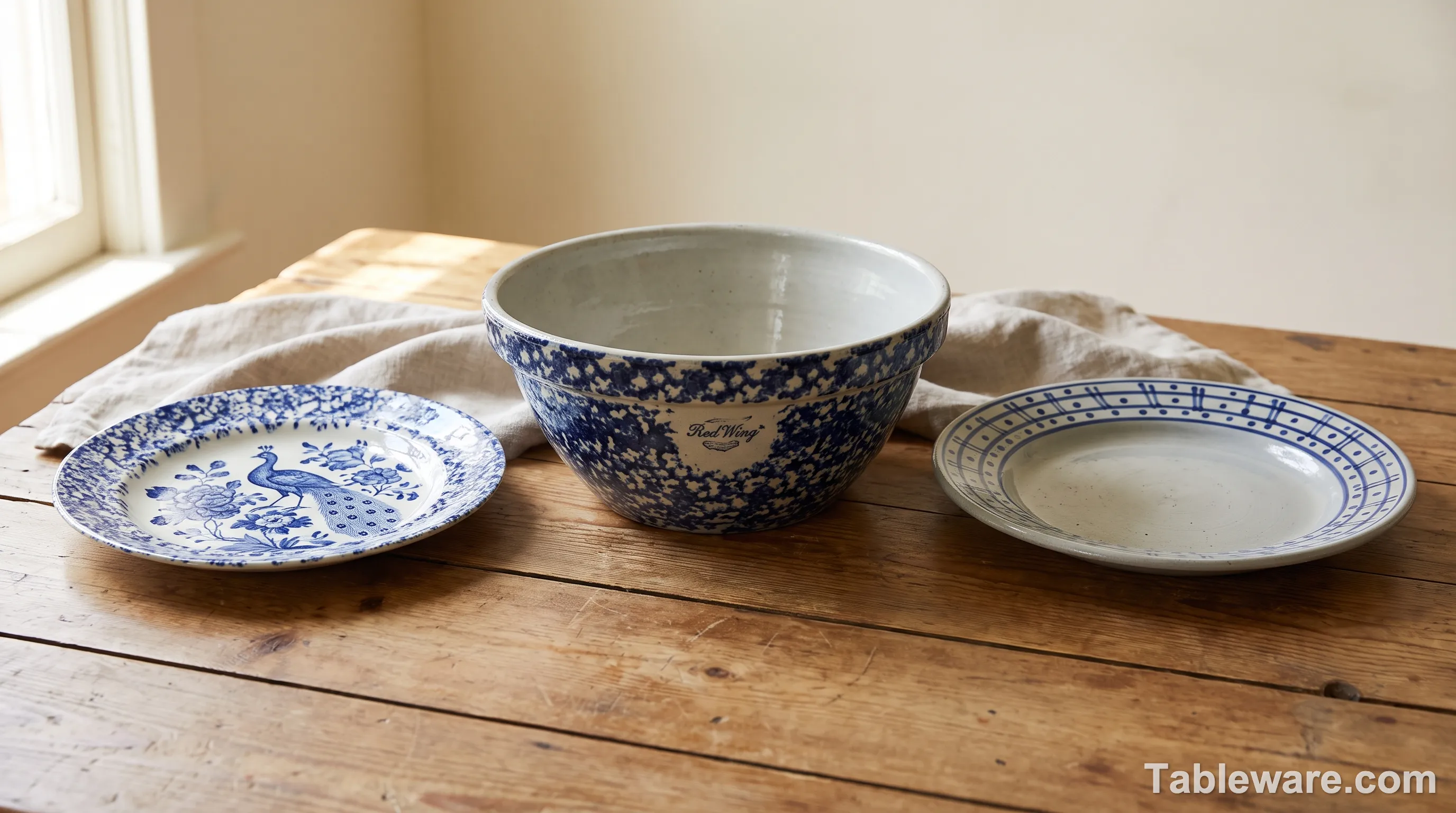
4. Hand-painted or hand-glazed studio pottery from Etsy or flea markets. This is the category I'd be most careful with. A studio potter in a small workshop is generally not subject to FDA testing requirements unless they explicitly sell their ware as food-safe. There are excellent studio potters — Heath, East Fork, Jono Pandolfi, Soldate, MQuinn — who run rigorous leach testing on every glaze they sell. There are also potters who mix their own glazes from recipes that may include lead frits or cadmium stains for color. Without third-party verification, it's hard to know which is which. I asked Jono Pandolfi's studio about their process — they leach-test every food-surface glaze quarterly. That's the standard. For a deeper walkthrough on buying handmade pottery safely online, see our 7 things to know before buying handmade pottery.
5. Old, chipped, cracked, or crazed pottery of any origin. Glaze that has chipped off or cracked (the technical term is "crazed" when you see fine cracks in the surface) exposes the underlying clay body. Most clay bodies are not food-safe on their own. Earthenware bodies can leach heavy metals from the clay itself. Stoneware bodies are generally safer. Porcelain is generally fine. If a piece has a chipped rim, I'd retire it from the dinner table — or use a food-safe sealant (like a clear, lead-free epoxy rated for food contact) on the chipped area.
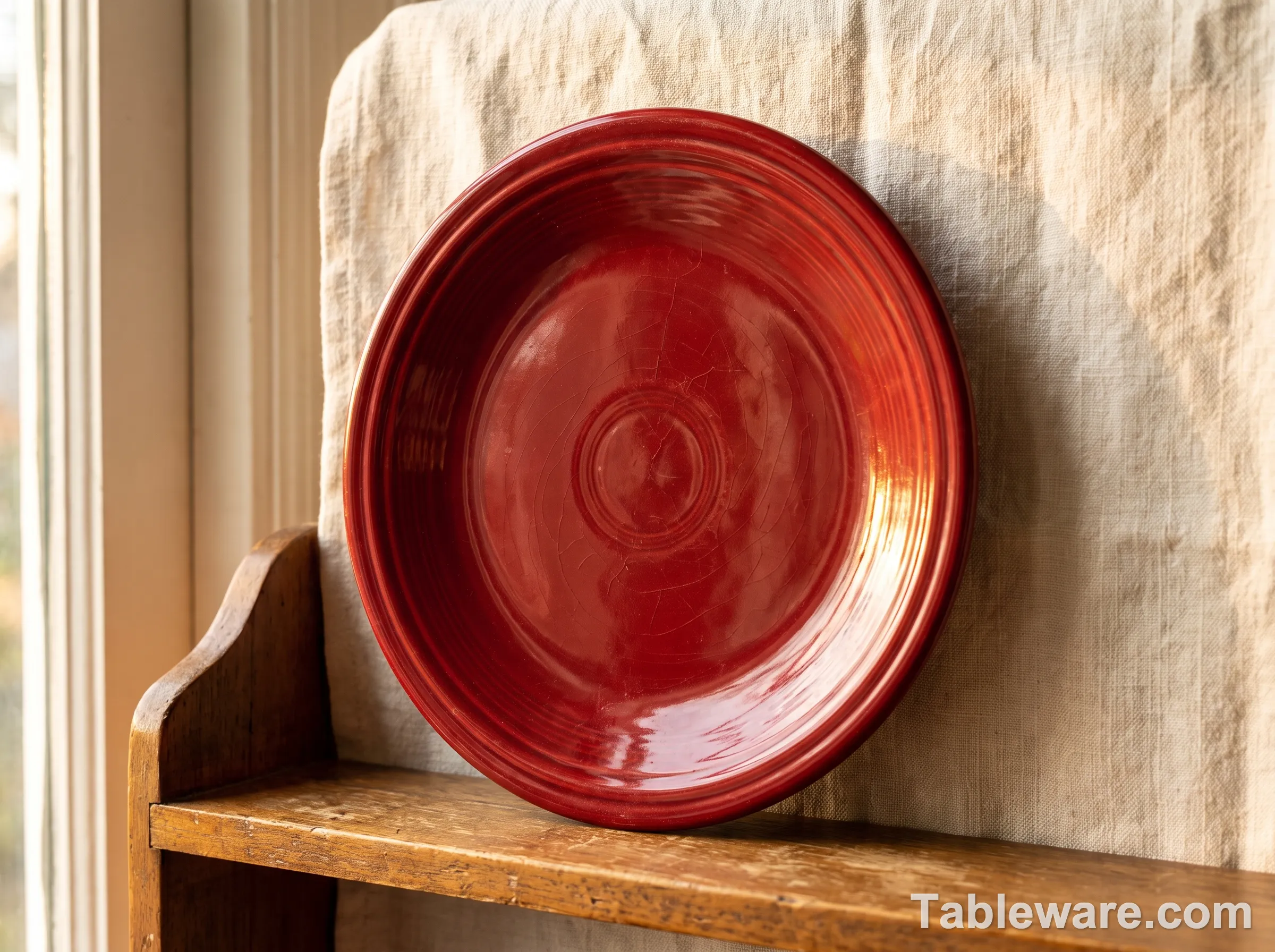
Fig 2. Pre-1986 Fiestaware in red, orange, or yellow used a cadmium-selenide pigment that was reformulated in 1986. Modern Fiesta red is a different chemistry. The color is almost identical to the eye — the pigment is what changed. If you're holding one of the old pieces, check the back stamp. The Homer Laughlin back stamp changed style in 1986, which is the easiest way to date it.
How to Test Pottery for Lead at Home (and When to Send to a Lab)
There are three home test methods people use, and one of them is reliable.
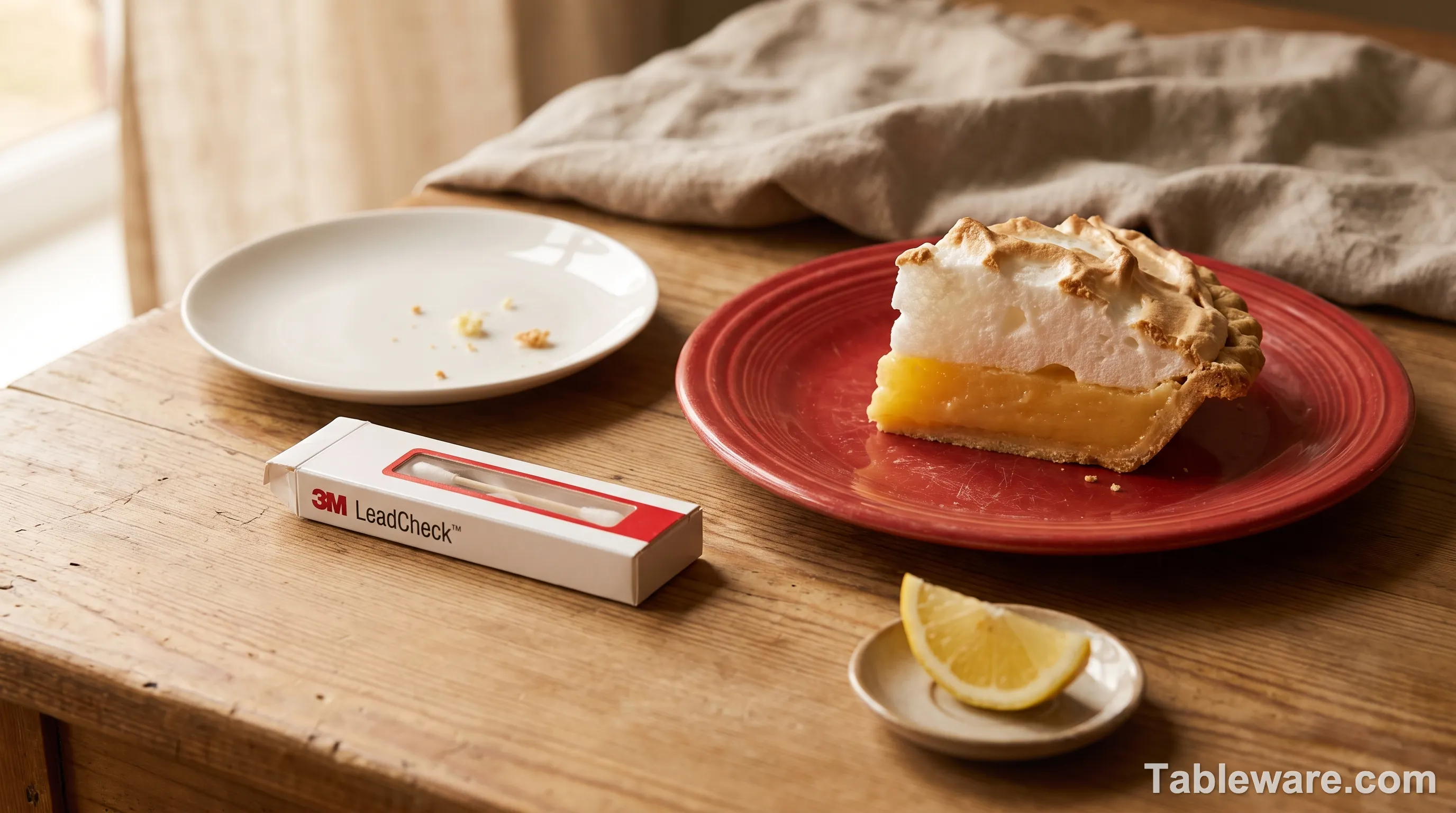
Home lead swab test kits — the 3M LeadCheck, D-Lead, or Lead Inspector kits — are the most reliable home option. They're swab-based tests designed for paint, but they work on ceramic glazes. You swab the surface, wait 30 seconds, and the swab changes color if lead is present above a certain threshold (typically 600 ppm or higher in lead-based paint, but the swab is sensitive enough to detect at the FDA-action level on glazes). The cost is about $10 to $25 for a kit of 8 to 16 swabs. The catch: the swab tells you if lead is present in the surface, but not if it's leaching at FDA-actionable levels. A piece can have detectable lead in the surface and still pass FDA leach testing. The swab is a screening tool, not a pass/fail test. I keep a kit of 3M LeadCheck swabs in the drawer for any new-to-me vintage piece.
Lemon juice (or vinegar) test — the folk method. You put lemon juice or white vinegar on the glaze surface, leave it for 15 minutes, and see if any color transfers or the surface dulls. This is unreliable. Most modern glazes won't show any visible change, and the test doesn't tell you if leaching is happening below the threshold of visual change. I'd only use it as a sanity check on pieces you're already suspicious about.
Microwave test — the internet myth. There's no reliable home microwave test for lead or cadmium in glaze. The microwave heats water in food, not the metal content of the glaze. Don't use it.
Send to a lab. If you have a piece you actually care about — a family heirloom, a $300+ studio pottery piece, anything you use every day with acidic food — send it to a lab. The standard test is XRF (X-ray fluorescence) for surface composition, plus a leach test for actual release. The cost is $30 to $150 per piece. Two labs I trust for consumer ceramics: The Center for Environmental Health (CEH) in Oakland, CA, and GalsonLabs (formerly Environmental Testing Labs) in South Charleston, WV. Both will run a single-piece test for a flat fee. The report takes 2 to 4 weeks.
The pragmatic bottom line: if your dinnerware is post-1990, from a major US or EU brand, and you've been using it for years without a Prop 65 recall hitting the news, you're almost certainly fine. If it's pre-1990, vintage, imported, hand-painted, or chipped, do the swab test. If it fails or you don't trust it, send it to a lab. Don't stress about plates you've been eating off for 20 years.
Food Safe Ceramic Glaze: A Buyer's Checklist for 2026
Here's the 7-point checklist I use when buying new tableware, in roughly the order I'd run through it.
Made where. US, EU, UK, Canada, Australia, Korea, Japan all have enforceable standards. Mexico and Brazil have partial standards. China has improved substantially since the 2017 import alerts, but "Made in China" alone is not a disqualifier — it's just a flag to look for the rest of the checklist. Avoid pieces with no country of origin at all — Etsy imports and "handmade" labels sometimes leave this off.
Sold by whom. A Williams-Sonoma, Crate & Barrel, West Elm, IKEA, Sur La Table, or Food52 seller is generally going to have third-party-tested products. A random Etsy shop with a "food safe glaze" claim and no documentation is not.
Stated standards. "FDA-compliant," "California Prop 65 compliant," "food-safe glaze" are not equivalent. Look for the strictest combination. If a product says "meets FDA standards" but doesn't address Prop 65, ask the seller.
Lead-free claim. This is the most direct. A "lead-free glaze" claim from a US or EU manufacturer is generally reliable. A "lead-free" claim from a small Etsy studio without documentation is not.
Price point. A 12-piece dinner set at $60 from a known retailer (IKEA, Target Threshold, Gibson) is almost certainly going to be food-safe. A 12-piece dinner set at $600 from a hand-painted Etsy shop with "lead-free" claims is the category you want to verify.
Color test. Bright cadmium reds, oranges, and yellows (especially on the food-contact surface) are the most likely to leach. Earth tones, cobalt blues, and iron reds are almost universally fine.
Condition. Chips, cracks, crazing — any of these means the glaze is compromised. Retire the piece from the dinner table.
I'll add one more thing that's not on the checklist but should be. If you're collecting vintage or antique pottery, treat it as decorative unless you can verify the glaze. That doesn't mean it's not beautiful. My grandmother's collection of 1950s Homer Laughlin is on a shelf in my dining room. It's gorgeous. It doesn't touch food. If you want to eat off a vintage piece, the swab test and lab option are there.
The ceramic glaze industry has come a long way since 1992. The FDA limit is outdated. The Prop 65 framework is the strictest practical standard. If you buy new from a regulated market, you're almost certainly fine. If you inherit vintage or buy antique, run the swab test. That's the playbook.
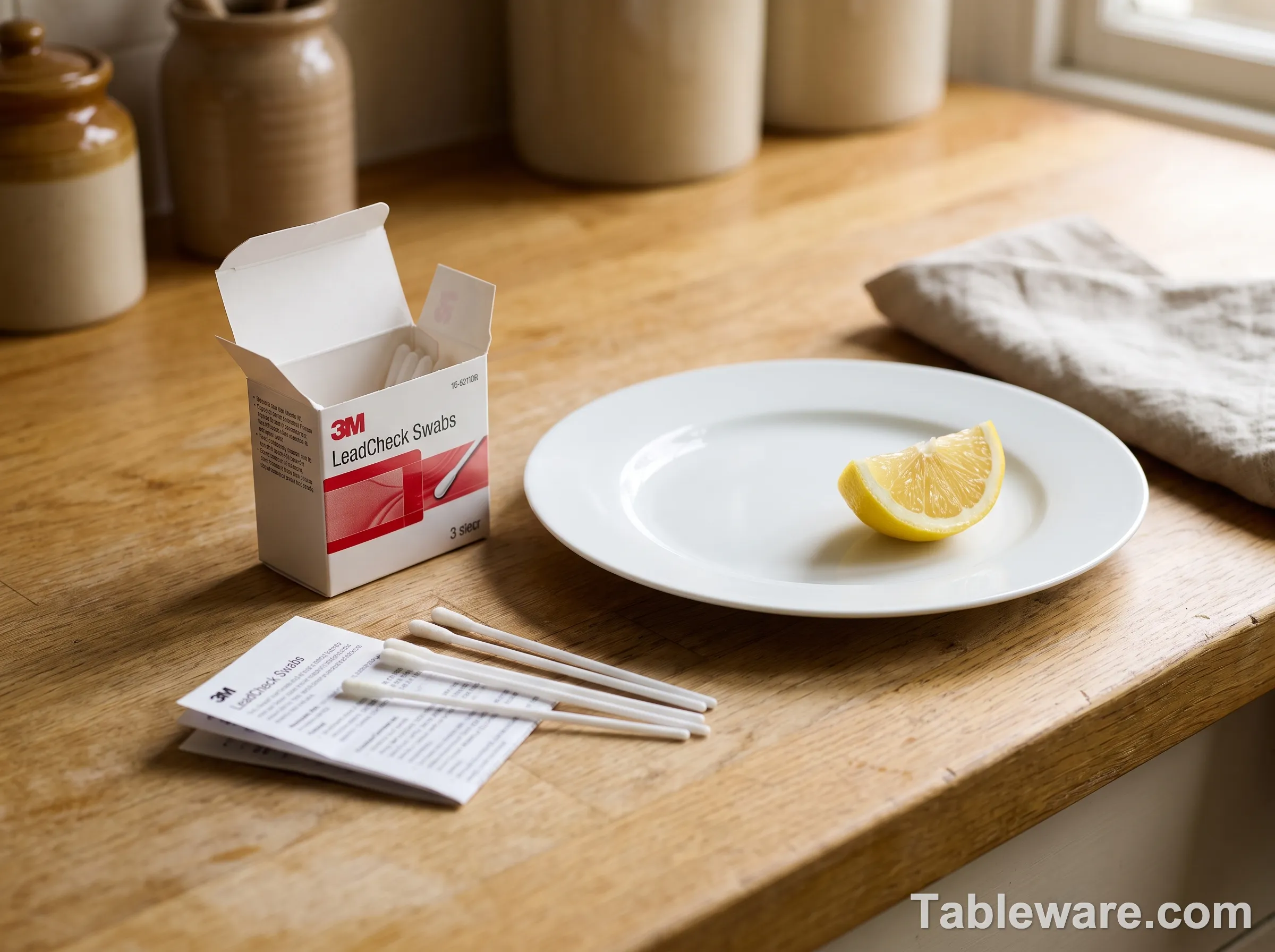
Fig 3. A $15 3M LeadCheck kit from any hardware store or Amazon is the most useful home tool for screening vintage or estate-sale pottery. The swab changes color if lead is detectable above a threshold. It's a screening tool, not a pass/fail — but it catches the obvious failures in seconds. For pieces that matter, follow up with a lab test ($30-150 per piece).
The Fiestaware red plate from 1962 is still beautiful. It belongs on a shelf, in a hutch, on a wall. It's not a dinner plate anymore. That's not a tragedy — it's just the right place for it. A 2026-made white porcelain plate from Heath, East Fork, or IKEA is the plate you eat off of. The vintage piece gets the Instagram photo, the white plate gets the dinner. Everybody wins.