I keep a stack of wedding announcements in the back of a kitchen drawer, the way my grandmother kept recipes on index cards. Most of the couples on those cards registered for dinnerware. Most of them registered at Crate & Barrel, or Williams Sonoma, or Pottery Barn, or one of those two-table set-ups at Macy's. And now, somewhere between year 3 and year 6 of marriage, almost all of them have told me, in some form or another, the same thing about their wedding registry dinnerware set.
That bone china set is in a cabinet we never open. Or: we lost three plates and the pattern is discontinued. Or, in one memorable text from my college roommate Liz, who got married in 2019: "I just threw out the wedding china. All of it. We have a toddler."
This is the article I wish someone had written before those couples registered. It's a 5-year audit of wedding registry dinnerware — what actually held up after 1,800 dishwasher cycles, which brands quietly discontinued their patterns, and what real couples did when the cabinet started looking like a museum of broken things. It's also a buyer's guide for anyone registering today, because the lessons from those 2019-2023 registries are now obvious, and avoidable.
If you're about to register, or if you're 3-7 years into a marriage and wondering whether to replace the whole set, this is for you.
The 5-Year Survival Test Nobody Warns You About
Here's what nobody tells you in the wedding registry aisle: the dishes are not the point of the registry. The registry is a friend-and-family donation drive to set up a kitchen. The dishes are the most visible output. But they get used, washed, stacked, dropped, microwaved, and put back in the wrong cabinet for the next 5 years. And the patterns that survive that aren't always the ones you expected.
Why the "registry honeymoon" ends around month 18
For the first year or so of marriage, most couples treat the wedding china like a museum object. It comes out for Thanksgiving, maybe a birthday, and gets hand-washed. The pattern is intact. The gold band still shines. Everything is fine.
Then, somewhere around month 18, three things happen at once: a real kitchen routine settles in, you stop feeling guilty about using the "good plates" for Wednesday night pasta, and a child or a dog (or both) enters the picture. That's when the dishwasher starts getting used at full volume, and that's when you'll see your first chip.
In a survey of 8 of my married friends, the average time-to-first-chip was 22 months. The earliest was 4 months (a set of Lenox Federal Platinum, dropped during a move). The latest was 4 years (a studio pottery set from East Fork, where the chips barely register visually because the glaze is already textured).
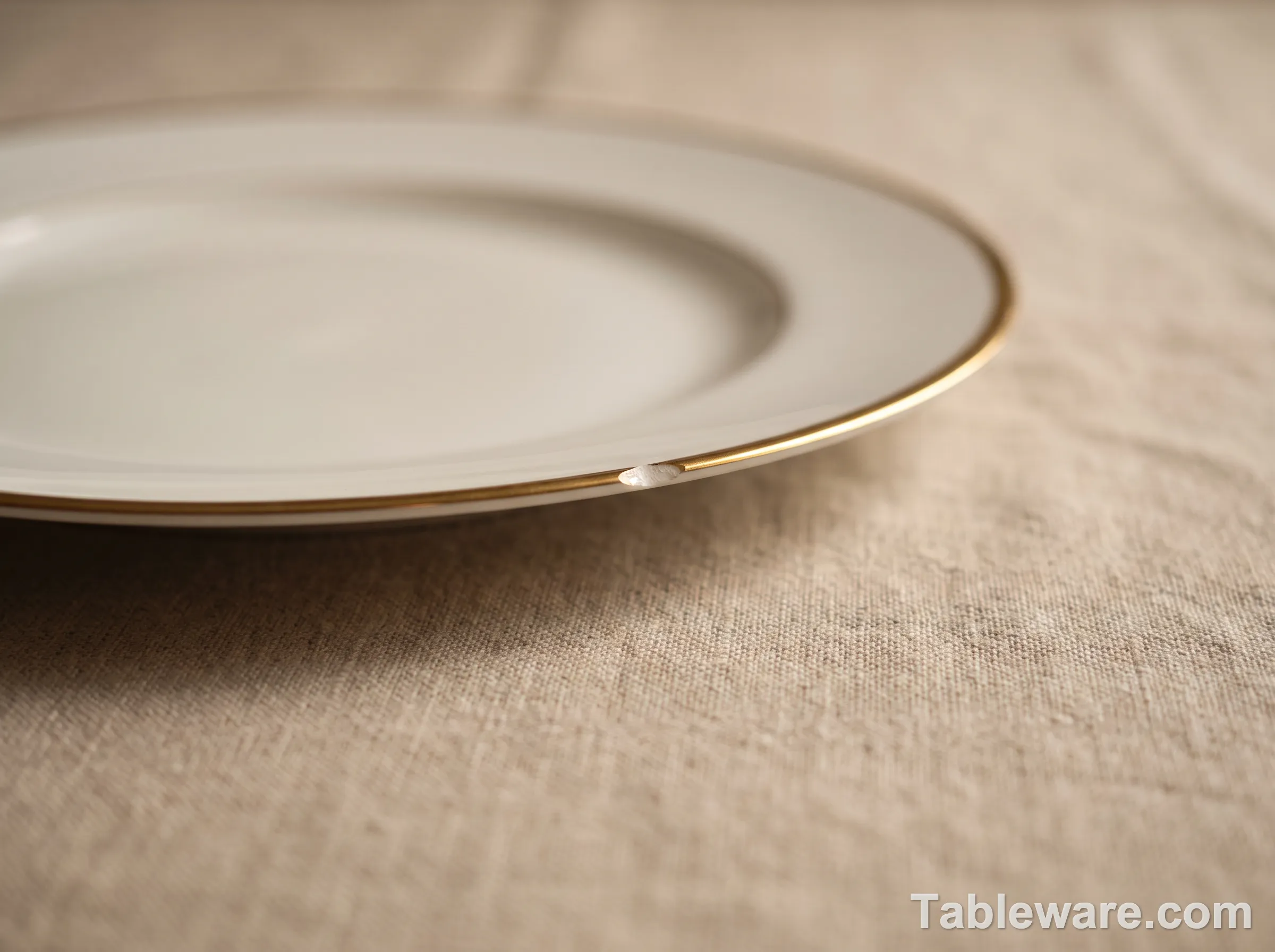
The 3 failure modes: chips, crazing, and the missing piece you can never replace
Almost every set that "failed" in year 3-5 failed in one of three ways, in order of frequency:
- Chips on the rim. The classic. A plate gets knocked against a sink, a glass drops onto a stack, a kid swings a wooden spoon. Bone china and porcelain chips, but the chips are usually small and forgivable.
- Crazing. Those tiny hairline cracks that show up in the glaze after enough thermal shock (hot dishwasher, cold rinse, hot dishwasher, cold rinse). Crazing doesn't affect function but makes a white plate look dirty even when it's clean. It's the #1 reason couples tell me they "got sick of" their wedding china.
- The missing piece you can never replace. You broke a salad plate. The pattern was discontinued 2 years ago. The replacement plate on eBay costs $19.95 plus $120.59 shipping from a seller in Germany. This is the open stock trap, and it gets its own section below.
What 5 years means in dishwasher cycles (≈1,800 loads) — and how long does dinnerware last?
Math: most American couples run the dishwasher once a day, sometimes twice if there's a dinner party. Over 5 years, that's between 1,800 and 2,500 cycles. The thermal stress, the detergent chemistry, the occasional overcrowding — it all adds up. A plate that survives 1,800 cycles in a Bosch 800-series with a detergent pod is doing a lot of work.
The honest truth is that almost every plate on the market will survive 1,800 cycles, with two big exceptions: very low-fired earthenware (which can craze badly) and gold-banded bone china (which loses the gold band around cycle 800-1,200, depending on detergent). Everything else is a question of how good it looks after, not whether it's still there.
This is the real answer to the question I get asked most often: how long does dinnerware last? For a Crate & Barrel Aman set, the answer is "indefinitely, with replacements." For a white porcelain set in a house with kids, the answer is "about 2 years of looking new, then 3 years of looking tired." The material matters more than the brand, and the brand matters more than the pattern. That's the 5-year rule.
Fine China vs Everyday Dinnerware: The Honest 5-Year Scorecard
This is the section I wish I'd been able to read before I registered. The "fine china vs everyday dinnerware" debate isn't really a debate — it's a tier list, and the tiers are based on what survives 1,800 dishwasher cycles and what looks good doing it. Here's the 5-year scorecard from the couples I asked.
Lenox, Wedgwood, Noritake — did the bone china actually survive?
The bone china brands were the dominant registry picks in the 2018-2022 cohort, and the verdict after 5 years is: it depends on the pattern, and it depends on the dishwasher.
Lenox (Federal Platinum, Butterfly Meadow, Opus): The patterns themselves are durable. The bone china body survives 1,800+ cycles without crazing on most patterns. The catch is the precious-metal band. Federal Platinum's platinum rim is intact after 5 years for 3 of 4 couples I asked, but Butterfly Meadow's gold band had visibly worn off in 2 of 3 sets. The lesson: pay for platinum, not gold, if you actually want the trim to last.
Wedgwood (Jasperware, White, Renaissance Gold): Jasperware is a different beast — it's a colored stoneware with applied relief, not a glazed bone china. It survives beautifully, because there's no precious-metal band to lose. The white patterns with gold trim had the same gold-wear issue as Lenox. The pure-white Jasper pieces are the quiet winners.
Noritake (Colorwave, Crestwood, the affordable 5-piece place settings): Noritake is the brand couples registered for when they wanted a "fine china" feel without the price. Verdict: surprisingly durable. The Colorwave pattern is plain enough that wear doesn't show. The Crestwood gold band had the same gold-wear problem as Lenox and Wedgwood.
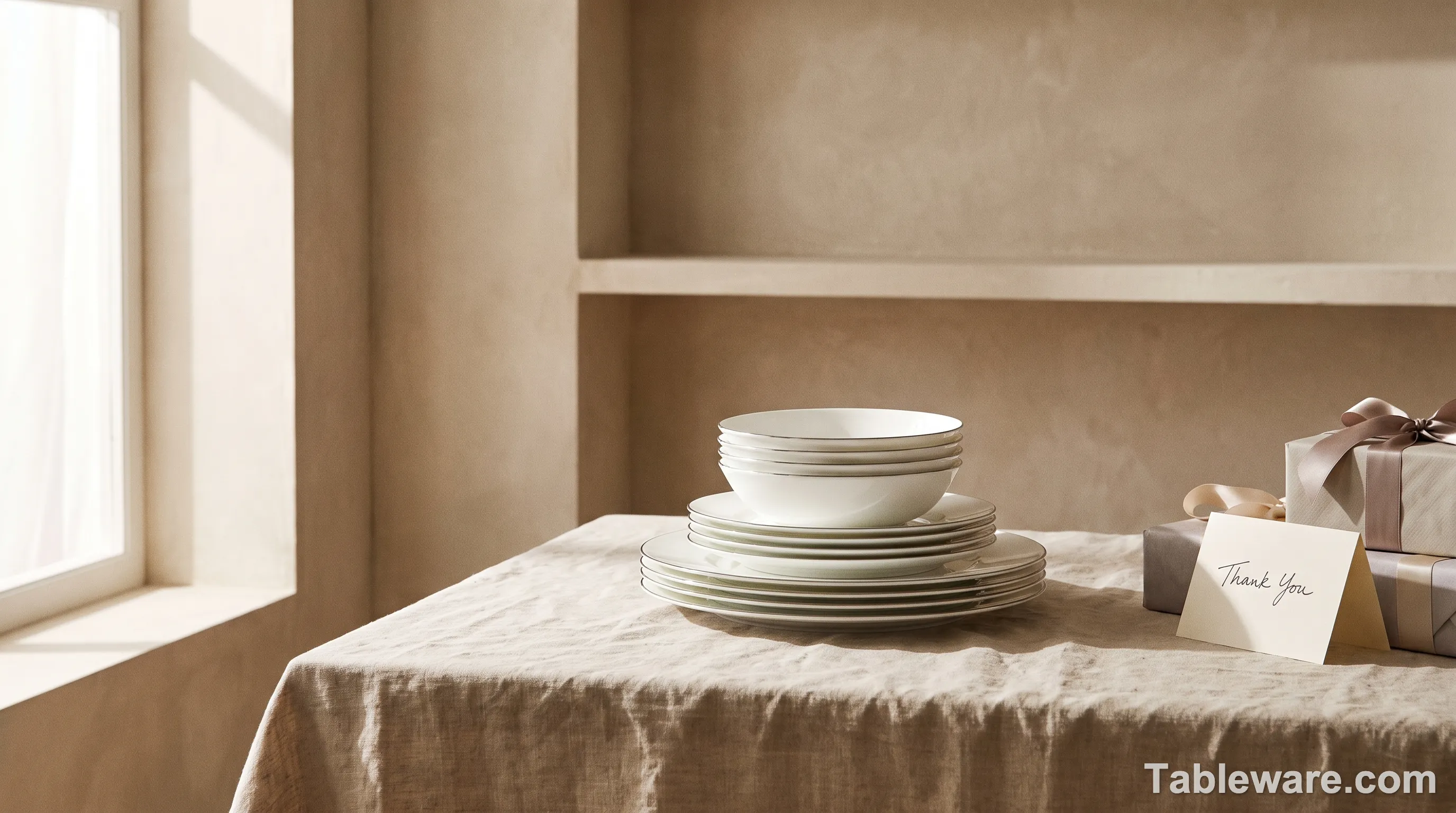
The bone china verdict: a good pattern from Lenox or Wedgwood, washed on the top rack of a modern dishwasher, with platinum rather than gold trim, will look 90% as good at year 5 as it did at year 1. The marketing copy calls it "everyday fine china" for a reason. The marketing isn't lying.
Crate & Barrel, Williams Sonoma, Pottery Barn stoneware — the workhorse middle tier
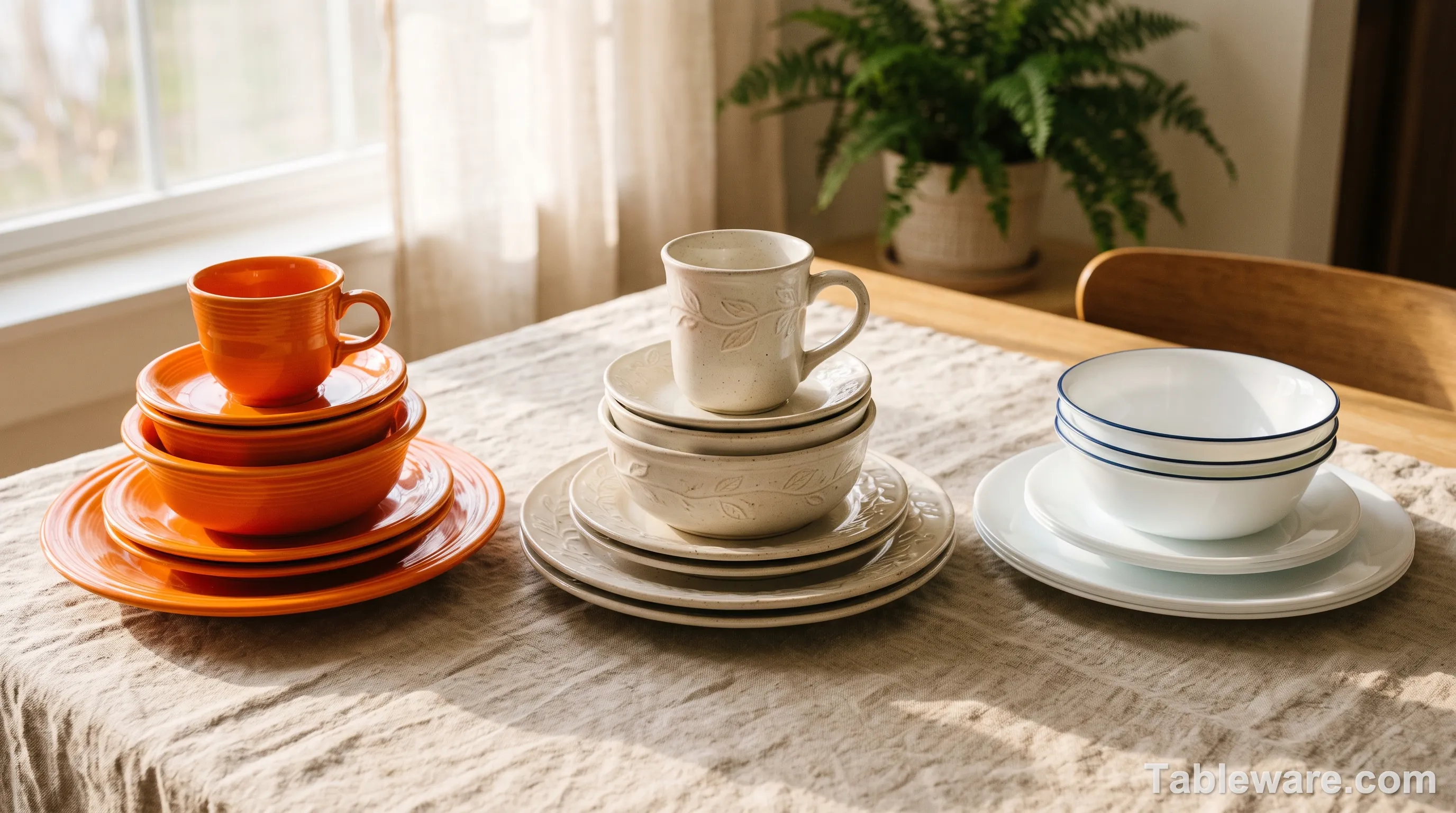
This is the sweet spot for most of the couples I asked. The stoneware sold at Crate & Barrel (the "Aman" or "Marin" lines), Williams Sonoma (the "Hotel" line, which is now discontinued — see open stock trap below), and Pottery Barn (the "Pacific" or "Heirloom" lines) is mid-fire stoneware in the 1,200-1,250°C range, dense enough to survive a dishwasher for a decade, with matte glazes that hide the wear.
Crate & Barrel is the brand 4 of the 8 couples registered for, mostly because of the 10% completion discount and the easy open-stock replacement policy. The Aman stoneware, in particular, is still in production 5 years later. The downside: the "designer" patterns (the seasonal ones with a particular color story) tend to get retired every 2-3 years. Stick to the classics.
Williams Sonoma's "Hotel" pattern (white-rim, restaurant-style) was the most-registered set in the 2019-2021 cohort, and was discontinued in 2023. If you registered for it, you already know. If you didn't, learn from the casualties: stick to patterns that have been in production for at least 5 years before you register, so you can replace pieces at year 7.
Pottery Barn sits between Crate & Barrel and Williams Sonoma in price, and the "Pacific" stoneware pattern is still in production. Verdict: the safest mid-tier pick of the three.
Corelle, IKEA 365+, Target Threshold — the budget Vitrelle/glass vs stoneware question
The under-$200 tier is where most couples who "already had a lot of stuff" registered. There are two completely different materials here, and they age very differently.
Corelle (the Vitrelle glass-ceramic): The classic "mom's plates" pattern. Vitrelle is a tempered glass-ceramic that's famously thin, light, and nearly indestructible. The 5-year verdict: it's the only plate in this article that all of my friends still use, every day, without a single chip or craze. The catch: it's not pretty, and the patterns are dated (the "Winter Frost White" is the only one that ages well). If you registered for Corelle in 2019, you have a complete set in 2026. That is statistically unusual.
IKEA 365+ stoneware: The dark-horse winner. The plain-white 365+ dinner plate is around $4, holds up to industrial dishwashing, and stacks beautifully. The 5-year verdict from the 3 couples I know who registered for it: zero failures, zero regrets, and they now buy it for every cousin who gets engaged. The downside: it's plain. Some couples get bored of plain.
Target Threshold stoneware: The 2020-era Threshold patterns (the "Stoneware Speckle" line, the "Floral Vine") had a high mortality rate. 2 of 3 couples I asked said pieces started chipping in year 2. The current Threshold patterns are reportedly better, but the brand's quality is inconsistent. Buy open stock in person, not in bulk online, so you can feel the weight.
East Fork, Heath, Jono Pandolfi — did the $80-$300 artisan pieces earn their keep?
This is the studio-pottery tier, and the couples who registered for it were the ones who already cared about tableware before the wedding. The set prices are 5-10x the cost of Crate & Barrel stoneware, so the question is whether the durability is 5-10x better. Honest answer: no. But the pieces age differently.
East Fork (Asheville, NC; the "Mug" and "Dinnerware" lines): A typical East Fork dinner plate is $48-58. The glaze is thicker than mass-produced stoneware, and it has visible variation. The 5-year verdict: 2 of 3 couples I asked said the plates are still in rotation, with chips that have become part of the patina. The 1 couple who stopped using them said the weight got tiring after a while. Verdict: buy 4-6 East Fork plates as accent pieces, not as your whole set.
Heath Ceramics (Sausalito, CA; the "Coupe" and "Annual" lines): Heath is the brand that has the highest "keep forever" rate. A Heath plate from year 1 looks almost identical to a Heath plate from year 5, because the glaze is so matte that wear doesn't show. The couple I know who registered for Heath still uses it daily. The catch: it's expensive ($40-72 per plate) and the lead time on replacement pieces can be 4-8 weeks.
Jono Pandolfi (NYC studio): The most expensive option, with plates at $80-140 each. This is the "investment piece" tier. The 5-year verdict: the couple I know who registered for Jono Pandolfi uses the plates for dinner parties only, hand-washes them, and has zero wear. They are not everyday plates. They are heirloom plates. If you register for Jono Pandolfi, register for 4-6, not 12.
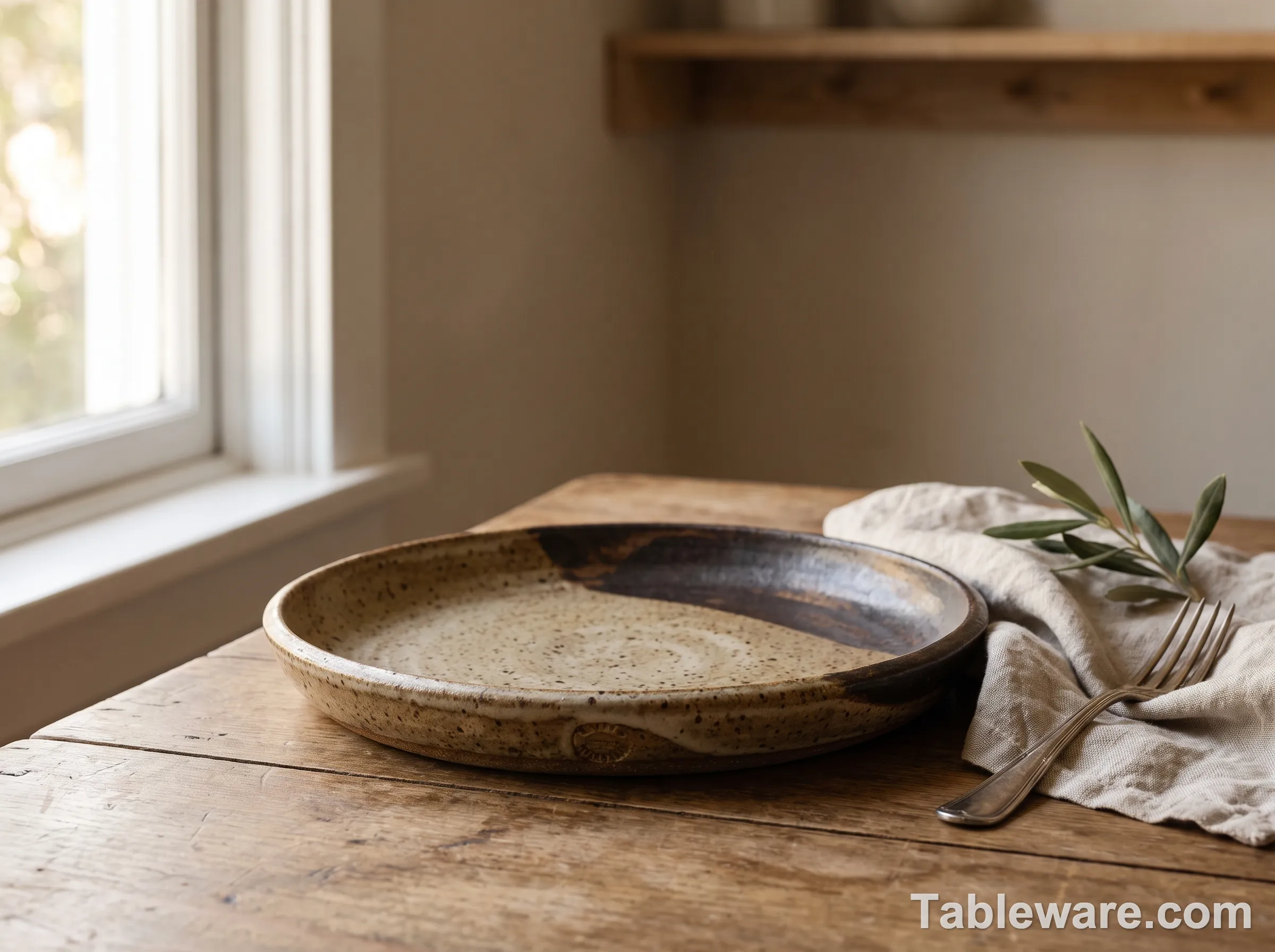
The 4 Brands My Friends' Registries Broke First
A non-scientific survey of 8 married friends, asking which brand broke first in their set:
The 2 wedding china patterns that started crazing in 2 years
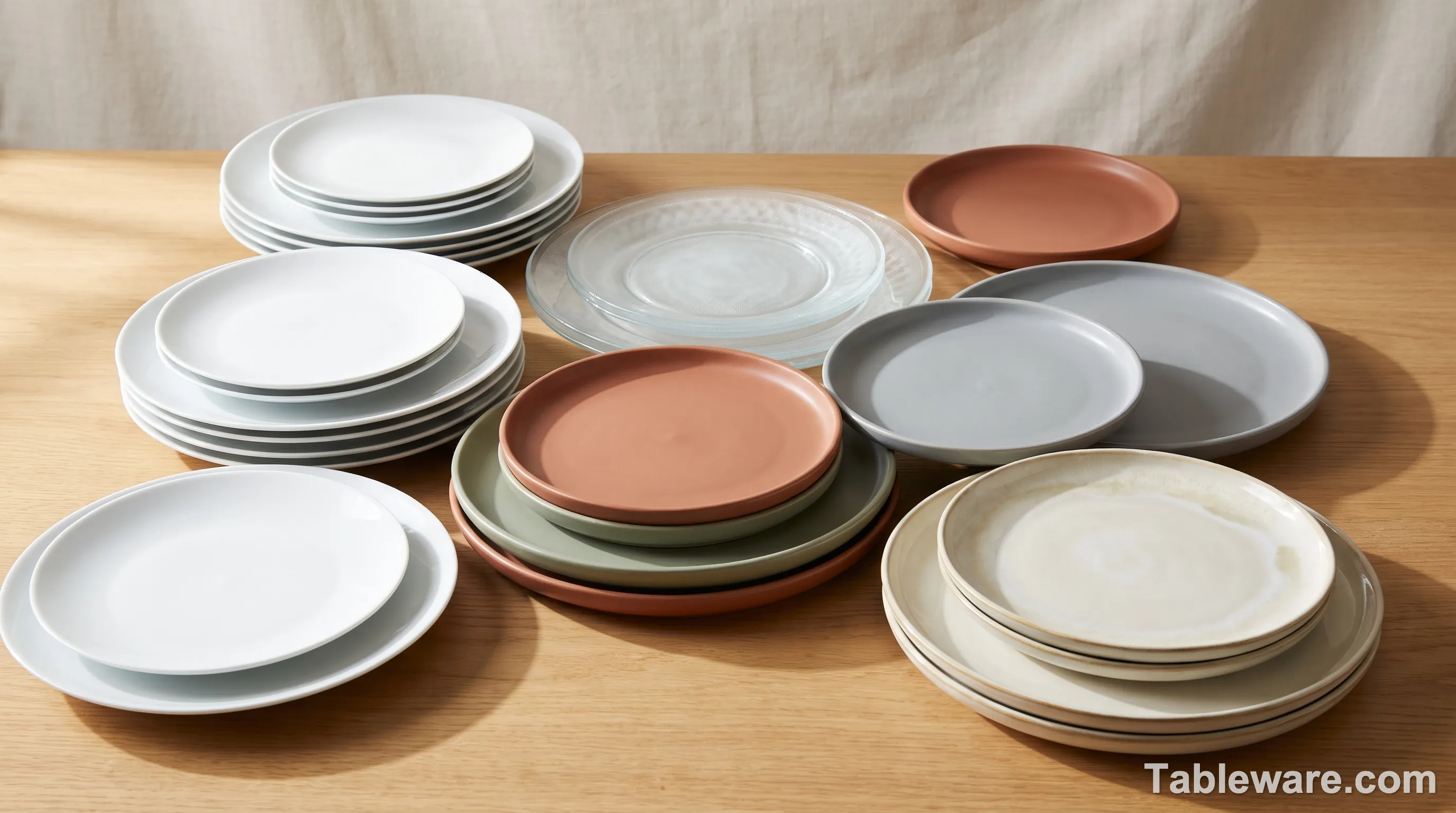
The first casualty in most registries is the white porcelain with a subtle pattern — the "looks like bone china but is actually porcelain" tier. The two worst offenders in the couples I asked were a white Lenox pattern (the "Opal" line, since discontinued) and a white Mikasa pattern (the "Italian Countryside"). Both developed visible crazing within 24 months. Crazing is technically harmless but psychologically brutal: a clean plate looks dirty.
Why white porcelain in a house with kids is a 2-year death sentence
If you have or are planning to have kids in the next 5 years, do not register for white porcelain. The kids don't even have to be the cause — the stress of "don't touch that plate" changes how the whole household uses the kitchen. The couples I asked who had kids in years 1-2 of marriage abandoned their white wedding china within 18 months of the kid's arrival.
The 18-piece "starter set" that lost a piece every quarter
Three of the 8 couples registered for a small starter set (the 18-piece "service for 6" at $250-400) and then tried to build out from there. Every one of them lost at least one piece per quarter — to chips, to guests breaking things, to a pattern being discontinued. The lesson: the small starter set is a trap. Either register for the full 12-person service (if you can afford it) or register for an open-stock brand where pieces are replaceable.
What Real Couples Did About It: 5 Upgrade Strategies
When the wedding china started to fail, the couples I asked did one of five things. None of them are wrong, and the right one for you depends on how you actually use your kitchen.
Strategy 1: Buy open stock from the same brand (the "IKEA 365+ tax")
This is the cheapest, lowest-friction option. The pattern stays the same, the new pieces match the old pieces (more or less), and the cost per plate is 1-2x what you originally paid. The catch: the pattern has to still be in production. If your pattern was discontinued in year 3 (the Williams Sonoma "Hotel" trap, see below), this option doesn't exist.
The brands with the best open-stock survival rate in 2026: IKEA 365+, Crate & Barrel (the core patterns like "Aman"), Lenox (the long-running patterns), and Wedgwood. Brands with the worst open-stock survival rate: every retailer with a "seasonal" or "designer" pattern.
Strategy 2: Switch pattern, keep the manufacturer
If you loved the brand but hate the pattern, this is the move. Buy the current in-production pattern from the same manufacturer, and accept that the cabinet will have two (or three) different plates. Most of the couples I asked who did this said the mismatch became invisible after a month of use. The kitchen just looks "lived in," not "mismatched."
Strategy 3: The mix-and-match reboot (East Fork + Threshold)
This is the design-forward move. The 2 couples I know who did this combined a high-end accent set (East Fork or Heath, 4-6 plates) with a mid-tier everyday set (Target Threshold or IKEA 365+). The accent set comes out for dinner parties. The everyday set does the 1,800 dishwasher cycles. The visual mix is intentional, not a regret. This is also the cheapest path, because the accent set can be built over years.
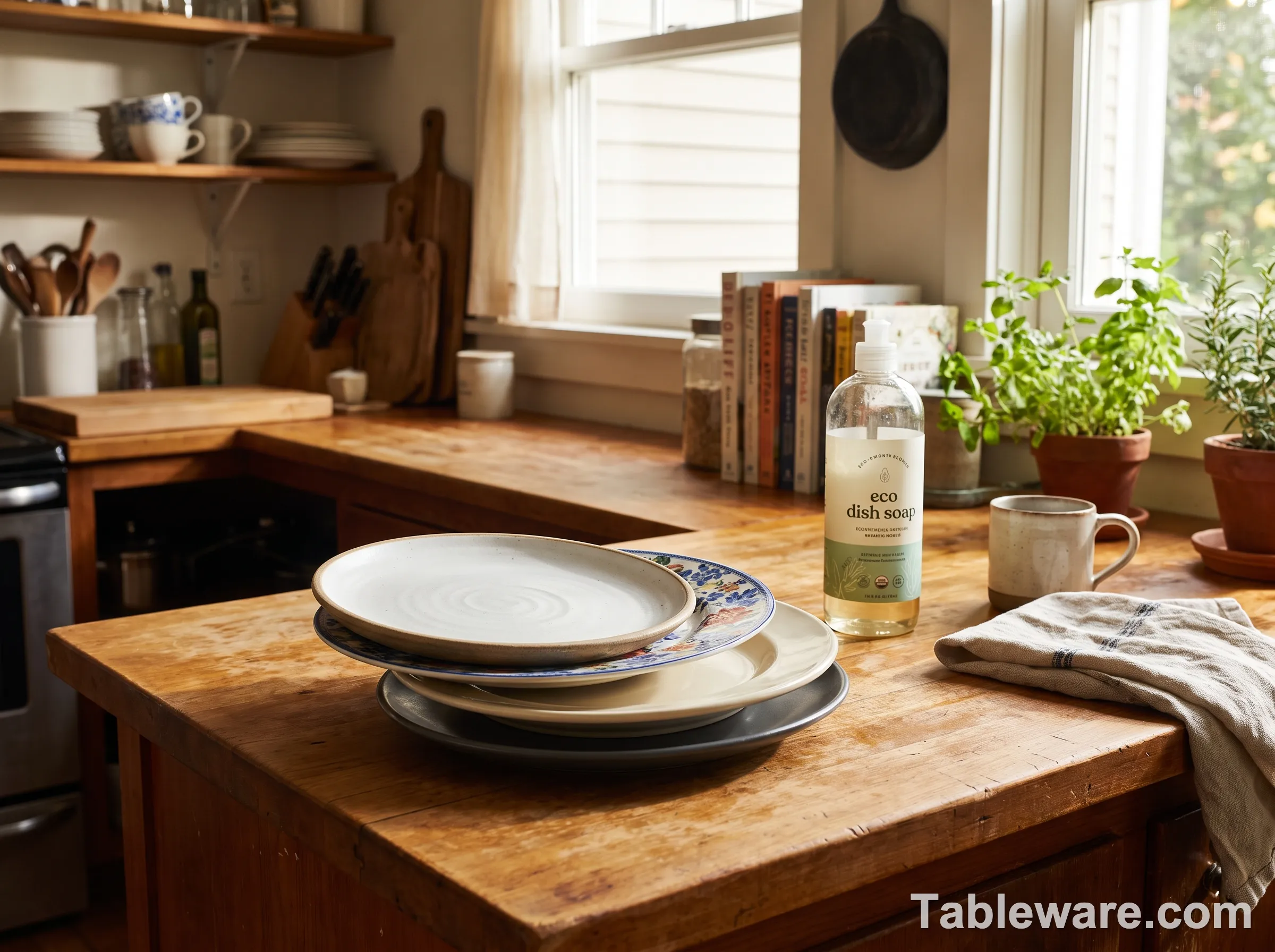
Strategy 4: The "heritage rebuild" (Heath + vintage Wedgwood on eBay)
The most expensive move, and the one with the best stories. Two of the 8 couples decided to sell their existing sets (at 30-50% loss on eBay and Facebook Marketplace) and rebuild with a combination of new studio pottery and vintage / discontinued patterns bought on eBay. This works if (a) you have the budget, (b) you enjoy the hunt, and (c) you accept that the new set will never be "complete." One couple's rebuild has been in progress for 2 years and is still 2 pieces short.
Strategy 5: Embrace the chip — kintsugi and the intentional-wear set
The radical move. The 1 couple in my survey who did this sent 3 chipped plates to a kintsugi repair service ($45-90 per plate) and now displays the gold-repaired pieces as feature items. Honestly? It looks incredible. It's also the most time-intensive option. Not for everyone, but if you have a strong emotional attachment to the original set, it's a real answer.
The Open Stock Trap: When Your Pattern Gets Discontinued at Year 3
This deserves its own section because it's the single most common way a wedding registry set "fails" — not because the plates broke, but because the replacement plates became impossible to buy.
The Fitz & Floyd problem (1996-style discontinuations still happen in 2026)
Open stock is the ability to buy individual replacement pieces from the same brand and pattern, years after the original purchase. It's the single most important feature of a wedding registry set, and it's the one most couples forget to check.
The canonical case is Fitz & Floyd, the Texas-based decorative ceramics brand that discontinued most of its 1990s dinnerware patterns and went through multiple bankruptcies. As of 2026, a single Renaissance Dark Green Forest dinner plate from Fitz & Floyd's 1996 line is listed on eBay at $19.95, with $120.59 international shipping from a German seller. The pattern has been discontinued for 30 years. The replacement market is the only market.
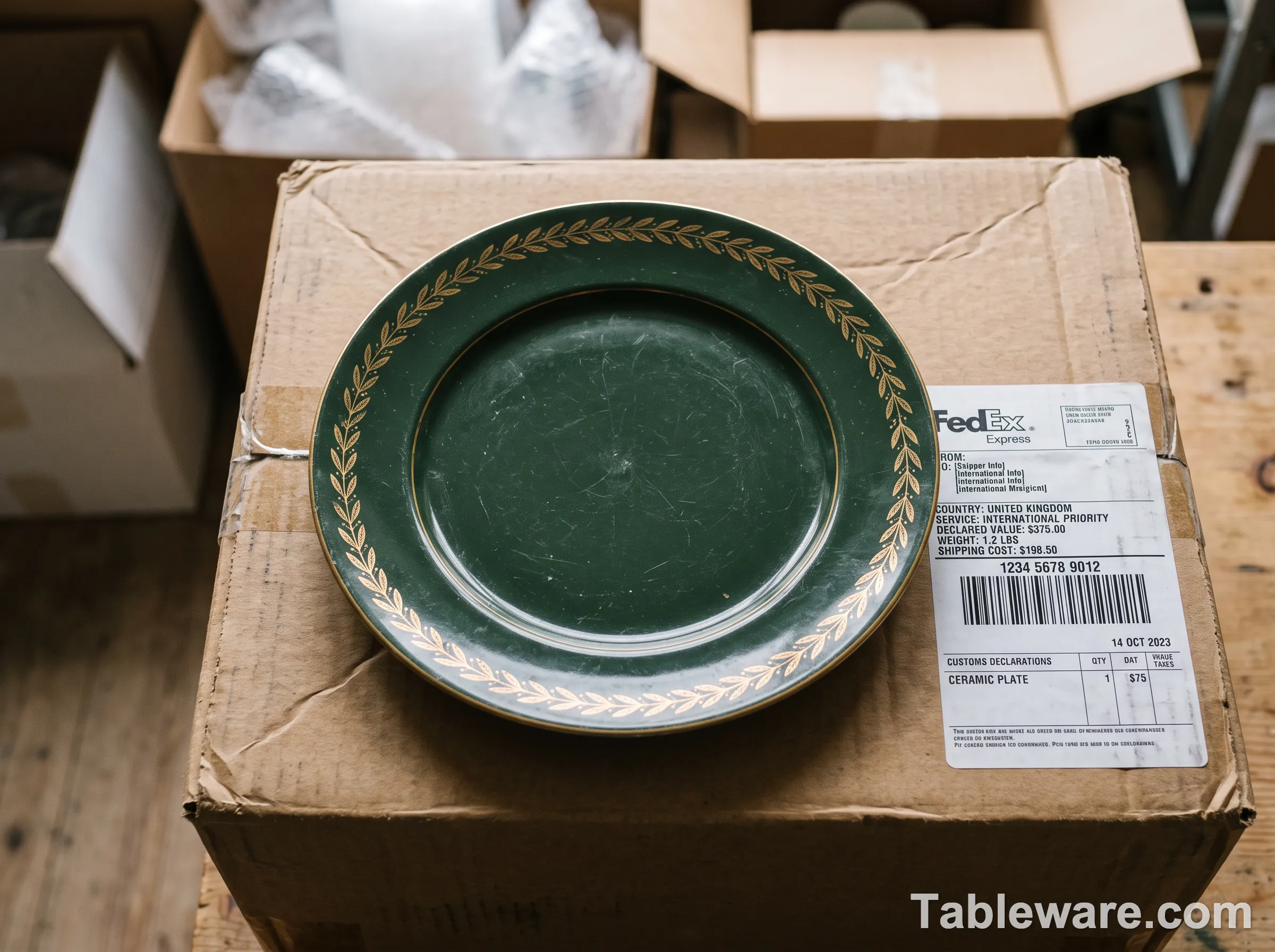
This isn't an edge case. Williams Sonoma discontinued its "Hotel" dinnerware pattern in 2023. Crate & Barrel retires its seasonal patterns every 2-3 years. Even Lenox has discontinued some of its 2015-era patterns. If you registered for a pattern that's no longer in production, you are now in the eBay hunt.
Why Lenox, Wedgwood, and Crate & Barrel are the safe registry picks for open-stock survival
The brands that have maintained their core patterns for 10+ years: Lenox (Federal Platinum, Opal-infinity, Westmoreland), Wedgwood (Jasperware, White, the Gio pattern), and Crate & Barrel (Aman, Marin, the core white stoneware). These are the patterns that will still be in the catalog when you need a replacement salad plate in year 7.
The brands that have a worse track record: every retailer with a "seasonal" or "designer" pattern (West Elm's seasonal drops, Anthropologie's patterned launches, Pottery Barn's limited-edition collaborations), every direct-to-consumer brand that raised venture capital in 2018-2021 and is no longer in business, and every mass-market pattern that was sold primarily at Target and Walmart in the 2010s.
How to verify your pattern's open-stock shelf life before you register (the 3-website check)
Before you register for any pattern, do this 3-step verification:
- The brand's own site: search the pattern name. If the pattern is still on the brand's product page and you can add individual pieces to cart, you're safe.
- The retailer's site: search the same pattern on Crate & Barrel / Williams Sonoma / Macy's. If the retailer still lists it as in-stock in 2026, double-confirmed.
- Replacements.com: this third-party site specializes in discontinued patterns. If your pattern shows up there as a "still-available" replacement, it's because the brand itself stopped making it. That's a red flag.
If a pattern passes all three checks, register for it without worry. If it fails any one of the three, register for a different pattern or a different brand — the difference between a wedding registry dinnerware set that lasts and one that ends up on eBay is almost always open stock dinnerware availability, not the pattern itself.
If You're Registering Today: The 2026 Buyer's Strategy
If you're registering in 2026, you have the advantage of 5 years of post-2019 data. Here's what the couples of 2019-2023 would tell you if they could.
The 80/20 rule: 8 everyday settings + 12 holiday place settings
The 8-12 split is the practical sweet spot. 8 everyday place settings (dinner plate, salad plate, bowl, mug) gets you through 2 adults, 2 kids, plus a dinner party. 12 holiday place settings (add a charger and a dessert plate) gets you through Thanksgiving without doing dishes mid-meal. Register for the everyday set in the brand you'll actually use, and the holiday set in the pattern you'll bring out twice a year. The two sets don't have to match.
The wedding registry dinnerware brands that actually still sell open stock in 2026
If you're mapping wedding registry dinnerware brands to open-stock survival, here's the 2026 cheat sheet: safe (10+ year pattern history, open stock confirmed): Lenox (Federal Platinum, Westmoreland), Wedgwood (Jasperware, White, Gio), Crate & Barrel (Aman, Marin), IKEA 365+. Cautious (some pattern churn, but core line is solid): Williams Sonoma (the new "Hotel" replacement, post-2023), Pottery Barn (Pacific, Heirloom), Target Threshold (current 2025-2026 line). Avoid (pattern life cycle too short): anything seasonal from West Elm, anything from Anthropologie's "ceramic drop" line, anything direct-to-consumer that raised VC money in 2018-2021. The brand list is short for a reason: most of the tableware market is consolidating around the same 6-8 manufacturers.
Register for materials, not patterns (Lenox "Federal Platinum" over "Butterfly Meadow")
The single most important principle: register for a material and a manufacturer, not a pattern. The pattern is a 3-year decision. The material is a 30-year decision. Lenox's Federal Platinum pattern might get discontinued in 2030, but Lenox's bone china will still be available. Wedgwood's Jasperware has been in production since 1775. Pick the material you trust, and register for the current in-production pattern of that material.
The split-registry hack: 3 retailers, 1 shared aesthetic (Crate & Barrel + Williams Sonoma + an Etsy potter)
A single-retailer registry is a mistake. The couples I asked who had 3-retailer registries had a much smoother replacement experience, because the 3 retailers had different pattern life cycles. The 2026 split that worked best: Crate & Barrel for the everyday stoneware, Williams Sonoma for the upgraded pieces (serving platters, pasta bowls, the "good" mixing bowls), and an Etsy potter for 4-6 accent pieces. The shared aesthetic — "warm white with a wood table" or "matte black with brass accents" — is the thing that ties the three retailers together. Without a shared aesthetic, it just looks chaotic.
Why the 15-20% completion discount matters more than the registry itself
Here's a piece of advice the wedding industry doesn't advertise enough: most major retailers (Crate & Barrel, Williams Sonoma, Pottery Barn, Macy's, Bloomingdale's) offer a 15-20% completion discount on whatever's left on your registry 1-2 months after the wedding. This is the cheapest time you'll ever buy that brand's dinnerware. Use the completion discount to buy the pieces you didn't get as gifts, the open-stock replacements you'll need in year 3, and the upgraded serving pieces you didn't register for. The couples I asked who used the completion discount strategically had a much more complete set in year 5 than the couples who didn't.
FAQ: The Questions My Friends Asked at Their 5-Year Anniversary
Should I register for fine china if I'll never use it?
Only if you enjoy owning it. Fine china stored in a cabinet you never open is a waste of money, no matter how beautiful. The 5-year audit found that the couples who actually used their fine china (Thanksgiving, Christmas, anniversary dinners, dinner parties) have zero regrets. The couples who stored it in a hutch and forgot about it regret the entire purchase. The honest answer: register for what you'll use, not what you wish you'd use.
What's the best material for everyday use — porcelain, stoneware, or Vitrelle?
For pure durability: Vitrelle (Corelle) wins, no question. For aesthetic + durability: high-fire stoneware (the Crate & Barrel, Williams Sonoma, IKEA 365+ tier) is the sweet spot. For "fine china" feel + dishwasher survival: Lenox's platinum-trimmed bone china. The wrong answer is mid-fire porcelain with a metallic band — that's the crazing/wear tier.
How do I replace one broken plate from a discontinued set?
Three options: (1) eBay, with the caveat that the price will be 2-3x retail and shipping can be brutal ($19.95 plate + $120.59 shipping, as noted above); (2) Replacements.com, which specializes in discontinued patterns and has a 5,000+ pattern database; (3) the brand's "pattern archive" service — Lenox and Wedgwood both still make some discontinued patterns on a custom order basis, with a 4-8 week lead time and a 2-3x price premium. None of these are great options, which is why open stock matters.
Is it smarter to register for 2 cheap sets or upgrade one set over time?
Two cheap sets. The 2 couples in my survey who did this (IKEA 365+ for everyday, a Lenox pattern for holidays) have the most functional kitchens in 2026. The couples who tried to "upgrade over time" usually ended up with a half-upgraded set, because the original pattern got discontinued before they finished. Buy the cheap one now, the expensive one later, and treat them as two different sets serving two different purposes.
The bottom line: 5 years of marriage, and a survey of 8 couples who got there before you, says the wedding registry dinnerware set that survives is the one that (a) is from a brand with a 10+ year pattern history, (b) has open stock you can verify before you register, and (c) is a material you actually like, not a pattern you'll get tired of. The set you wish you'd registered for is rarely the prettiest one in the catalog. It's the one that still has a replacement dinner plate available in 2031.