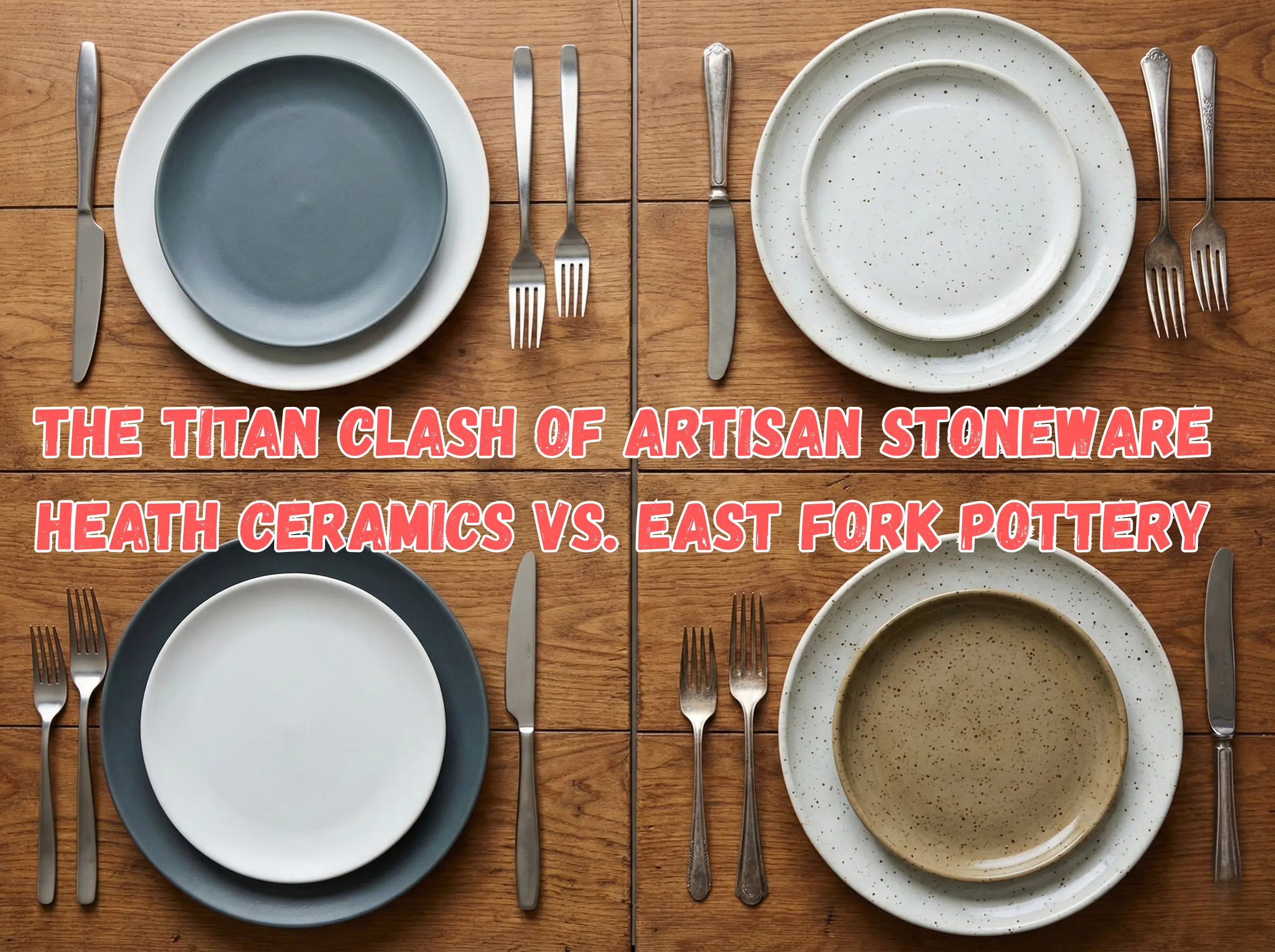
In the realm of high-end, everyday dinnerware, few decisions are as polarizing—or as expensive—as choosing between Heath Ceramics and East Fork Pottery. They are the undisputed heavyweights of American-made artisan stoneware. To have a stack of either on your open shelving is to signal a specific kind of dedication to craftsmanship, aesthetics, and the rituals of the table.
But if you are looking to invest in a "forever set"—dinnerware meant to survive daily dishwashing, enthusiastic steak cutting, and potentially be passed down to the next generation—the choice between these two brands is agonizing. They share a similar orbit but possess vastly different gravitational pulls.
Heath Ceramics is the established icon, the mid-century modern elder statesperson whose architectural forms defined California cool. East Fork Pottery is the modern challenger, the North Carolina-based outfit that leveraged transparency, earthy robustness, and a cult-like social media following to redefine what "handmade" feels like in the 21st century.
This is not a review based on a quick unboxing. This is a deep-dive comparison based on living with both brands, analyzing their clay bodies, their glaze chemistries, their weight in the hand, and how they handle a Tuesday night spaghetti bolognese. If you are paralyzed by the choice between Sausalito soul and Asheville artistry, this guide is for you.
The Philosophy of Form: Architectural vs. Anthropomorphic
To understand how these plates perform on the table, you must first understand the intent behind their creation. The fundamental difference between Heath and East Fork lies in their origin stories and their approach to design.
Heath Ceramics: The Industrial Craft
Founded by Edith Heath in 1948, Heath Ceramics was born out of the mid-century modern movement. Edith was a lone woman in a male-dominated industry, a chemist as much as an artist. Her goal was to create ceramic shapes that were functionally obedient and aesthetically quiet, designed to let the food shine.
Heath’s aesthetic is architectural. The famous "Coupe" line, with its gentle curve and lack of a defined rim, feels incredibly streamlined. Even their rimmed plates have a precise, almost engineered quality. A key characteristic of Heath is the exposed clay rim—the "wipe." The glaze stops just short of the edge, revealing the textured, sandy clay body beneath. This isn't just an aesthetic choice; it’s a tactile anchor. When you pick up a Heath plate, your thumb naturally finds that raw clay edge, providing grip and a direct connection to the material.
The vibe is refined, understated, and incredibly consistent. A Heath plate bought today will likely nest perfectly with one bought twenty years ago. It is industrial craft at its finest—using machines to assist human hands to achieve a level of precision that pure hand-throwing cannot match at scale.
East Fork Pottery: The Human Hand
East Fork, founded by Alex and Connie Matisse (yes, that Matisse family) and John Vigeland, started as wood-fired potters making thousands of pots by hand in rural North Carolina. While they have scaled massively and moved to gas firing, their DNA is rooted in the folk pottery tradition of the American South.
If Heath is architectural, East Fork is anthropomorphic. Their plates feel "friendlier," rounder, and significantly more robust. They are thicker, heavier, and embrace a certain level of "wabi-sabi"—the Japanese aesthetic centered on the acceptance of transience and imperfection. While East Fork pots are formed on industrial jiggers today, they are designed to look thrown. The rims are rounded and soft, often showing the slight undulations of the forming process.
East Fork plates are fully glazed (except for the foot ring on the bottom). There is no exposed rim to grab onto. Instead, the tactile experience comes from the sheer heft of the piece and the lusciousness of their glazes, which are generally thicker and hungrier than Heath’s. Holding an East Fork mug feels like shaking hands with a lumberjack; holding a Heath mug feels like holding a finely tuned instrument.
The Glaze Comparison: Matte Precision vs. Earthy Depth
If you are spending upwards of $50 a plate, the glaze had better be spectacular. Both brands develop their own glazes in-house, a rarity in the modern ceramic world.
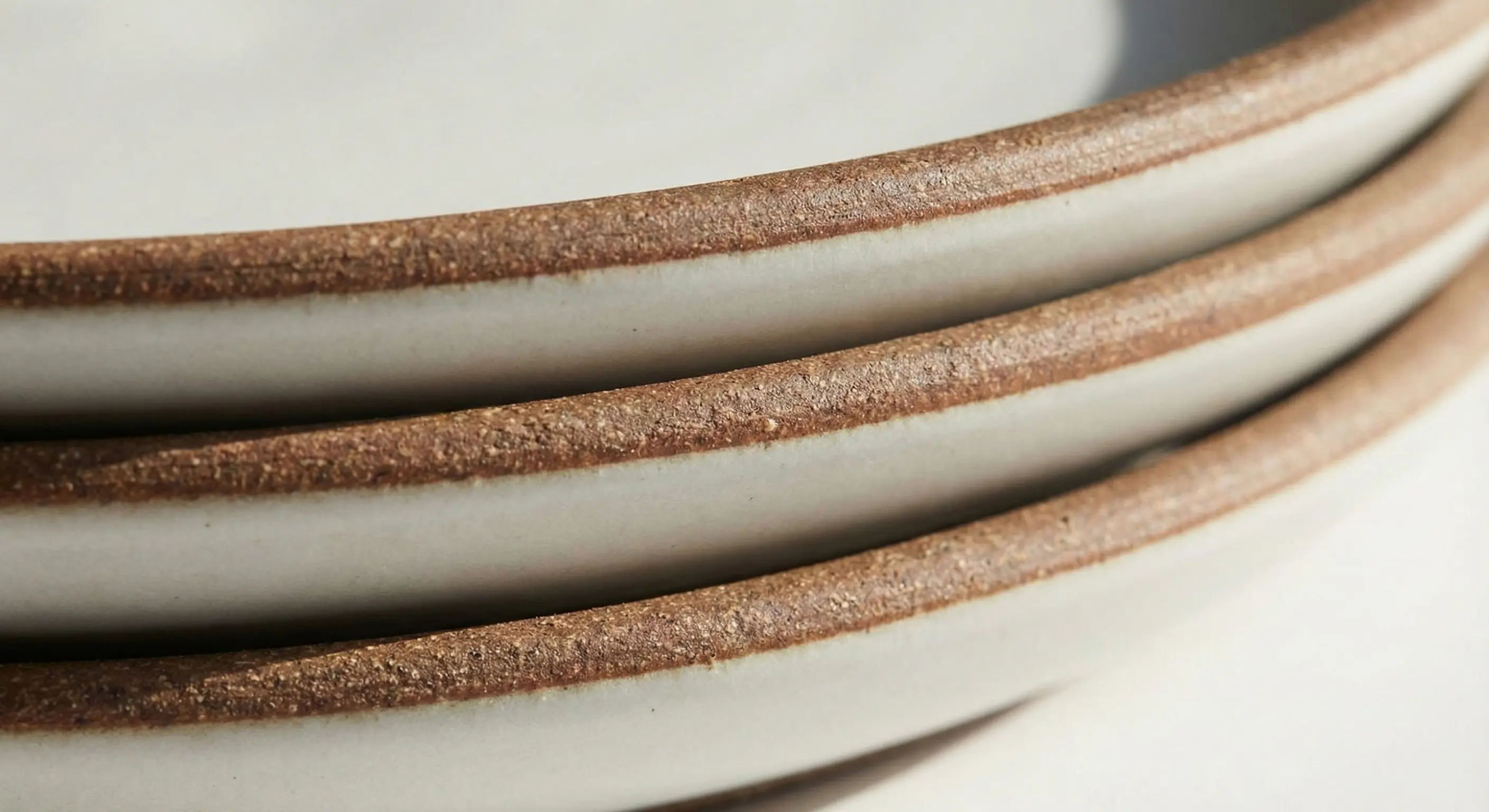
Fig 1. The signature Heath "wipe." The unglazed rim provides a tactile contrast to the smooth, often matte, glaze surface, showcasing the clay body underneath.
Heath: The Mastery of Matte
Heath is famous for its matte glazes. Edith Heath pioneered single-firing at lower temperatures than traditional porcelain, creating unique, soft, non-glossy finishes that were revolutionary at the time. Colors like "Opaque White," "Slate," and "French Grey" have a velvety depth that absorbs light rather than reflecting it.
The beauty of a Heath glaze is its consistency and its subtle interaction with the clay. Because the glazes are often semi-opaque, the darker clay body beneath lends a dusky, muted quality to the final color. It’s sophisticated and moody. However, matte glazes, by their nature, have microscopic surface textures that can occasionally be more prone to "metal marking" from silverware (more on that later).
East Fork: The Iron-Rich "Break"
East Fork’s glaze philosophy is entirely different. They use an iron-rich clay body mined nearby. Their glazes are designed to interact dynamically with this iron. They are famous for the "break"—the way the glaze thins out over rims and edges, allowing the dark, speckled iron of the clay to burn through.
Their signature color, "Eggshell," is not white; it's a creamy, speckled, rich off-white that looks different in every light. Their seasonal colors often feature high variations, pinholes, and iron spots. To an East Fork devotee, these aren't flaws; they are features that prove the object is alive. The glazes tend to be glossier or satin-matte, feeling thicker and more "glassy" than Heath's. They feel incredibly durable and smooth to the touch.
Durability and Daily Living: The "Dishwasher Test"
This is where the rubber meets the road. A beautiful plate you are terrified to use is useless. Both brands are stoneware, fired at high temperatures to be non-porous and extremely strong. Both are microwave and dishwasher safe. But they handle abuse differently.
Chip Resistance
In my experience, East Fork has a slight edge in raw chip resistance. The rims are thicker and rounder, capable of absorbing a knock against the side of the sink or another plate. Heath’s rims, particularly on the coupe line, are finer and thinner. While still incredibly strong compared to standard ceramic, if you drop a heavy pot onto the edge of a Heath plate, it is more likely to chip than the East Fork equivalent.
Scratch Resistance and Metal Marking
This is a crucial distinction. "Scratches" are cuts into the glaze; "metal marks" are residue left by softer silverware rubbing off on a harder glaze surface.
Heath’s matte glazes, while gorgeous, act somewhat like very fine sandpaper to cheap cutlery. If you use softer stainless steel knives and bear down hard on a steak, you may see gray streaks appear on your "Opaque White" plates. These are usually metal marks, not scratches, and can be removed with Bar Keepers Friend, but it’s a maintenance consideration.
East Fork’s glazes, being generally glossier and thicker, are incredibly resistant to metal marking. You really have to try hard to leave a mark on an "Eggshell" plate. They feel bulletproof under a knife and fork.
Heat Retention and Weight
East Fork plates are significantly heavier. A dinner stack of eight East Fork plates requires reinforced shelving. This mass has a benefit: thermal mass. If you preheat an East Fork bowl for soup or pasta, it stays hot for a very long time.
Heath plates are lighter (though still substantial). They are easier to handle when loading a full dishwasher or carrying a stack to the table. If you have wrist issues or prefer a delicate feel, Heath is much more manageable on a daily basis.
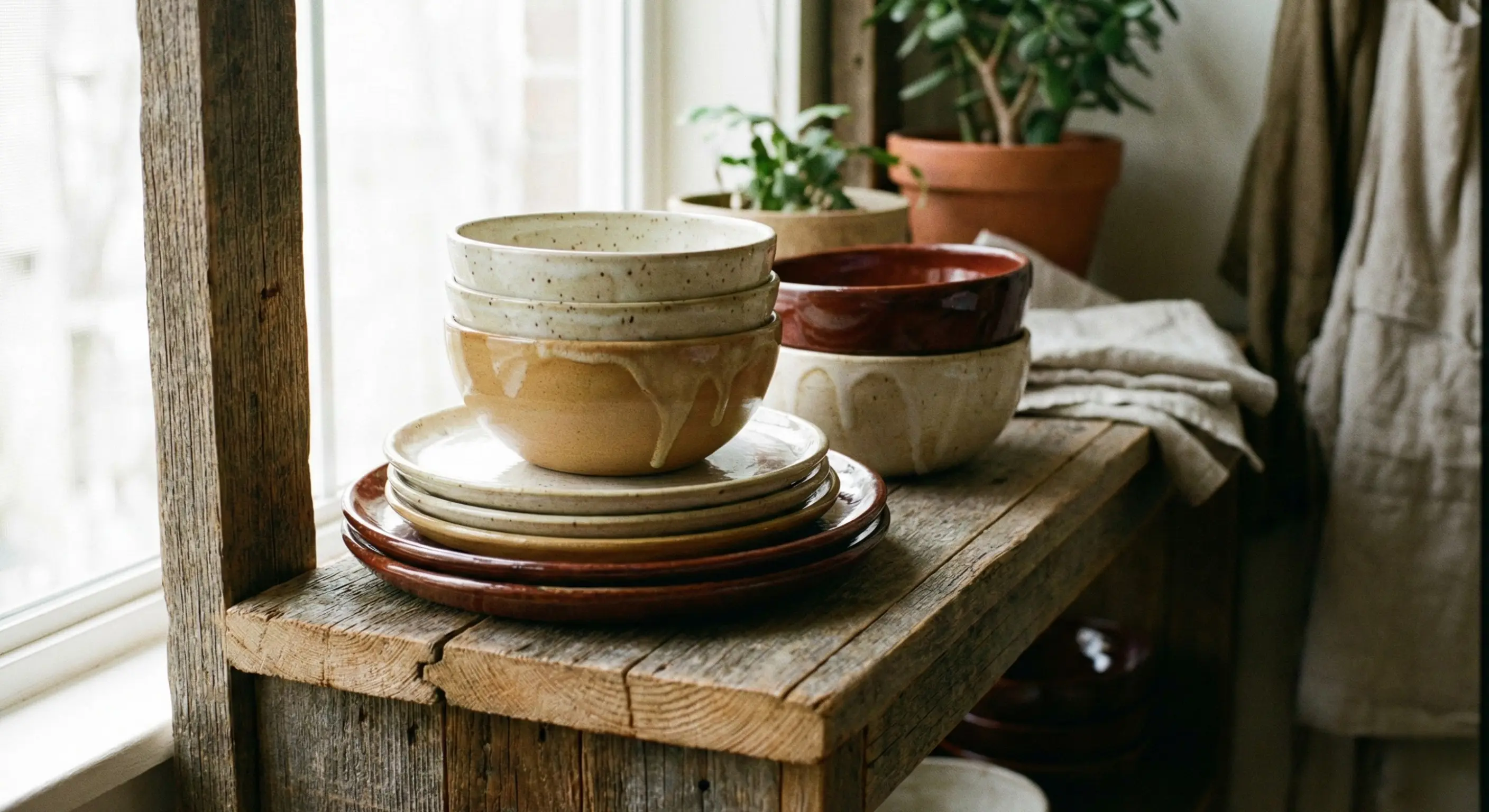
Fig 2. The robust profile of East Fork. Note the thicker, rounded rims and the variation in the glaze coloration, indicating a heavier, sturdier piece of pottery.
The Verdict: Choosing Your Personality
Deciding between Heath and East Fork is rarely about quality; both are exceptional examples of American manufacturing. It comes down to the personality of your home and how you eat.
Choose Heath Ceramics if:
- You value consistency and precision. You want plates that stack perfectly flat and look identical year after year.
- Your aesthetic is refined, modern, or minimalist. You want the tableware to recede and let the food be the star.
- You prefer a lighter weight plate. You want stoneware durability without the farmhouse heft.
- You love the tactile feel of raw clay. The unglazed rim is a sensory detail you appreciate.
Choose East Fork Pottery if:
- You embrace wabi-sabi and variation. You want every plate to feel slightly different, with visible signs of the materials and process.
- Your aesthetic is rustic, farmhouse, or eclectic. You want your table to feel warm, inviting, and robust.
- Maximum durability is your priority. You have kids, you are clumsy, or you just don't want to baby your plates. You want a glaze that laughs at silverware.
- You like heft. You want to feel the substantial weight of the object in your hands.
Ultimately, you cannot lose. Investing in either of these brands is an investment in a slower, more intentional way of living. Whether you choose the precise architectural lines of Sausalito or the robust, earthy soul of Asheville, you are buying into a legacy of craftsmanship that will elevate your daily bread for decades to come.