Dinner Plate Sizes: How Big Should Your Dinner Plate Be?
The cupboard is where dinner plate sizes become real. I bought a 12-inch dinner plate set once because the store display looked generous and the photo on the website made the plates look like they belonged on a restaurant table. It was a nice set. It also sat in my cabinet at an angle, wedged against the shelf above, for the next three years.
That is the whole problem with dinner plate sizes in one image: you never see them next to anything else. A 12-inch plate on a store shelf looks big. A 12-inch plate in a cupboard with a 12-inch-deep shelf looks impossible.
So here is the answer before the details. For most American kitchens, the sweet spot for a dinner plate is 10.5 inches (26.7 cm). It holds a main course and two sides without crowding, fits inside a standard base cabinet, washes in a standard dishwasher, and still leaves room on the table for a glass, a bread plate and a fork. Go to 11 inches if you have the cabinet depth and you like a fuller look. Go to 12 inches only if your table is big and your serving dishes live on a sideboard — that size is a restaurant plate and it will crowd a home table.
Let me get into the details, because the diameter is only half of what dinner plate sizes actually decide.
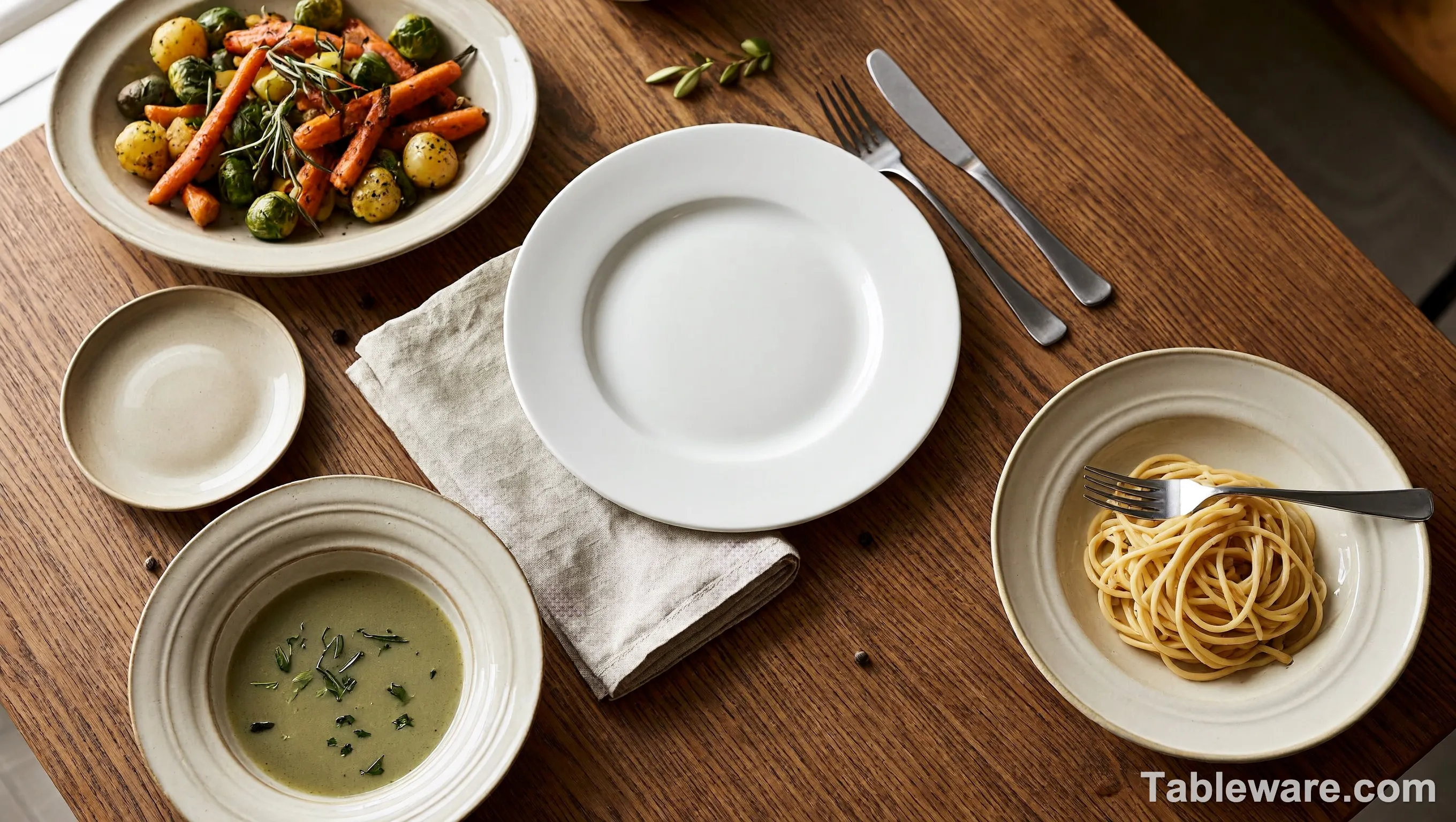
Fig 1. One table, five plates, five different jobs. Getting the sizes right is less about matching a rulebook and more about giving each course a plate that fits it.
Dinner Plate Sizes: The Full Chart
Here is the full reference. The inch column is what US retail prints on the box; the centimeter column is what European makers put on the bottom stamp, and it is the number that actually disambiguates a listing.
| Plate | Diameter (in) | Diameter (cm) | What it is for |
|---|---|---|---|
| Bread & butter plate | 5–7 | 13–18 | Rolls, butter, small appetiser |
| Dessert plate | 6–8 | 15–20 | Cake, pastry, one slice of pie |
| Salad / luncheon plate | 8–9 | 20–23 | Salads, soup, light mains, brunch |
| Dinner plate | 10–12 | 25–30 | The main course, every night |
| Soup bowl | 8–10 | 20–25 | Soup, stew, ramen, pasta |
| Charger / underplate | 12–14 | 30–36 | Decorative, goes under the plate |
| Serving platter | 13+ | 33+ | Sharing, family style |
Two things in that table catch people out.
First, a salad plate and a luncheon plate are the same plate with two names. If a set gives you 8-inch plates, they will do salad, soup, appetiser and dessert. That is the single most useful plate in a set and the one most people use daily.
Second, chargers are not dinner plates. A 13-inch charger is a decorative underplate that sits under the whole setting and comes off before the main course. If someone sells you a "12-inch dinner plate" and it weighs a pound and a half, you are probably holding a charger.
Rim Width: The Part Nobody Mentions
Two plates can both measure 11 inches and behave completely differently, because the rim is the variable that matters.
A rimmed plate has a flat border around a shallow well. The rim frames the food and it keeps sauce off the table. This is the classic shape and it is what you want for a roast chicken with pan juices, or a steak, or anything you plated by spooning sauce around.
A coupe plate has almost no rim — the well slopes all the way up to the edge. Modern, clean-looking, and genuinely useful for pasta, because the sloped walls push the food back toward the middle where you twirl it. It also looks more restaurant-plated and less homey, which is a matter of taste.
A deep-well plate has a tall, steep rim. It exists for soup, stew and saucy pasta, because a 3cm wall keeps liquid where it belongs.
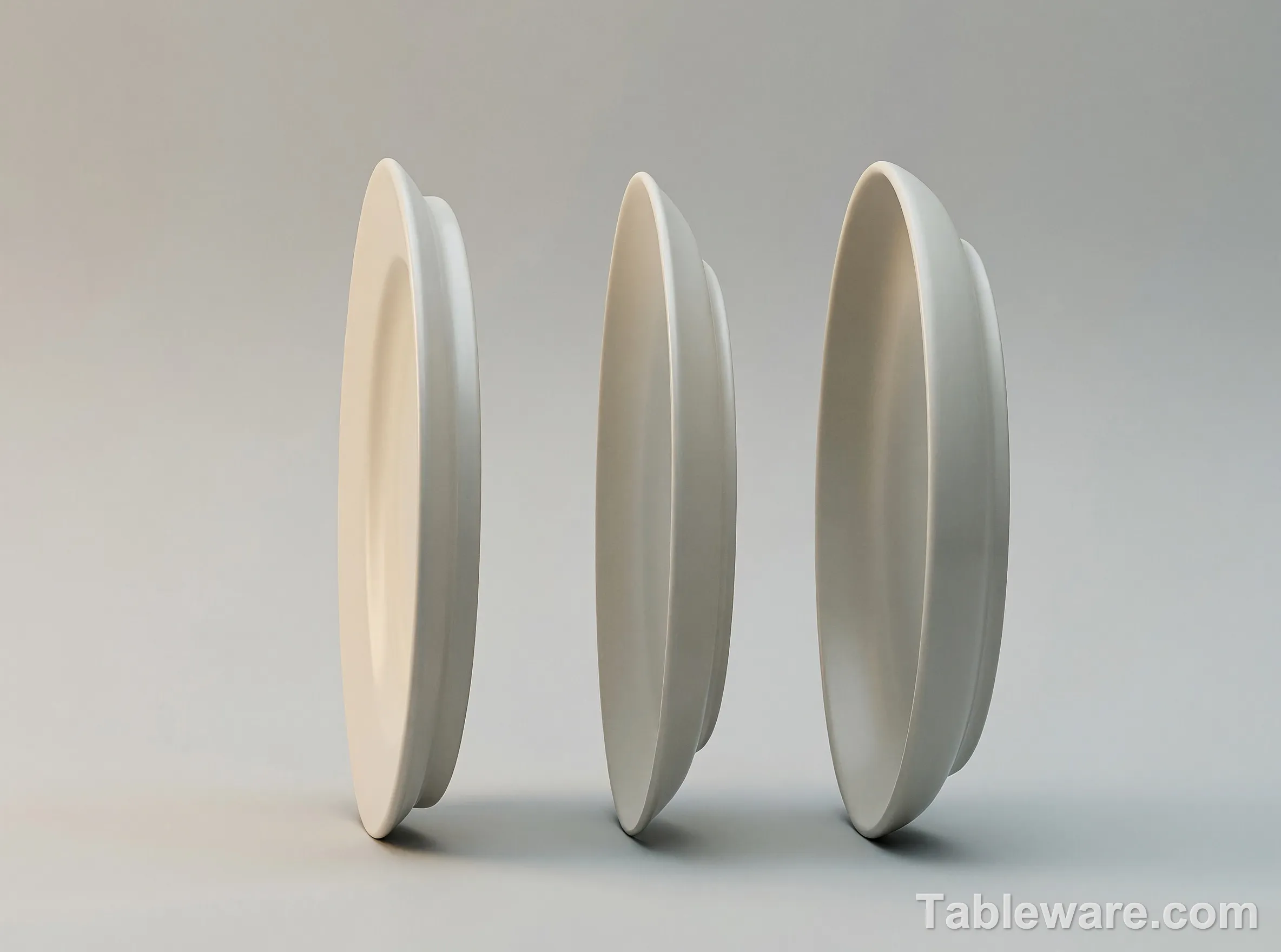
Fig 2. The same diameter, three completely different plates. Left is a rimmed dinner plate, middle is a coupe, right is a deep-well soup plate.
Here is the practical rule I use. If you buy one dinner plate shape, buy rimmed. It is the most versatile and the most forgiving. If you are replacing a single broken piece in an existing set, match the shape first and the diameter second, because a mismatched 10.5-inch coupe in a set of 11-inch rimmed plates will look like an error to everyone who sees it.
Rim width also has a practical side effect that nobody warns you about: a wide rim reduces the usable food area. A 10-inch plate with a 1.5-inch rim leaves about 7 inches of actual eating surface in the middle. On paper that sounds like a small difference. On a plate with a 5-ounce portion of pasta, it is the difference between a composed plate and a stranded blob in the middle.
10 vs 11 vs 12 Inch Dinner Plate Sizes: Which One Fits Your Kitchen
The 10.5-inch benchmark exists for a mechanical reason, not an aesthetic one. The 10 inch vs 12 inch dinner plate question is really a question about two different kitchens, not two different tastes.
10 to 10.5 inches (25–26.7 cm) — Fits everything. Slides into a standard base cabinet shelf. Stacks in a standard dishwasher lower rack without angling. Leaves a visible rim of table around the plate when you set four place settings. If you are buying your first set and you want it to work in a normal kitchen, this is the answer.
11 inches (28 cm) — This is the European standard and the upscale-casual restaurant size. Baci Milano dinner plates are 28 cm. It is 1.5cm more than 10.5 inches and that 1.5cm is exactly the difference between "fits on the shelf" and "resting on the shelf's front edge." Measure before you buy.
12 inches (30.5 cm) — Restaurant size. It works beautifully on a 40-inch-wide table where serving dishes live on a sideboard. It does not work on a 36-inch table with serving dishes down the middle, because two 12-inch plates plus a serving bowl leaves no room for elbows. It is also the size most likely to fail a dishwasher fit test, since most residential lower racks are rated around 11 to 12 inches and a wide-rimmed 12-inch plate can catch on the tines.
Here is the measurement that actually decides dinner plate sizes for your kitchen, and it takes 30 seconds. Measure the clear depth of the shelf where plates will live — from the front edge of the shelf to the cabinet back. On most 24-inch-deep base cabinets this works out to roughly 12 inches of usable shelf once you account for the door and the back panel. Then:
- A plate needs its diameter plus about half an inch of depth to slide in and out without scraping.
- A 10.5-inch plate needs about 11 inches of shelf. A 12-inch plate needs about 12.5.
If your shelf gives you 11 inches, the 12-inch set is going to live on the shelf at a tilt like mine did. That is the whole test.
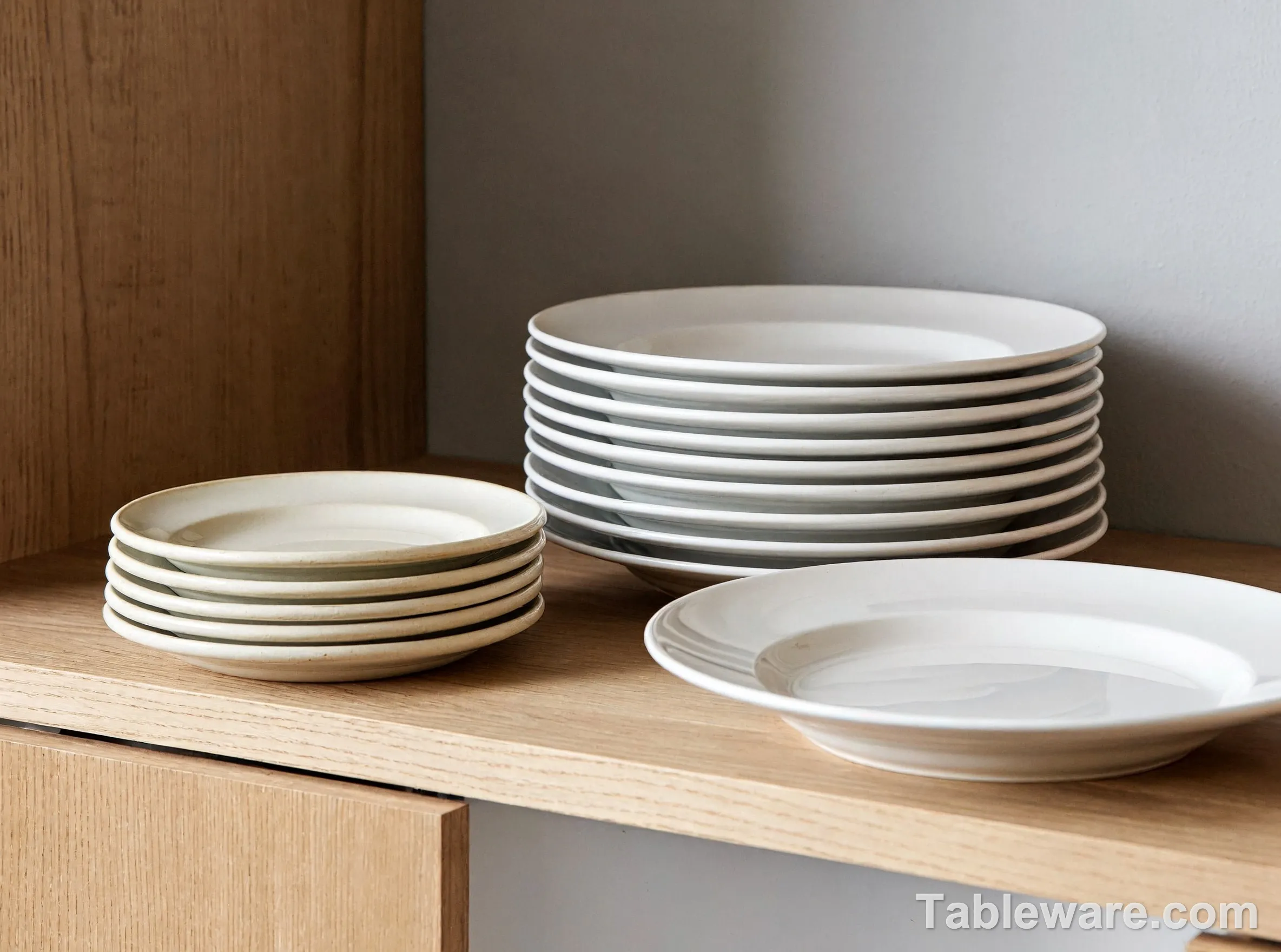
Fig 3. A 12-inch plate and a 10-inch plate need almost the same shelf depth but not quite. When the shelf is short, the big plates take the hit.
How Dinner Plate Sizes Change How Much You Eat
I want to be careful here, because the research on plate size and appetite is real but oversold by retailers.
The mechanism is the Delboeuf illusion: a portion looks larger on a smaller plate. Served on a 10-inch plate, a normal serving of pasta reads as a full meal. The same serving on a 12-inch plate reads as a small helping, and people frequently add more.
One frequently cited estimate puts the difference between serving the same food on a 9-inch and a 12-inch plate at a 25 to 30 percent increase in how much people eat. Whether that exact number holds for you depends on how hungry you are and how the food is arranged, but the direction is well documented enough that restaurants pay attention to it. Upscale casual operations standardise around 10.5-inch dinner plates for exactly this reason, while more casual dining rooms run 11.5.
The flip side is real too, and it is the reason I would not buy a 9-inch plate to "help me eat less." A plate that makes your food look insufficient creates friction at the table, and friction at the table is not a healthy strategy. It is a strategy that ends with you eating crackers over the sink.
The sane version: pick the size that makes a normal portion of your normal food look normal. For most households that is 10.5 or 11 inches.
Dinner Plate Sizes, Place Setting Dimensions and Table Space
Dinner plate sizes only matter twice: once in the cupboard, and once on the table.
On the table, the standard allowance is about 24 inches (61 cm) of table edge per person as a minimum, with 28 inches comfortable. That number covers the plate, the cutlery on both sides, the glasses and a little elbow room. European formal setting guides use a similar figure, calling for 60 cm of width per place setting as standard and 65 cm when multiple glasses are on the table. These are the place setting dimensions that decide whether your table feels generous or crowded.
Put that against a standard 12-by-18-inch placemat, which is sized for a 10- to 11-inch dinner plate with cutlery on both sides:
- A 10-inch plate on a 12-by-18 mat leaves about 4 inches on each side for the fork and knife. Comfortable.
- An 11-inch plate leaves 3.5 inches on each side. Fine.
- A 12-inch plate leaves 3 inches on each side. The forks start to hang off the edge.
And on a narrow table, the plate sizes of the people sitting opposite you matter more than your own. Two 12-inch plates side by side across a 36-inch table means there is 6 inches of table between them, which is where your bread basket wants to live.
Shape counts here too, by the way. An octagonal plate fits a tighter grid than a round one, because there is no curved edge wasting space in the corners.
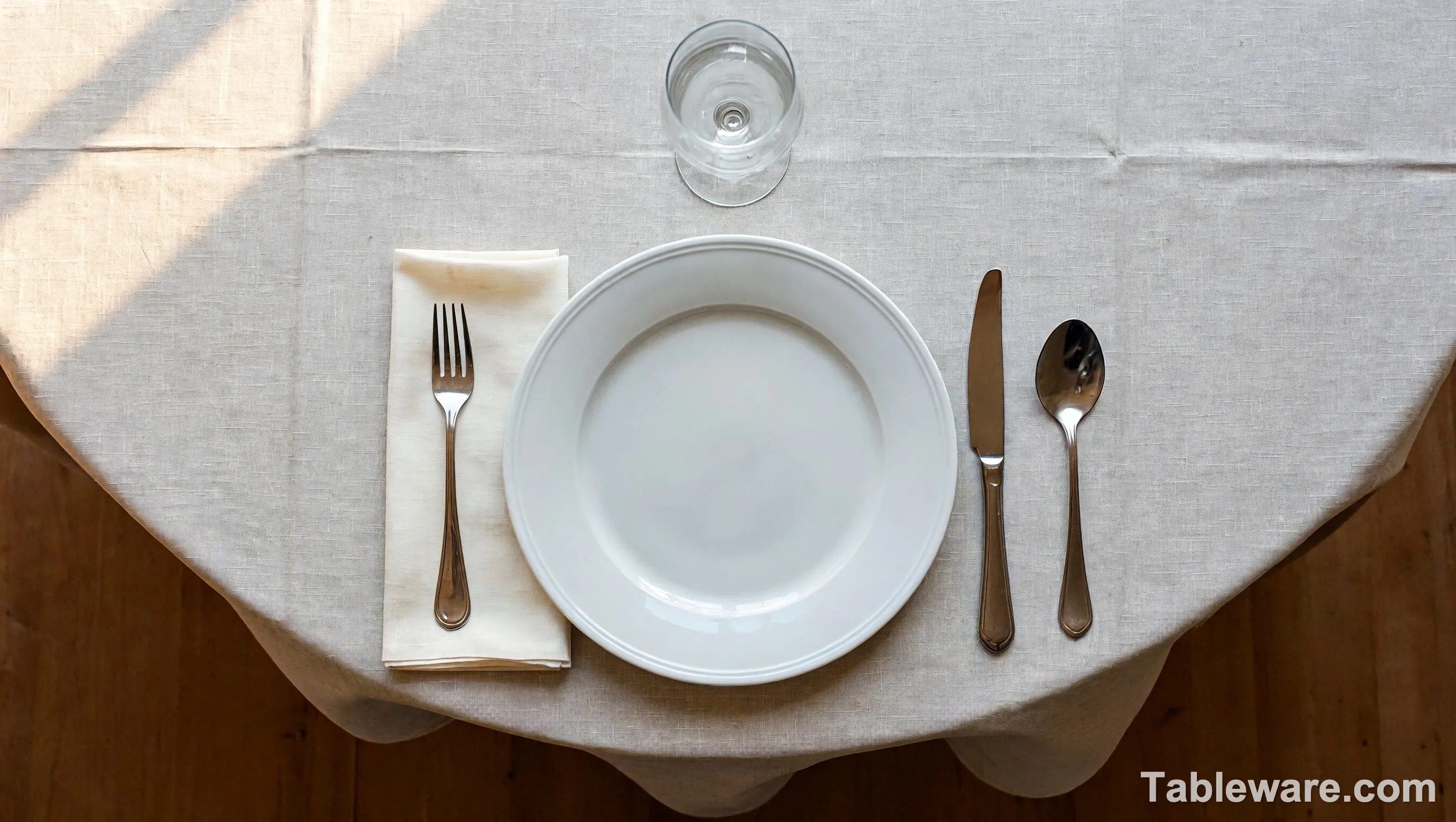
Fig 4. One complete place setting. The empty linen to the left and right of the plate is the space your cutlery and glass are about to occupy.
How Many Plates You Actually Need
Dinner plate sizes are only half the purchase. The other half is how many, and the standard advice is boringly practical.
For a family of four: 8 to 10 dinner plates and 8 to 10 salad plates. The extras cover guests and let you run the dishwasher in cycles instead of washing every night. A good rule is your household size plus four to six spare dinner plates.
For a couple: 6 dinner plates, 6 salad plates. You will still end up replacing a chipped plate eventually, and matching a replacement later is much harder than buying the set while the pattern is in stock. Open stock means buying one piece at a time whenever you need it, which is a much better deal when you only need one piece. We did the money on that here.
The 45-piece service you see in the store catalogue — twelve dinner plates, twelve salad plates, twelve bread plates, plus cups, saucers, a tureen and serving pieces — is built for a household that feeds twelve people regularly. For most people it is 45 pieces of storage. The 12-piece and 20-piece sets are far more common, and our three-phase buying guide works through how to build a set over time instead of all at once.
The one thing worth resisting is buying all six plate sizes on day one. For hospitality, the efficient number is four or five distinct sizes: dinner, salad, a bowl or two, a platter, and a bread plate. Everything else is duplication.
How to Buy: A Decision Path
If you want the short version, walk through this in order.
- Measure the shelf depth. Below 11 inches, buy 10 to 10.5-inch plates and stop thinking about it.
- Measure your table. If it is 36 inches wide and you serve family style, cap at 11 inches. If it is 40 inches or wider and serving dishes go on a sideboard, 12 inches is fine.
- Pick the shape based on what you cook. Mostly roasts and plated mains: rimmed. Mostly pasta, grain bowls and curries: coupe or a plate with a modest rim. A lot of soup: deep-well, and check the bowl diameter rather than the plate.
- Pick the material for the job, not the look. Stoneware is heavier and takes a beating, and it is what I use daily. Bone china is thinner and lighter and better for a table you dress up for. Porcelain sits between them. We compared the three side by side if you want the detail, and there is a longer piece on stoneware specifically.
- Buy the salad plate count first. Then the dinner plates. Then everything else, six months later, once you know what your table actually needs.
If you are starting completely from zero, the everyday dinnerware guide covers the material side properly, and our pasta bowl spec guide goes deeper on the one bowl shape people measure wrong most often.
Five Mistakes I Keep Seeing
Buying 12 inches because the store display looked generous. The display was not sized for your cabinet. Measure the shelf. I have made this exact mistake and I still catch people doing it.
Matching diameter but not shape. Replacing a broken coupe plate with a rimmed one of the same size will be visible from across the table. Match shape first.
Ignoring the usable food area. A wide rim on a small plate is a lot of decoration and very little dinner. If you cook saucy food, check the well diameter, not the outside diameter.
Buying the 45-piece service. Storage math says no. Our real 10-year cost breakdown shows how quickly the unused pieces eat the discount you paid for the set.
Putting the plates in the dishwasher on the wrong cycle. This one is about the plates, not the sizes, but it is the most common reason a set dies early. Overheating and harsh detergent are what craze a glaze. The dinnerware care guide covers the rest, including why stoneware and bone china should not share a load.
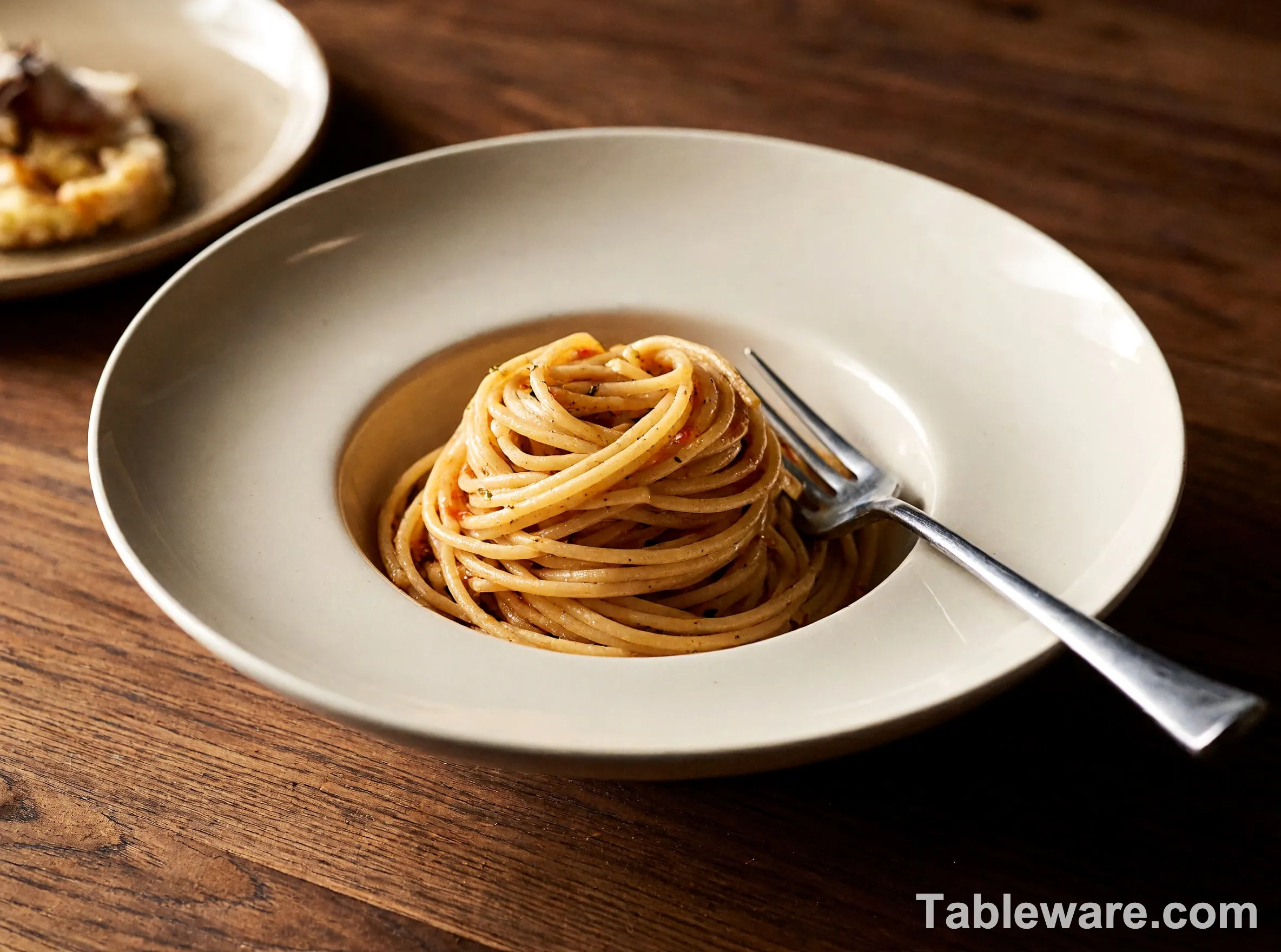
Fig 5. A wide rim on a shallow plate. It frames the food beautifully and leaves nowhere for the sauce to go, which is exactly why pasta plates are a different shape.
Quick Answers
What is the standard dinner plate size in inches? In the US, 10 to 12 inches (25 to 30 cm). 10.5 inches is the most common size in home dinnerware sets, and 11 inches is the European standard. Restaurants usually run 11.
What size dinner plate do I need? 10.5 inches (26.7 cm) for most kitchens. Go to 11 inches if your shelf has the depth and you want a fuller look. Only go to 12 inches if your table is 40 inches or wider and you serve from a sideboard.
Is a 12-inch dinner plate too big for home? Often, yes. It fits the cabinet and the table, but it leaves no room for serving dishes in the middle and no room for the bread basket.
Should my dinner plate be 10 or 11 inches? If your cabinet shelf gives you 11 inches of depth, buy 10.5-inch plates and you will never think about it again. Buy 11-inch plates if you want a slightly more generous look and your table is at least 36 inches wide.
Are bigger plates better for portion control? No. Smaller plates can make a normal portion look substantial, but they add friction and can make a meal feel skimpy. Pick the size at which a normal serving looks normal.
Does the diameter matter more than the rim width? For how the plate behaves, the rim matters more. For how the set looks and fits, the diameter matters more. Check both.
Can I mix dinner plate sizes in one set? You can, and plenty of people do it deliberately — a large 12-inch plate for the main with 10-inch plates around it reads as a deliberate mix if the pieces share a glaze. Matching sizes with clashing shapes reads as a mistake.
More from Tableware.com: our serving ware buying guide covers the platters and bowls that go in the middle of the table, our dinnerware care guide covers keeping a set alive, and our drinking glass breakdown covers the glassware that has to fit in whatever space your plates leave.