The Definitive Dinnerware Buying Guide: How to Choose Plates You'll Love Forever
Wednesday, February 18, 2026
A comprehensive buying guide for selecting the perfect dinnerware set. We navigate the confusing world of materials from stoneware to bone china, decode place setting configurations, explore style aesthetics, and offer practical advice on durability and care to ensure your investment lasts a lifetime.
Choosing dinnerware is one of the most significant, yet often underestimated, decisions you make for your home. Unlike a trendy throw pillow or a seasonal centerpiece, your dinnerware is a daily workhorse. It is the canvas for your culinary creations, the tactile connection between you and your food, and a foundational element of your home’s aesthetic. It witnesses hurried Tuesday morning breakfasts, celebratory holiday feasts, and quiet late-night snacks.
Because it is used so frequently, the pressure to "get it right" can feel overwhelming. Walking into a department store or scrolling through an online catalog presents a dizzying array of options: myriad materials, endless shapes, confusing price points, and jargon like "coupe," "vitrified," and "reactive glaze."
This comprehensive guide is designed to cut through the noise. We will move beyond mere aesthetics to understand the practical implications of different materials, how to determine the right number of settings for your lifestyle, and how to balance timeless style with modern trends. Whether you are outfitting your first apartment, registering for your wedding, or finally replacing that chipped mismatched collection you’ve had since college, this guide will empower you to make a confident, informed purchase that you will love for years to come.
Phase 1: Assessing Your Lifestyle and Needs
Before you fall in love with a beautiful pattern on Instagram, you must ground your decision in the reality of your daily life. Dinnerware needs to function first and look good second. If it doesn't suit your lifestyle, it will either end up unused in a cupboard or chipped beyond recognition within a year.
Casual vs. Formal: Defining Your "Everyday"
The first question to ask is: How do you eat 90% of the time?
The Busy Household/Family Friendly: If you have young children, a bustling kitchen, and the dishwasher runs daily, durability is paramount. You need materials that can withstand accidental knocks against the counter and high-heat dishwasher cycles. Look for chip-resistant guarantees and avoid metallics (gold rims) that aren't microwave-safe.
The Enterstainer: If you frequently host dinner parties, holidays, or casual get-togethers, you might need a set that can transition seamlessly from casual to elegant. A versatile "base set" in white or a neutral tone can be dressed up with chargers, linens, and serving pieces for formal occasions, yet still feel appropriate for a Tuesday night pasta dinner.
The Minimalist Dining: If you live alone or in a small household and rarely cook elaborate meals, a smaller, highly functional set (perhaps open stock rather than boxed sets) might be preferable to storing 12 place settings you never use.
The Numbers Game: How Many Settings Do You Need?
A common mistake is buying too few or too many place settings. The golden rule for most households is to aim for eight to twelve settings.
Why this range? Even for a household of two, an eight-setting service allows you to go through a day of breakfast, lunch, and dinner without running the dishwasher constantly. It also provides a buffer for when another couple joins you for dinner.
For families of four or more, or for those who host holidays, twelve settings are standard. This accommodates a larger gathering and accounts for inevitable breakage over the years. If twelve feels like too much initially, buy two 4-piece starter sets to begin with, but ensure the pattern is not being discontinued soon so you can add a third set later.
Storage Realities
Before purchasing that chunky, rustic stoneware, measure your cabinets.
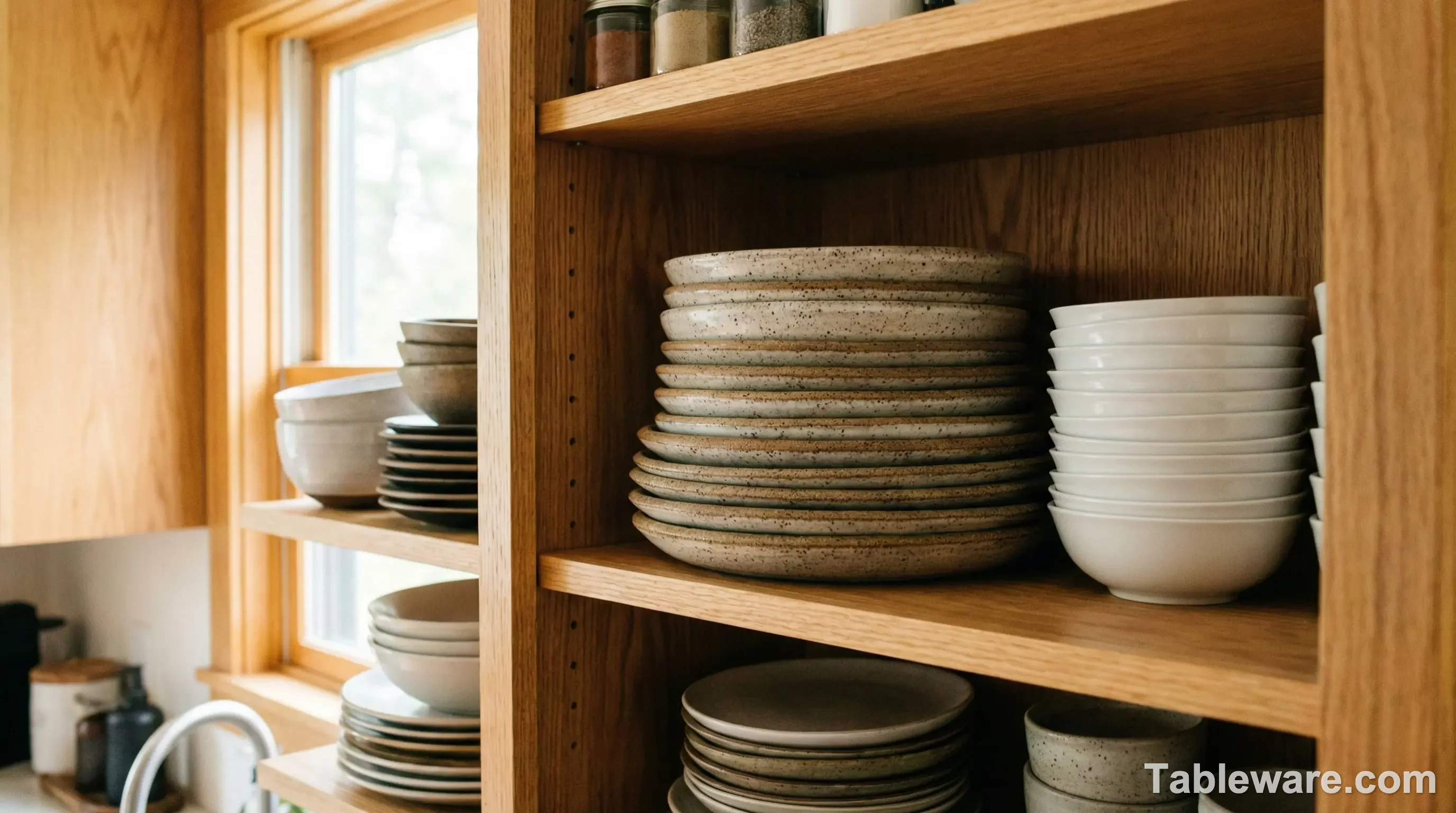
Some artisanal or earthenware plates are significantly thicker and heavier than porcelain. A stack of twelve stoneware plates might be several inches taller than a stack of twelve bone china plates. Ensure your shelves can handle both the height and the weight. Furthermore, consider the depth of your cabinets—oversized modern charger plates might prevent the cabinet door from closing completely.
Fig 1. Before buying, consider your storage space. Thicker materials like stoneware stack higher than sleek porcelain. Measure your shelves to ensure a comfortable fit for a full set.
Phase 2: The Material World—Decoding Ceramics
The material of your dinnerware dictates its look, feel, weight, price, and most importantly, its durability. This is the most crucial technical aspect of your purchase. Most dinnerware falls under the umbrella of "ceramics," but the differences in clay composition and firing temperatures create vastly different end products.
1. Earthenware (Terracotta, Creamware, Majolica)
The Vibe: Rustic, warm, often hand-painted, heavy, and substantial. It feels artisanal and cozy.
The Science: Fired at relatively low temperatures. The clay body remains porous under the glaze.
The Pros: Often the most affordable option. It takes bright colors and intricate hand-painting beautifully, offering a unique aesthetic.
The Cons: It is the least durable ceramic. Because it is porous, if the glaze chips, the clay underneath can absorb water, leading to crazing (fine cracks in the glaze) or even mold growth inside the plate. It is generally prone to chipping and is often not microwave-safe as the porous body can heat up unevenly and crack.
2. Stoneware
The Vibe: Organic, earthy, durable, and textural. It bridges the gap between rustic earthenware and refined porcelain. It has a satisfying heft.
The Science: Fired at higher temperatures than earthenware, often with vitreous (glass-like) ceramic fluxes added to the clay. This makes the body denser and non-porous (vitrified), regardless of glaze.
The Pros: Excellent durability for everyday use. It is generally chip-resistant and safe for microwaves, dishwashers, and often low-temperature ovens (check manufacturer details). Reactive glazes used on stoneware create beautiful, unique variations on each piece.
The Cons: It is heavier than porcelain and bone china. It lacks translucency and can sometimes show cutlery marks on matte finishes.
3. Porcelain (Fine China)
The Vibe: Elegant, refined, smooth, and classic. It has a higher-pitched "ring" when tapped compared to the dull thud of earthenware.
The Science: Made from fine-particle clay, typically kaolin, feldspar, and quartz, fired at very high temperatures. This results in a completely vitrified, non-porous, super-strong body that can be formed very thinly.
The Pros: Surprisingly incredibly durable despite its delicate appearance. It is resistant to chipping and thermal shock. It is non-porous, dishwasher safe, and microwave safe (unless decorated with metallic bands). The white color is typically a cool, bright white.
The Cons: Can be more expensive than stoneware. Some find the look too formal for casual dining, though modern designs are changing this perception.
4. Bone China
The Vibe: The pinnacle of luxury. It is the lightest, strongest, and most delicate-looking ceramic. It has a warm, creamy white color and a distinctive translucency—if you hold a plate up to the light, you can see your hand's shadow through it.
The Science: It is porcelain with the addition of bone ash (historically calcined ox bones, though synthetic alternatives exist). The bone ash adds strength and lowers the firing temperature slightly, resulting in that characteristic warm milky white color and translucency.
The Pros: It is mechanically the strongest ceramic material, making it highly chip-resistant relative to its thinness. It is elegant enough for the most formal dinner yet durable enough for daily use. Most modern bone china without metallic trim is dishwasher and microwave safe.
The Cons: It is typically the most expensive option. The association with formal "wedding china" scares some casual users away, though this is an outdated view.
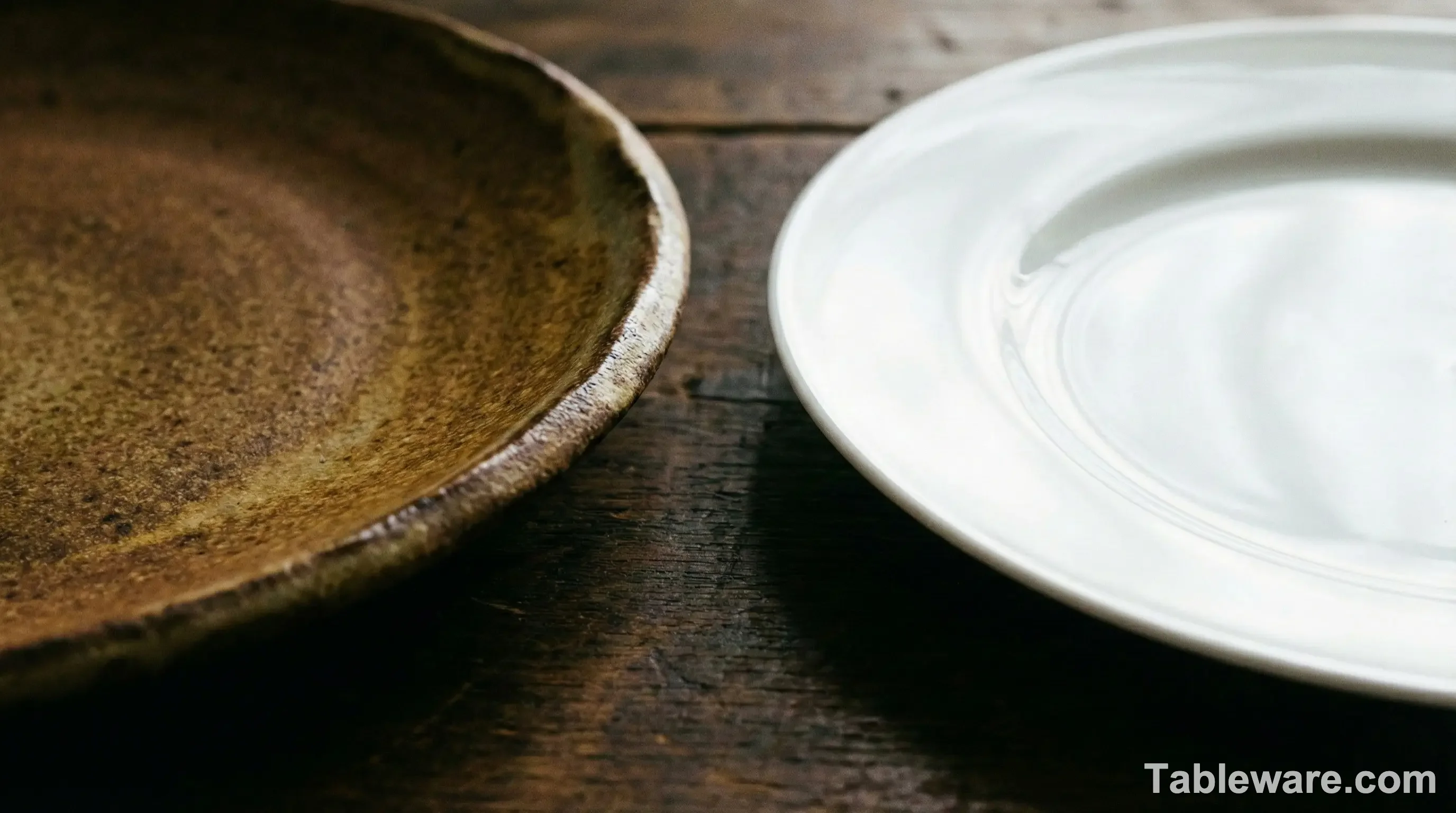
Fig 2. The material defines the experience. On the left, thicker stoneware offers rustic durability. On the right, thin bone china provides translucent elegance without sacrificing strength.
Phase 3: Defining Your Aesthetic Style
Once you have settled on the practicalities of material and quantity, the fun part begins: choosing the look. Your dinnerware sets the tone for your entire dining area.
The Case for Classic White
There is a reason white dinnerware remains the best-seller year after year.
Versatility: White plates are a blank canvas. They make food look appealing because there is no color competition. A vibrant beet salad or a rich pasta sauce pops against a white background.
Timelessness: White never goes out of style. You won't tire of it in five years, and it fits into any kitchen decor change.
Easy to Accessorize: You can change the entire mood of your table simply by changing napkins, placemats, or centerpieces. White works for Christmas, Fourth of July, and a random Wednesday.
Embracing Color and Pattern
If white feels too clinical for you, embrace color.
Solid Colors: A set in a signature color like celadon green, navy blue, or charcoal gray can anchor your dining room's color palette.
Patterns: From delicate florals to bold geometric designs, patterns express personality. However, be wary of overly trendy patterns that might date quickly. Classic blue and white motifs (like Delftware or Chinoiserie) tend to have longevity.
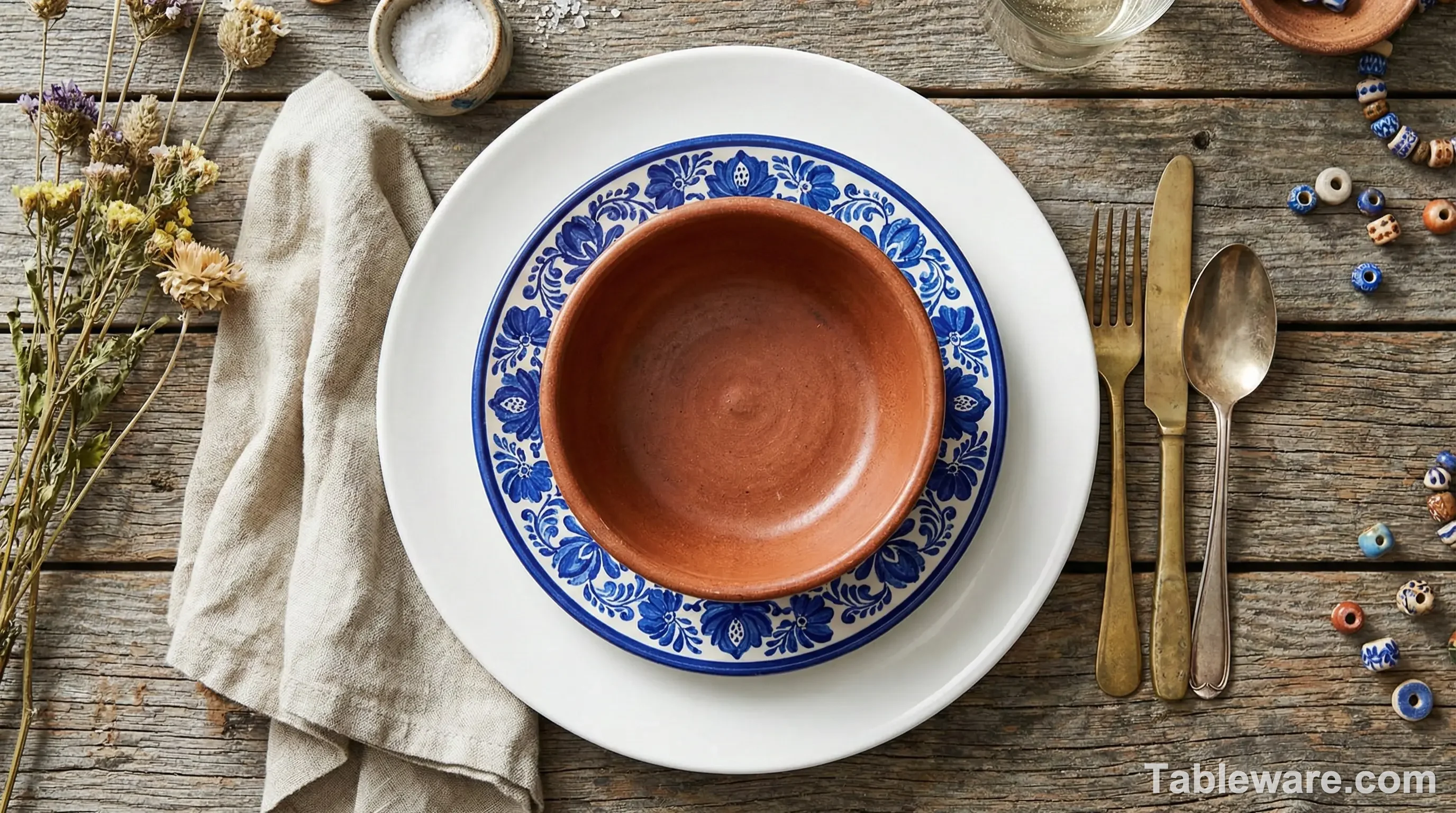
The "Mix and Match" Trend: Modern table setting is less about rigid uniformity. A very popular approach is to buy dinner plates in a solid neutral (like white or cream) and then buy salad/dessert plates and bowls in bold colors or patterns. This adds visual interest without being overwhelming, and it's easier to replace a few patterned accent plates later than a whole set.
Shape Matters: Coupe vs. Rim
The silhouette of the plate changes the dining experience.
Rimmed Plates: The traditional style with a defined, wide flat edge surrounding the central well. The rim is practical for holding silverware and provides a "frame" for the food. It feels more formal and classic.
Coupe Plates: Modern, minimalist plates that have a continuous, gentle slope from the edge to the center, with no defined rim. They maximize the usable surface area of the plate and have a clean, contemporary feel. They are excellent for meals with sauces, as the slope keeps liquids contained.
Organic/Free-Form: Plates that are deliberately slightly imperfect or asymmetrical, often found in artisanal stoneware. They provide a wabi-sabi, handmade aesthetic that is very popular in modern rustic farmhouse designs.
Fig 3. Don't feel limited to a single pattern. The modern table often embraces "mix and match," layering neutral dinner plates with patterned or colored accent plates to create a unique, personalized look.
Phase 4: Understanding Sets and Configurations
How you buy the dinnerware is just as important as what you buy.
The Standard "Place Setting"
Traditionally, dinnerware is sold in 4-piece or 5-piece individual place settings.
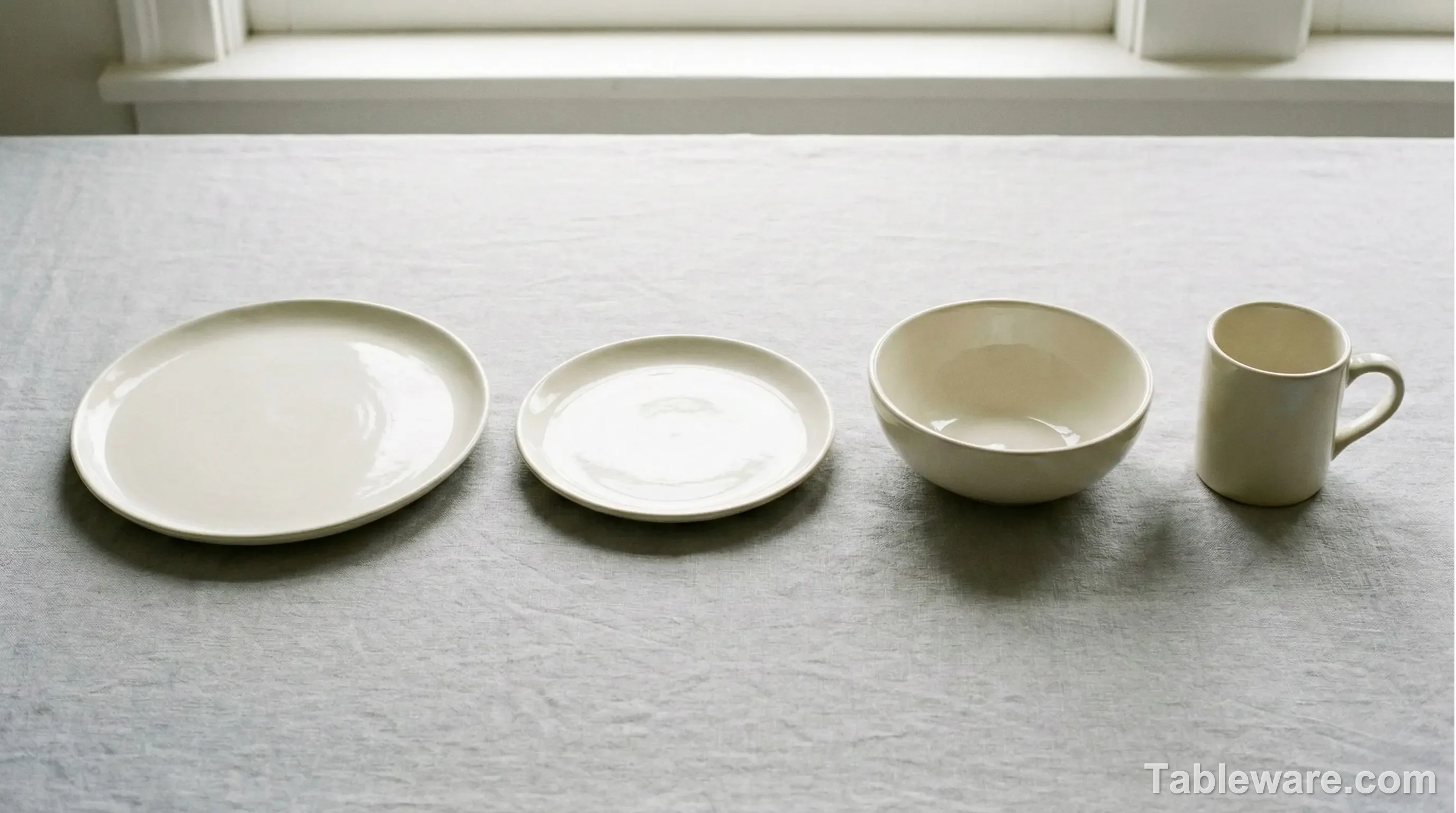
4-Piece Setting: Usually consists of a Dinner Plate, Salad Plate (also used for dessert), Soup/Cereal Bowl, and a Mug.
5-Piece Setting: Often more formal, including a Dinner Plate, Salad Plate, Bread & Butter Plate, Teacup, and Saucer. (Note: Teacups and saucers are increasingly falling out of favor for everyday use, replaced by mugs).
A Note on Mugs: Many boxed sets include mugs. Ask yourself if you really need 12 matching dinnerware mugs. Most people have a separate collection of favorite coffee mugs. If you don't need them, look for sets that substitute the mug for a second bowl type (like a shallow pasta bowl) or consider buying open stock.
Boxed Sets (e.g., "16-Piece Set")
This is usually the most economical way to buy. A "16-Piece Set" is typically four place settings containing four pieces each. To get service for eight people, you would buy two of these boxes.
Open Stock (Buying Individually)
Buying "open stock" means purchasing each plate and bowl individually.
Pros: Ultimate flexibility. You can skip the mugs entirely, buy 10 dinner plates but only 8 bowls, and easily replace a single broken item later.
Cons: Usually more expensive per piece than buying a boxed set.
Essential Serving Pieces
Don't forget how you will get the food to the table. To complete your set, budget for at least:
Two varied serving bowls (one large shallow bowl for salads/pastas, one deeper bowl for sides).
One medium-to-large platter (for roasts, whole fish, or appetizers).
Fig 4. The standard 4-piece place setting is the building block of most collections. Ensure every component—especially the bowl size and mug shape—is actually useful for how you eat and drink.
Final Practical Considerations
Before you tap "check out," do these final checks.
The Dishwasher Test: Verify the manufacturer’s care instructions. Almost all modern everyday ceramic ware is dishwasher safe. However, if you are buying vintage pieces or items with metallic gold or platinum rims, they must be hand-washed.
The Microwave Test: Similarly, ensure the set is microwave safe. Again, metallic rims are the enemy here—they will spark and ruin both the plate and your microwave.
Check for Continuity: Is this a brand new pattern or one that has been around for a decade? Buying from an established brand with long-running patterns ensures that if you break a plate three years from now, you will likely be able to buy a replacement. Trendy, flash-sale sites often sell patterns that disappear forever once sold out.
Buying dinnerware is an investment in your daily life. By balancing the practical demands of your household with your personal aesthetic style, and understanding the fundamental differences in materials, you can choose a set that will not only serve your food but also serve as a backdrop for memories for years to come. Choose wisely, and enjoy every meal.