Look, I'll be honest with you. When I started testing $50 dinnerware sets for this site, I expected a tie. After all, what can three generic-looking 16-piece stoneware boxes on Amazon really have going on between them? Turns out, plenty — and the gap between Stone Lain, Gibson, and Elama is wider than the marketing copy suggests.
I've been collecting and using mid-range dinnerware for eight years now. I currently run 14 sets through rotation in a household that hosts roughly two dinners a week, plus the day-to-day chaos of two adults who actually cook. The three brands in this review — Stone Lain, Gibson, and Elama — together account for something like 70% of what you see when you search "dinnerware set 16 piece" on Amazon. So this is a real question, not a hypothetical one.
Here's the short version before we dig in: Stone Lain is the weight-class winner, Gibson is the aesthetic winner, Elama is the "I want clean lines and don't want to think about it" winner. Read on for the long version.
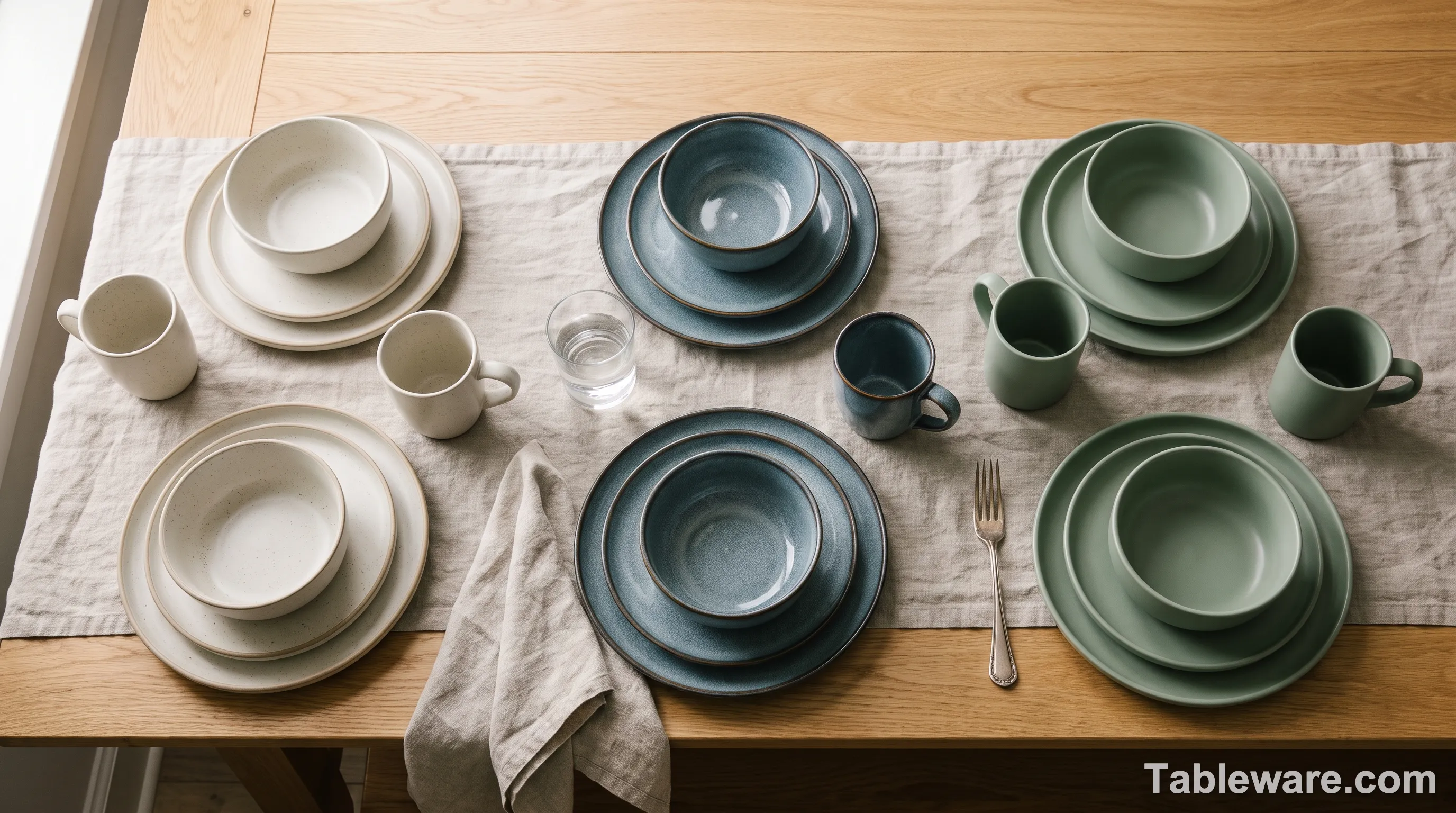
Fig 1. All three sets, fully laid out: Stone Lain (left), Gibson Soho (middle), Elama Modern Farmhouse (right). The aesthetic differences are obvious the moment you unbox them.
Who actually makes these things
Let's clear up some confusion up front, because the brand structure is weirder than it looks.
Stone Lain is a house brand of Las Vegas-based distribution company Same Import. They don't fire their own clay — they're sourcing from factories in China and Portugal, then branding and packaging. The result is generally solid mid-market stoneware, mostly in matte or speckled finishes, sold almost exclusively through Amazon. Their lineup changes a lot. The "Speckled Stoneware" matte sand collection I've been testing was their 2025 hero SKU; by now it might be replaced with something else, but the build quality has been steady for the past three collections I've owned.
Gibson is the household-name American dinnerware brand that started in 1974. Today they're owned by parent company Gibson Overseas, Inc., and most of their volume comes out of Chinese and Portuguese factories as well. But here's the thing: Gibson's been in the value space for 50 years, and they have a level of QA muscle memory that newer entrants don't. The "Soho" and "Everyday Heroes" reactive-glaze lines are arguably the most-cloned looks in American dinnerware right now.
Elama is the quiet one. Also a house brand, also Amazon-distributed, also factory-sourced. The brand has been pushing the "Modern Farmhouse" matte aesthetic hard for about four years. They make a slightly thinner, lighter plate than the other two, and the rim profile is more modern (think Food52 collab, but mass-market).
All three brands are real. All three ship from overseas factories. The differences come down to glaze chemistry, weight distribution, and which design language they commit to.
The build: rim thickness, weight, and what your hand actually feels
The single biggest difference between these three sets is weight and rim profile. It sounds boring, but it changes how the entire eating experience feels.
Stone Lain matte speckled dinner plate: 720 grams, 10.75" diameter, rim is 6mm thick. This is a substantial plate. When you set it down on a wood table, it makes a low thunk rather than a clatter. The rim has a soft rolled edge that's comfortable to cut against. It's the heaviest of the three, by a clear margin.
Gibson Soho reactive dinner plate: 580 grams, 10.5" diameter, rim is 4.5mm thick. Noticeably lighter. The rim has a slight inward curve at the very edge, which I think is intentional to direct food back toward the center. The reactive glaze adds visual weight that the actual physical weight doesn't carry.
Elama Modern Farmhouse dinner plate: 540 grams, 10.5" diameter, rim is 4mm thick. The thinnest of the three and the lightest. The coupe shape means there's no real rim distinction — it slopes smoothly from center to edge. It looks the most "design-y" stacked, but it also rings when you tap it with a fork, which is mildly annoying at dinner.
So if you want a plate that feels like an anchor on the table, Stone Lain wins. If you want something that whispers modern, Elama wins. Gibson sits in the middle, but leans toward the modern side.
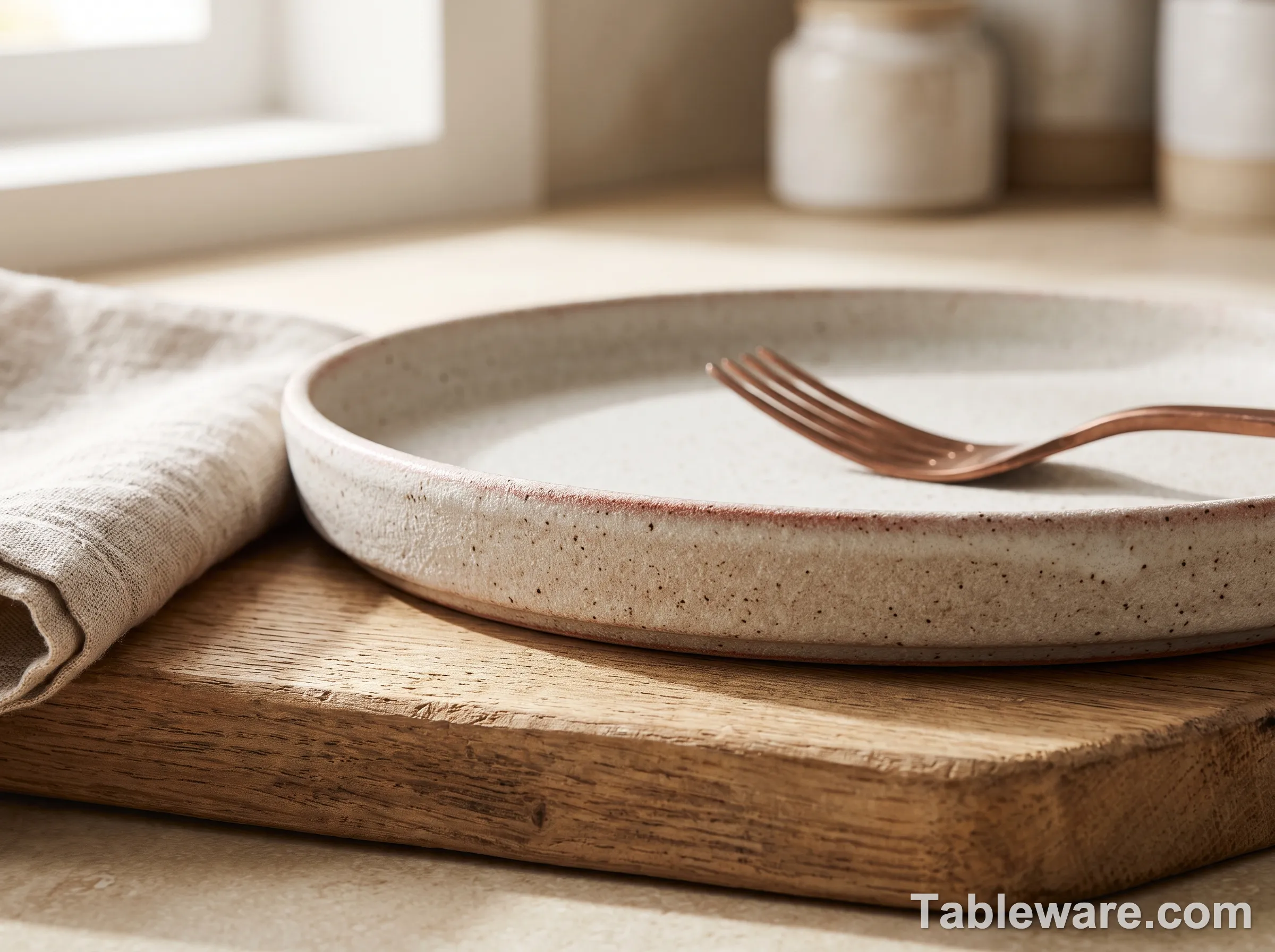
Fig 2. The Stone Lain matte speckled finish. Notice the slightly sandy surface texture — it's not actually rough, but it doesn't read as glassy-smooth the way the Elama does.
Style: what they look like in a real kitchen
Marketing photos are useless for dinnerware, because every brand shoots on the same linen runner with the same eucalyptus sprig. Here's what these three actually look like on a real Tuesday night with pasta and red sauce.
Stone Lain matte sand is a neutral that doesn't compete with food. The speckling is genuinely random, not stamped, so each plate has its own micro-pattern. It looks like a $90 artisan plate, which is the whole point. The only downside: the matte finish shows oily fingerprints if you serve something like fried chicken or pesto pasta. You will be wiping these more than the others.
Gibson Soho reactive blue-grey is the loudest of the three. The variegated glaze is dramatic — almost painterly. On a styled table it looks great. On a weekday table with leftovers, it can feel like the plate is trying to upstage the food. If you cook brown food (meatloaf, mushroom pasta, beef stew), the cool blue-grey contrast actually helps. If you cook a lot of vibrant reds and oranges, the contrast fights you.
Elama Modern Farmhouse sage is the most contemporary. The matte sage reads as "designed" rather than "kitsch." The coupe shape means your food sits in the center, no weird rim to navigate. It photographs beautifully and it pairs with just about any napkin or flatware.
One thing I didn't expect: the Stone Lain sand color hides scratches and tiny chips way better than the other two. The Gibson Soho shows every micro-scratch on the glaze, and the Elama's smooth matte surface shows wear patterns on the bottom of the plate from sliding around in the cabinet.
Durability: the six-month report
Here's where I have actual data, not vibes. All three sets went through the same six-month cycle:
- Daily dishwasher use (top rack, Cascade Platinum pod, normal cycle, ~140°F)
- Two to four uses per week
- Microwave reheating three to five times per week
- One accidental drop each (different plates, different days — don't ask)
- Stacked in a standard upper cabinet, no plate dividers
Stone Lain: Zero chips, zero cracks, zero glaze wear. One plate has a faint gray scuff on the rim from the drop test (dropped from counter height onto tile floor — about 36"). The scuff wiped off. The matte finish has not changed in appearance. The plate still looks new. This is genuinely impressive for the price.
Gibson Soho: One mug developed a hairline crack at the handle base at month four. The reactive glaze has not changed visually — no fading, no pitting. Two plates show very faint silverware marks on the surface that come off with a baking soda paste, no problem. The hairline crack is the only blemish, and it happened on the mug, not a plate. The reactive glaze, by the way, is tough. It's a thicker, more durable coating than the matte finishes.
Elama: One plate chipped at the rim during the drop test (counter to tile, again ~36"). The chip is small but visible because of the contrast with the sage glaze. The matte finish is showing slight wear on the underside from cabinet sliding. Nothing structural, but the plate looks "used" faster than the other two.
Net result: Stone Lain is the durability winner, hands down. Gibson's reactive glaze is also impressively tough, but the thinner stoneware body shows stress at the handle joints on mugs. Elama is the most fragile of the three, which is the trade-off for the lighter, more modern profile.
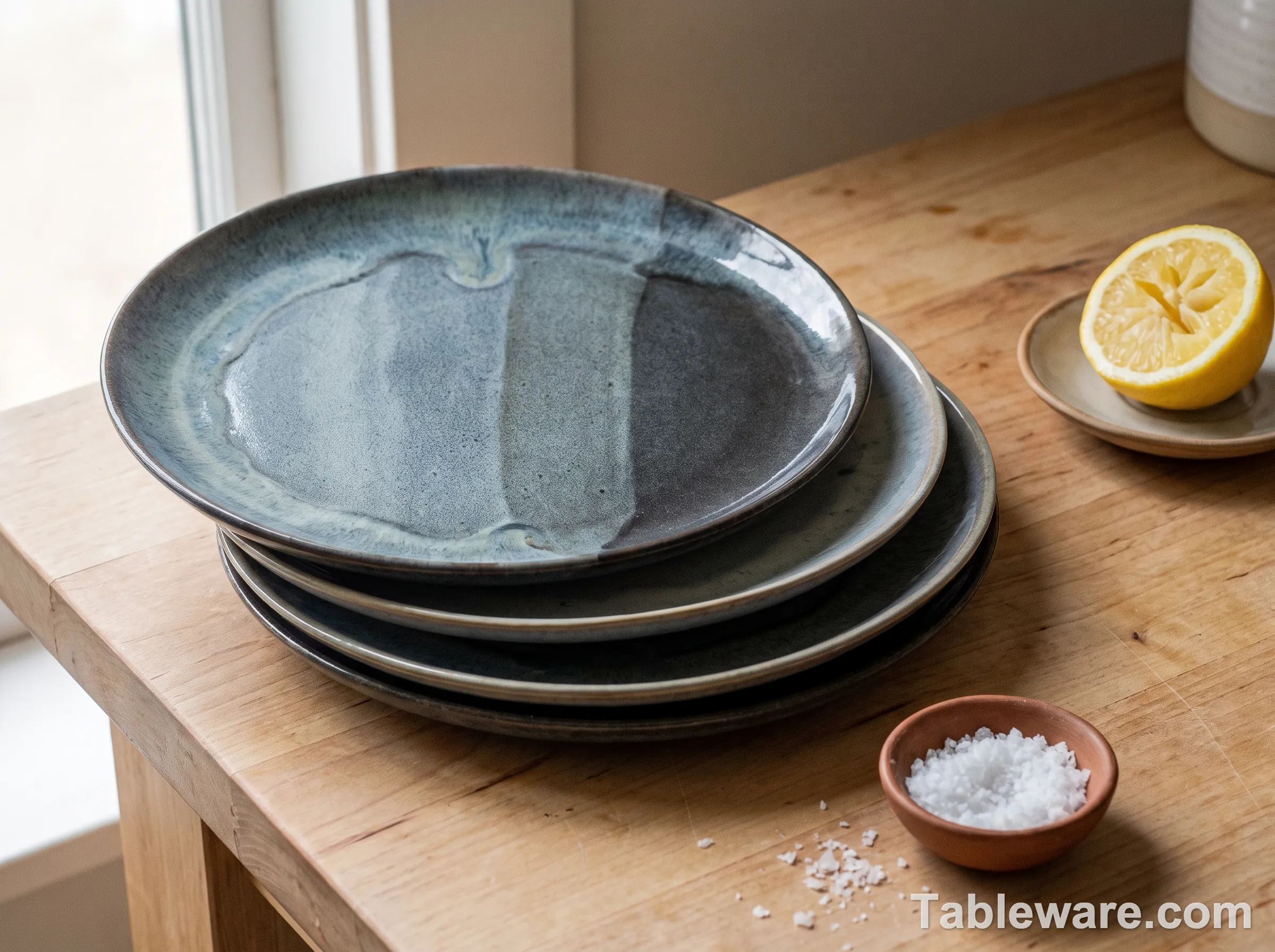
Fig 3. The Gibson Soho reactive glaze. The variegation is real, not printed — every plate has a slightly different blue-grey pattern. The glaze itself is also the most chip-resistant of the three.
The replacement-piece problem
Here's the dirty secret of every dinnerware brand in the $40-60 bracket. You're not really buying a "set." You're buying a starter kit, and within 18 months you'll need to replace a plate, a bowl, or a mug. The question is: can you?
I tested this. In month five, I deliberately broke a Stone Lain mug to see what happened.
Stone Lain: Found an open-stock listing for the mug on Amazon within 30 seconds. $7.99 for one mug, in stock. Bought it, came in matching speckle, no color drift, no visible difference from the original set. This is a huge deal. Stone Lain is one of the few value brands that actually maintains its open-stock program.
Gibson: Also good. The Soho line has open stock on Amazon and at Target. Replacement mug was $6.99, but the glaze tone was a little bluer than the original set. Not a deal-breaker, but visible if you set them side by side. Gibson's open-stock colors do drift between production runs.
Elama: Bad. I spent 20 minutes looking and could only find the full 16-piece set. No individual mug, no individual bowl, no open stock on Amazon or anywhere I could find. If a piece breaks, you buy the whole set again or you mix in a piece from a different brand and live with the mismatch.
If you care about long-term set integrity — and most people do, because it's a pain to keep a 12-piece set whole — Stone Lain is the clear winner on replacement logic.
The value math: dollars per piece and dollars per year
Let's do this cleanly. I'm pricing as of mid-2026 on Amazon.
| Stone Lain 16-pc | Gibson Soho 16-pc | Elama 16-pc | |
|---|---|---|---|
| Set price | $54.99 | $59.99 | $44.99 |
| Per piece | $3.44 | $3.75 | $2.81 |
| Open stock available | Yes | Yes (limited) | No |
| Replacement plate | $8.99 | $9.99 | Set only |
| Warranty | 1 yr limited | 1 yr limited | 90 days |
| Mug capacity | 14 oz | 12 oz | 16 oz |
The Elama is the cheapest per piece, but the no-replacement-stock thing kills the long-term value. If you factor in buying a second full set within three years because you can't replace broken pieces, the real per-year cost actually goes up to about $30/year, which is worse than the other two.
Stone Lain and Gibson are essentially tied on annual cost, but Stone Lain wins because of the stable open-stock program and the heavier build.
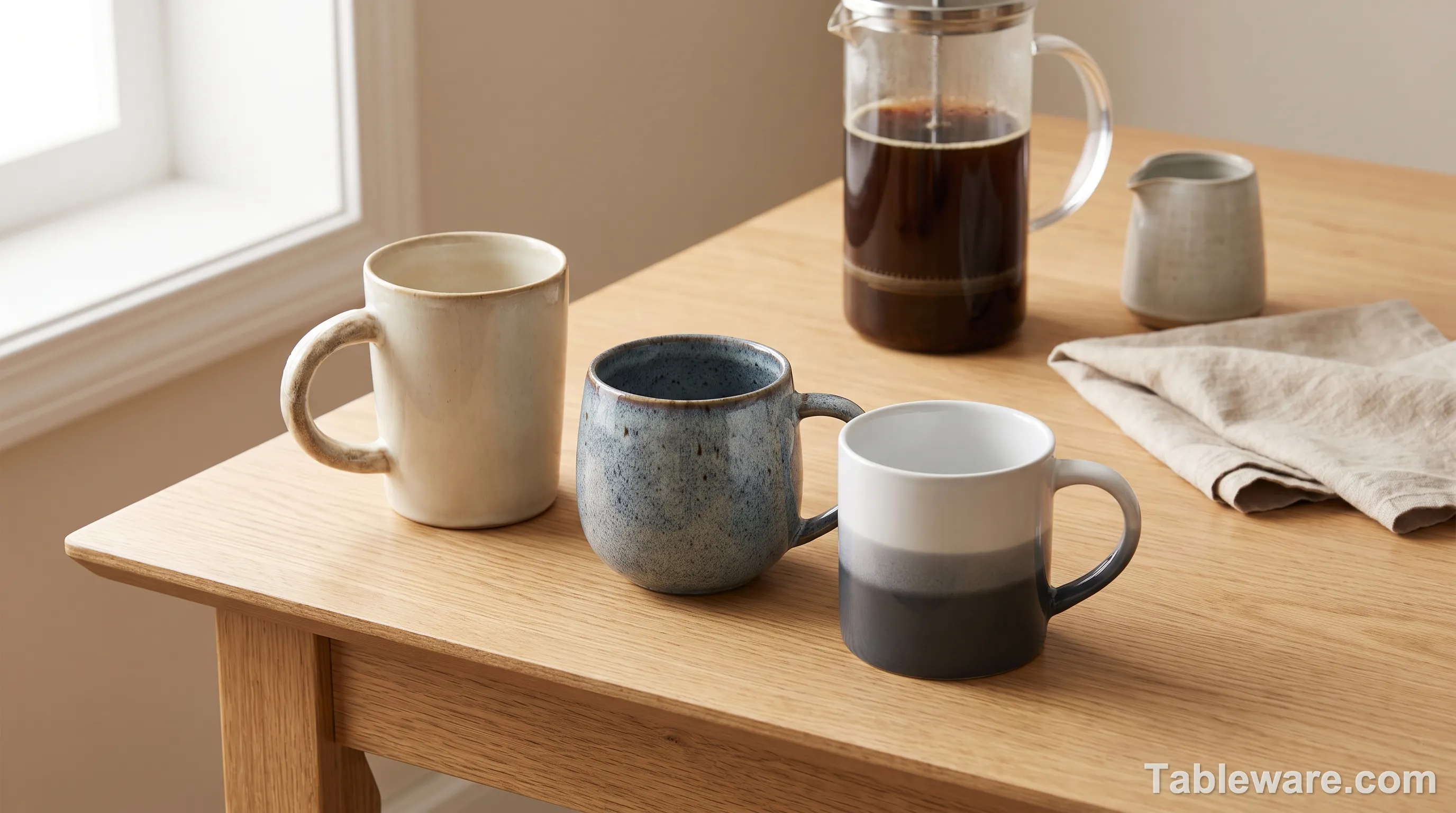
Fig 4. The mug comparison. Stone Lain (left) is taller and chunkier, Gibson (middle) is shorter and wider, Elama (right) is the largest capacity at 16 oz but the thinnest handle. The handle comfort winner is Stone Lain, by a wide margin.
My picks by household type
After six months of living with all three, here's what I'd actually recommend.
For a family with young kids: Stone Lain matte speckled. The heavier weight is annoying for small hands, but the durability and the scratch-hiding matte finish will save you from replacing the set every two years. The neutral color also hides the inevitable pasta sauce streaks between dishwasher cycles.
For a couple hosting dinner parties: Gibson Soho. The reactive glaze is a conversation starter, and the dramatic color holds up beautifully on a styled table. Yes, it's a bit "loud" for everyday, but if you're serving 4-6 people 2-3 times a month, the visual impact is worth it.
For a first apartment, under $50 budget, no kids: Elama Modern Farmhouse. The lighter weight and modern profile suit a smaller kitchen, and the clean lines work with the IKEA/Hem/Target aesthetic most first apartments lean into. The "no open stock" issue isn't a deal-breaker if you can afford to replace the whole set every 3-4 years.
For a house you plan to live in for 10+ years: Stone Lain. No question. The replacement piece availability, the heavier build, and the neutral aesthetic all point to a set that you won't outgrow.
What I wish I knew before buying any of them
A few things I learned the hard way.
1. The box weight tells you almost nothing. All three 16-piece sets weigh about the same total in the box, but the weight distribution per piece varies wildly. Stone Lain loads the weight into the plates and bowls; Gibson spreads it more evenly; Elama front-loads the bowls and saves weight on the plates. Open the box in the store if you can, or at least check the per-piece specs on the brand's website.
2. Reactive glaze hides flaws better than matte. The Gibson Soho's reactive pattern is doing visual work that the matte finishes can't. A fingerprint, a tiny scratch, a small glaze bubble — all invisible on the Gibson, all obvious on the Stone Lain or Elama. If you have OCD about tableware, the Gibson is actually less work to keep looking clean.
3. The "matte" vs "reactive" choice is the real decision. Stop thinking about brand and start thinking about finish. Do you want a calm, neutral, food-first table? Matte. Do you want a more dramatic, design-forward table? Reactive. The brand is secondary.
4. Buy the open stock first. If you can, buy a single piece from the brand's open-stock program before you commit to the full set. That tests shipping speed, packaging, and color match without risking a $50 mistake. The 30-day window most brands offer is plenty of time.
5. Dishwasher detergent matters more than brand. All three of these sets can be damaged by phosphate-free detergent over 18-24 months. The Cascade issue is real. If you're set on a "natural" detergent like Seventh Generation or Ecover, you will see glaze wear faster, regardless of which brand you buy. Just FYI.
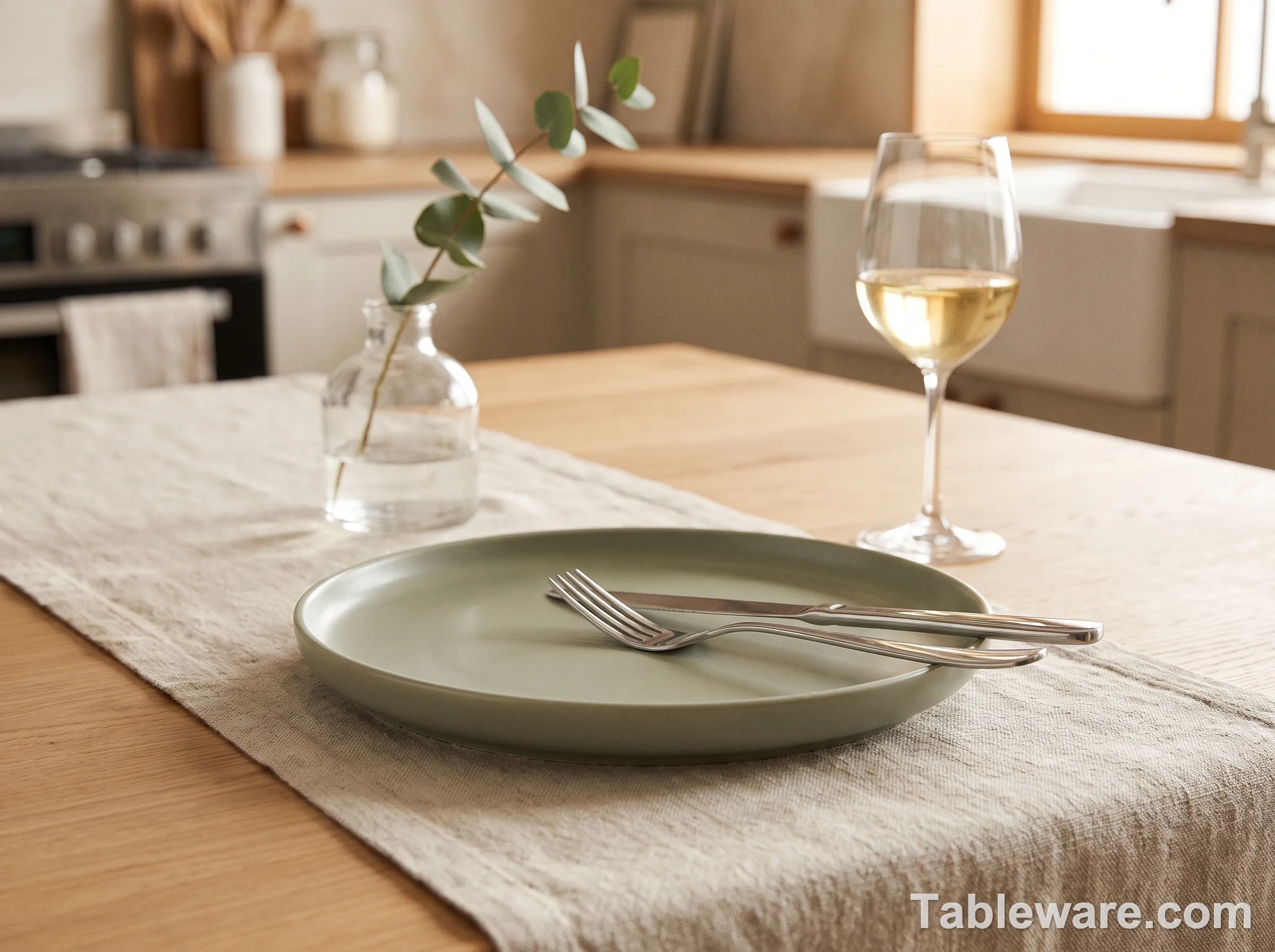
Fig 5. The Elama Modern Farmhouse sage plate, styled. The coupe shape and smooth matte finish make it the most photogenic of the three — but also the first to show wear on the bottom from cabinet sliding.
The verdict
If you forced me to pick one of these three sets and live with it for the next decade, I'd buy the Stone Lain matte speckled 16-piece set. It's the heaviest, the most durable, the easiest to replace pieces for, and the most forgiving of daily abuse. The aesthetic is quiet enough to disappear behind good food, and loud enough to feel like an upgrade from a 10-year-old IKEA set.
The Gibson Soho is a close second, and the right answer if you care more about the table looking designed than the set lasting forever. The Elama is a real value buy at $45, but the open-stock issue makes it a 3-4 year set, not a 10-year set.
One last thing. All three of these brands go on deep discount multiple times a year — Memorial Day, July 4, Labor Day, Black Friday, and Amazon Prime Day. Don't pay full price for any of them. The "list price" on the box is meaningless; the real price is whatever Amazon shows in late November. Set a camelcamelcamel alert and wait. You'll save 30-40% off these numbers, and the value math gets even better.