7 Things to Know Before You Buy Handmade Pottery Online
I bought a $42 mug off Etsy last spring. It was gorgeous in the photos. Speckled cream glaze, slightly wonky handle, the kind of "wabi-sabi" thing the algorithm wants you to click. It arrived three weeks later, wrapped in what looked like a single sheet of bubble wrap, with a hairline crack running through the foot. The seller refunded me, but I was out the wait. I learned more from that one mug than from a year of reading pottery blogs.
Here's the honest truth about buying handmade pottery online: it's a different sport than buying a Le Creuset dutch oven from Williams Sonoma. The pieces are made by humans, fired in kilns that occasionally have bad days, and shipped across state lines by carriers who treat boxes like footballs. If you go in expecting Amazon Prime economics with artisan prices, you will get burned.
This guide is the 7 things I wish someone had told me before I started ordering studio pottery from Etsy, brand sites like East Fork and Heath, and one memorable Instagram DM. Some of it will save you money. Some of it will save you heartbreak. Most of it will make you a smarter buyer in 15 minutes than I was after two years of trial and error.
Let's go.
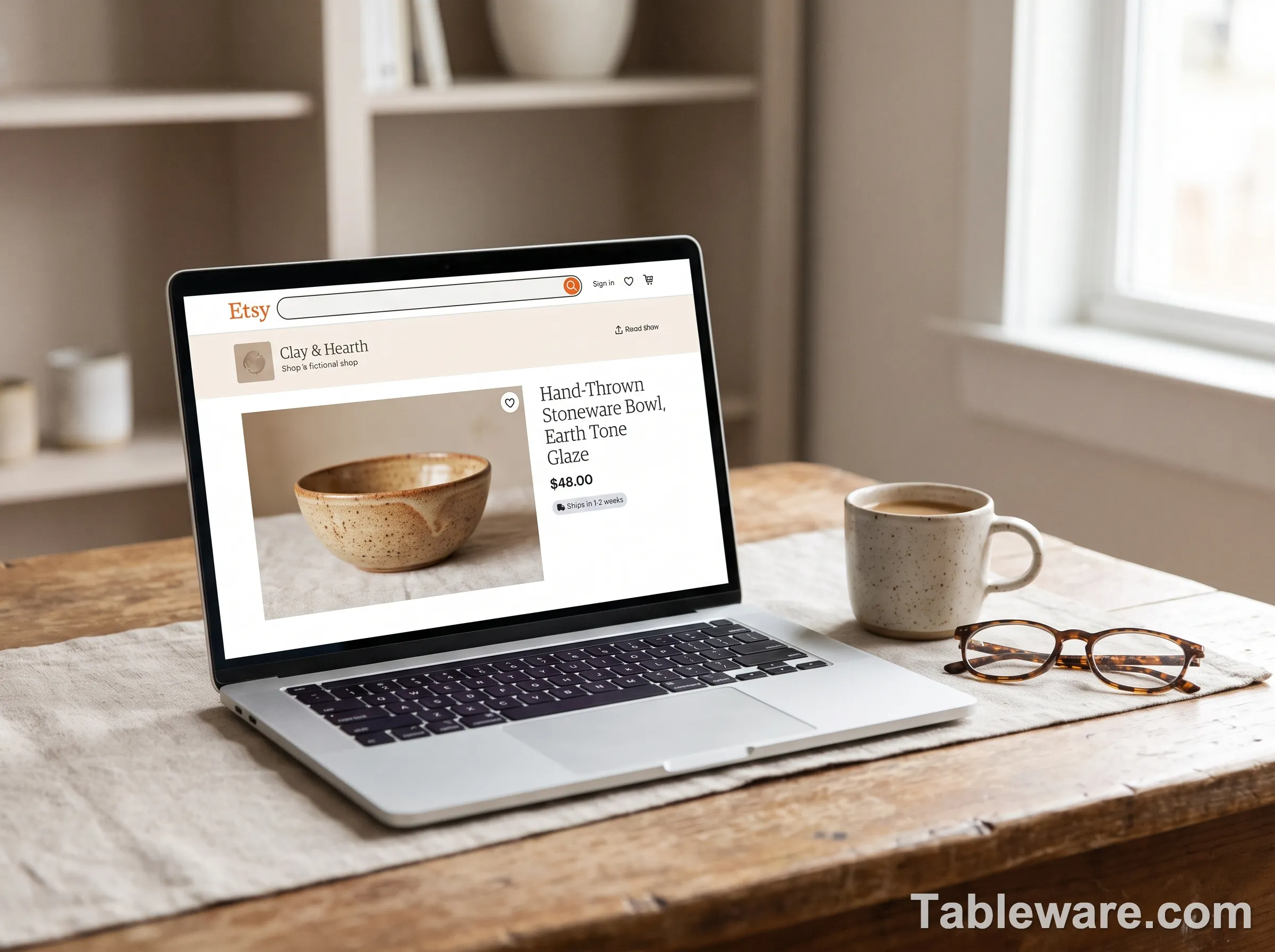
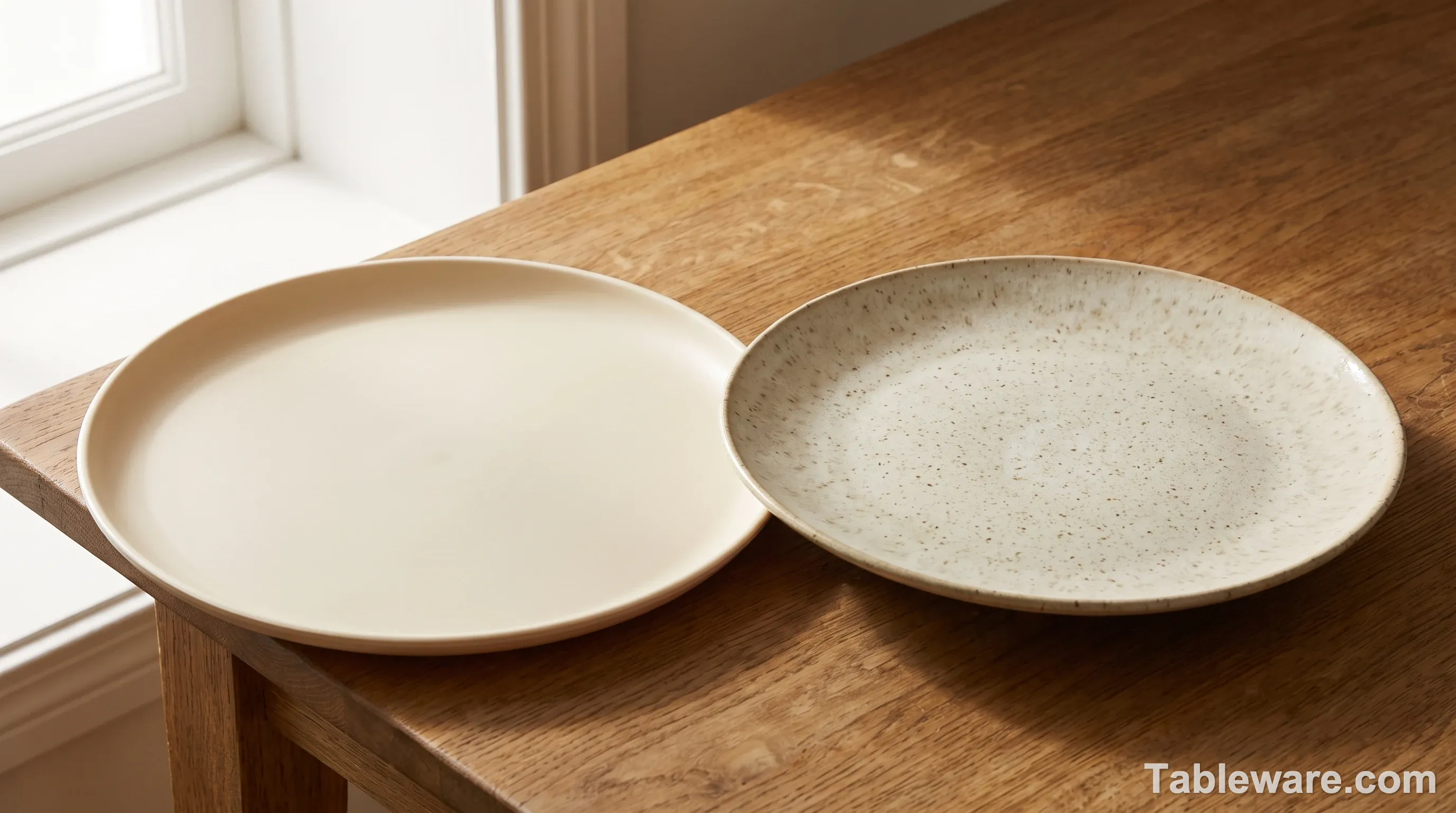
Fig 1. A typical Etsy pottery listing — beautiful photo, four lines of text, and a 1-2 week ship date. Everything you need to vet lives in those four lines.
1. Why "Handmade" Online Is a Different Game (and a Harder One)
Walk into a craft fair and you can hold the bowl. You can feel the weight — a 10-inch stoneware dinner plate is roughly 1.4 to 1.8 pounds, and you can tell within 30 seconds whether the foot is balanced or if it'll wobble on the table. You can run your thumb across the glaze and see if it's smooth or sandy, if the rim is rolled or sharp, if the colors look right under daylight instead of the softbox the maker used in the booth photo.
Online, all of that goes away. You get a photo — usually 4 to 8 of them — taken by someone who knows how to make their work look incredible. You get a description written in 80 to 200 words, often by the same person. You get dimensions in inches and weight in pounds, if you're lucky, and a note about the clay body if it was important to the maker. That's it.
There's no "handmade" certification. Etsy, the biggest marketplace for handmade pottery online, defines handmade as "made by hand, and either designed or significantly altered by the seller." That technically allows someone to buy slip-cast greenware from a factory in Mexico, fire it in their own kiln, and call it handmade. The platform's enforcement is mostly complaint-driven. So you, the buyer, have to do the verification work.
This is the part most guides skip. Buying handmade pottery online is not a normal consumer transaction. It's closer to commissioning art, except you're not in the room when the artist makes decisions about clay body, glaze chemistry, and firing temperature. You are betting that the person on the other end of the listing knows what they're doing.
The good news: most of them do. The better news: there are concrete ways to tell who does and who doesn't. That's what the rest of this guide covers.
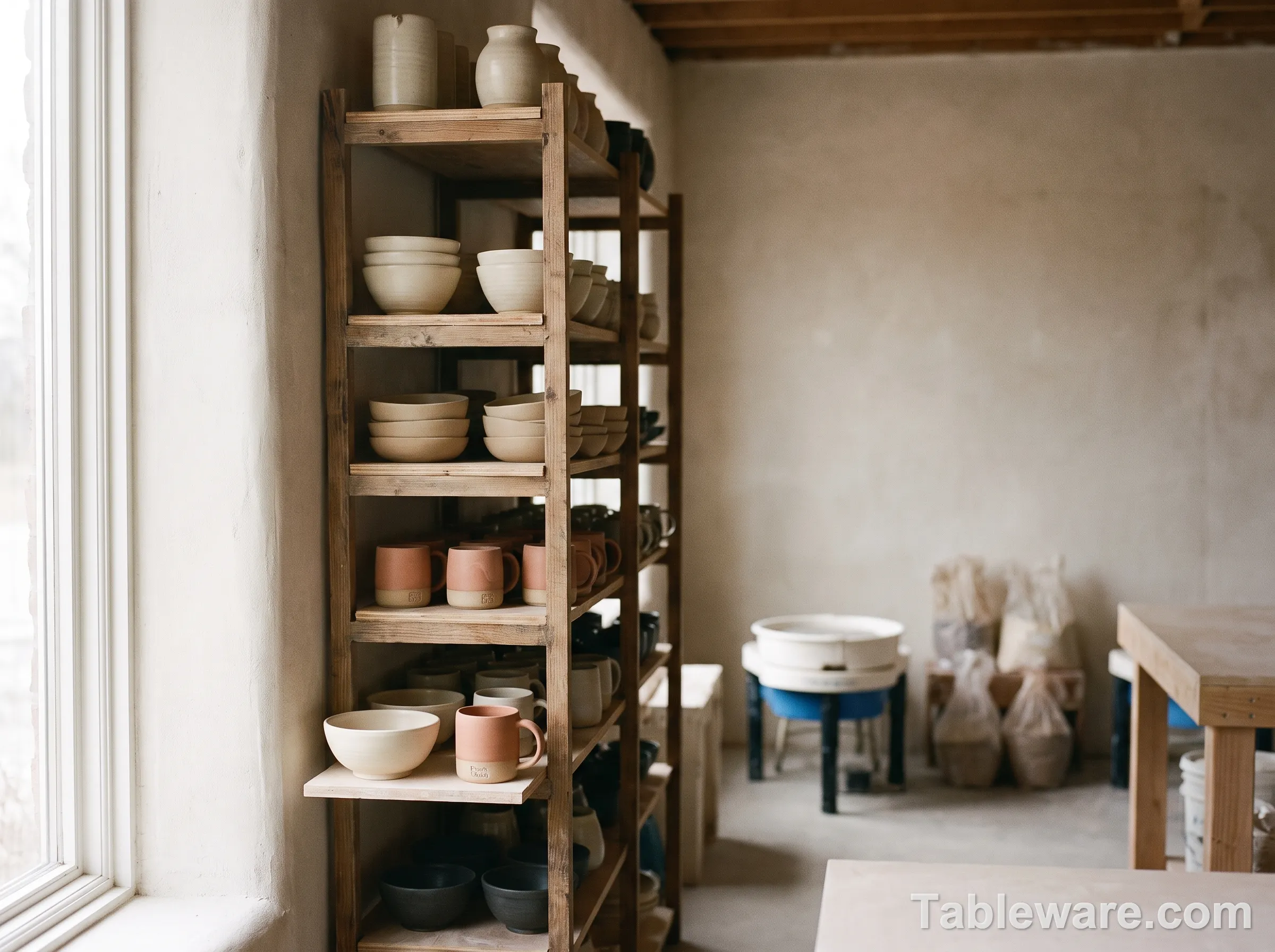
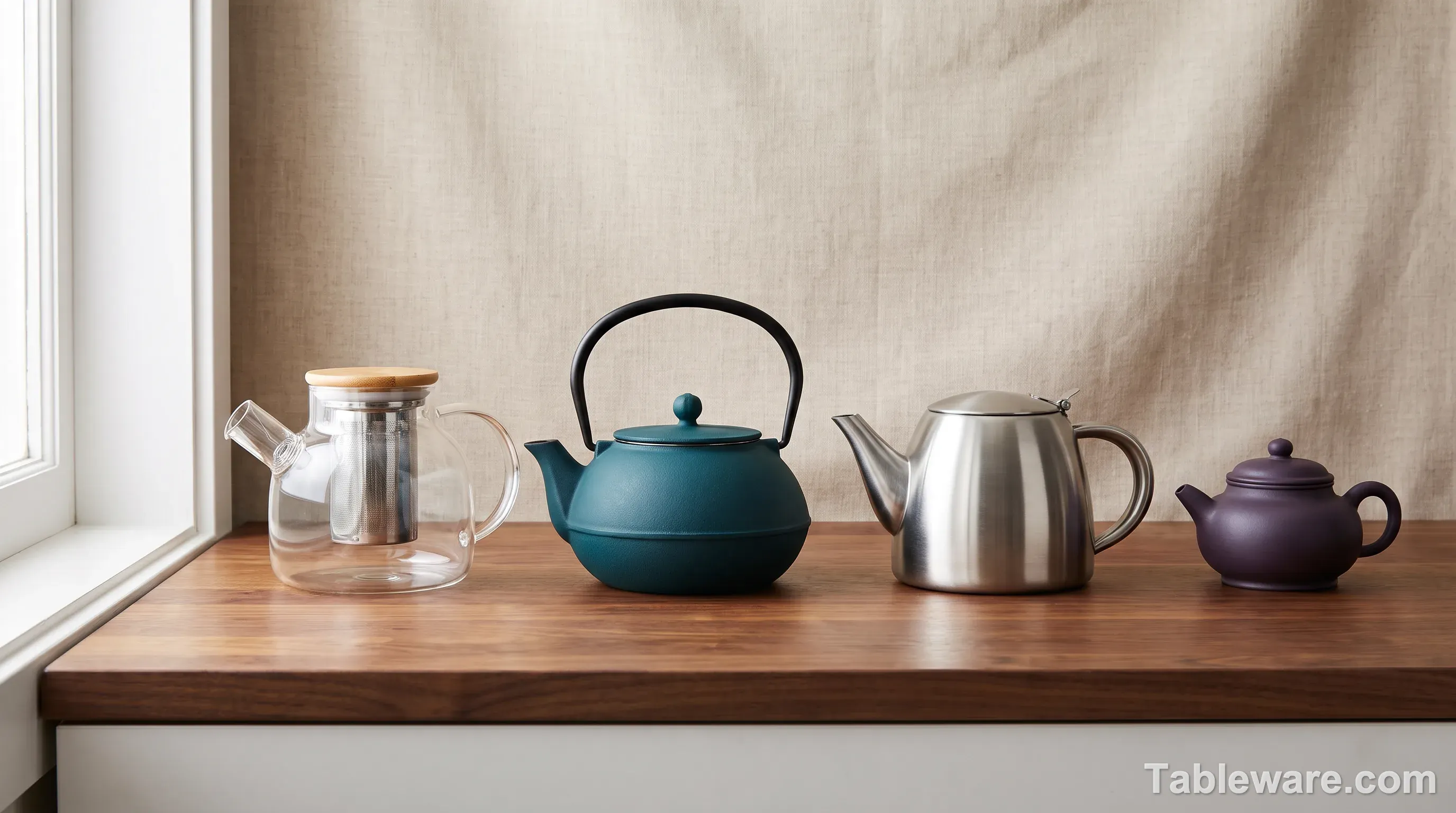
Fig 2. A working studio shelf — pieces in production often look less "Instagram perfect" than the listing photos, and that asymmetry is a good sign.
2. Where to Actually Buy Handmade Pottery Online (and Where to Avoid)
There are basically three channels, and they all behave differently.
Etsy and large marketplaces. Etsy's pottery category is enormous — well over 200,000 active listings at any given time, and the platform does a reasonable job surfacing shops with good review velocity. The upside: selection, buyer protection (Etsy Purchase Protection covers damage in transit for most orders, which is a big deal — more on that in section 5), and the ability to filter by clay body, color, and even "ready to ship" if you don't want to wait. The downside: you are doing the verification work. There are dropshippers, resellers, and a small but real slice of "handmade" listings that are factory goods with a kiln pass.
Brand sites like East Fork, Heath, and Jono Pandolfi, and Farmhouse Pottery. These are studios that have grown into brands. East Fork sells direct through eastfork.com and ships from a small but growing set of clay bodies and glazes — their "Eggshell" and "Morel" lines are best-sellers, and the site tells you exactly what clay you're getting (a North Carolina stoneware) and whether it's dishwasher safe. Heath is the 75-year-old California studio famous for its "Coupe" dinnerware and the 2002 acquisition that put it on the design map; their site is the best place to buy first-quality pieces. Jono Pandolfi sells restaurant-grade handmade dinnerware sets directly to chefs and home cooks, mostly by quote. Farmhouse Pottery is the Vermont studio that pivoted hard into direct-to-consumer after a Shark Tank appearance and now ships mugs, bowls, and bakeware nationwide. These sites cost roughly 20-40% more than Etsy equivalents, but the product is consistent and the return policy is real.
Direct from a studio, often via Instagram DMs. This is where the most interesting work lives. Studios that don't have a Shopify backend often take orders through DMs, email, or a small WooCommerce cart. You'll see posts on Instagram — the @eastforkpottery, @heathceramics, @jonopandolfi, @baabaazhem, @workhorseceramics accounts are the gateway — and you can message the maker directly to ask about custom orders, lead times, and what's coming out of the next firing. This is the best channel for one-of-a-kind pieces. It's also the slowest, most opaque, and most dependent on you asking the right questions.
A few places to actively avoid: Amazon listings for "handmade ceramic" (almost always factory slip-cast), Wayfair's "artisan" collections (mostly mass-produced), and any Etsy shop that uses stock photos instead of process photos. We'll get to the red flags in section 4.
3. How to Read a Pottery Listing Like a Pro
Most pottery listings have the same skeleton. Photo at the top, title, price, ship time, then a wall of text that — if the maker is good — tells you exactly what you need to know. Here's what to look for, in priority order.
Clay body.
The four clay bodies you'll see are stoneware, porcelain, earthenware, and raku. Stoneware is the workhorse of studio pottery — chip-resistant, dishwasher safe in most cases, fired between 1200°C and 1300°C, and the most common choice for functional dinnerware. Porcelain is the delicate one, fired hotter (1280°C+), translucent in thin sections, and used by makers who want a refined, white surface. (See our pro porcelain breakdown if you want the full chemistry.) Earthenware is the terracotta cousin — beautiful, but more porous and usually not dishwasher safe. Raku is the showy, crackle-glazed technique that's decorative only; never food-safe, never dishwasher safe, never microwave safe. The listing should name the clay body explicitly. If it doesn't, ask.
Glaze and food safety.
"Lead-free" and "food-safe" are not the same thing. A glaze can be lead-free and still leach other things under acidic conditions (citrus, tomato, vinegar). Reputable makers use commercially tested glazes and will say "durable, food-safe, dishwasher safe" or similar. The most defensive you want to be is to ask the maker what temperature the glaze was fired to — if they don't know, walk away.
Dimensions and weight. A 10-inch dinner plate is a 10-inch dinner plate. The shape of the rim, the height of the foot, and the depth of the well are not. If the listing only gives you one number, you don't have enough information to know if the plate will fit in your cabinet. A good listing will give length, width, height, and weight. A great listing will give capacity in fluid ounces for bowls and mugs. If you're buying handmade pottery online for daily use, this is the one spec most listings skip and most buyers wish they had asked for.
Process photos. This is the single biggest tell of a real maker. Studios that are actually making their work show process — wedging clay, trimming feet, dipping glazes, loading kilns. If the listing has 8 photos and they're all hero shots of finished pieces, the maker is either a hobbyist who hasn't built out their shop, or a reseller. Neither is necessarily bad, but it's information.
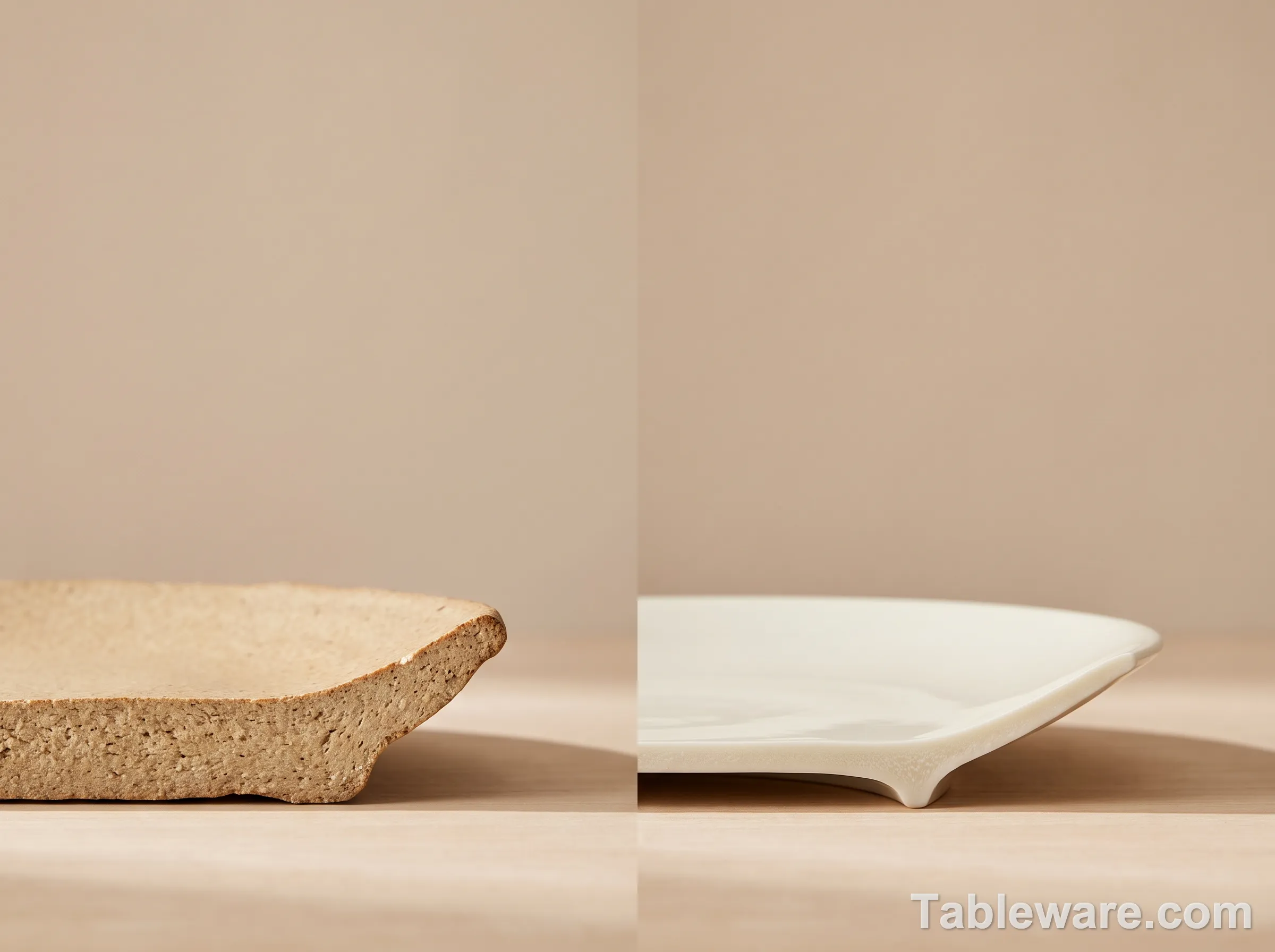
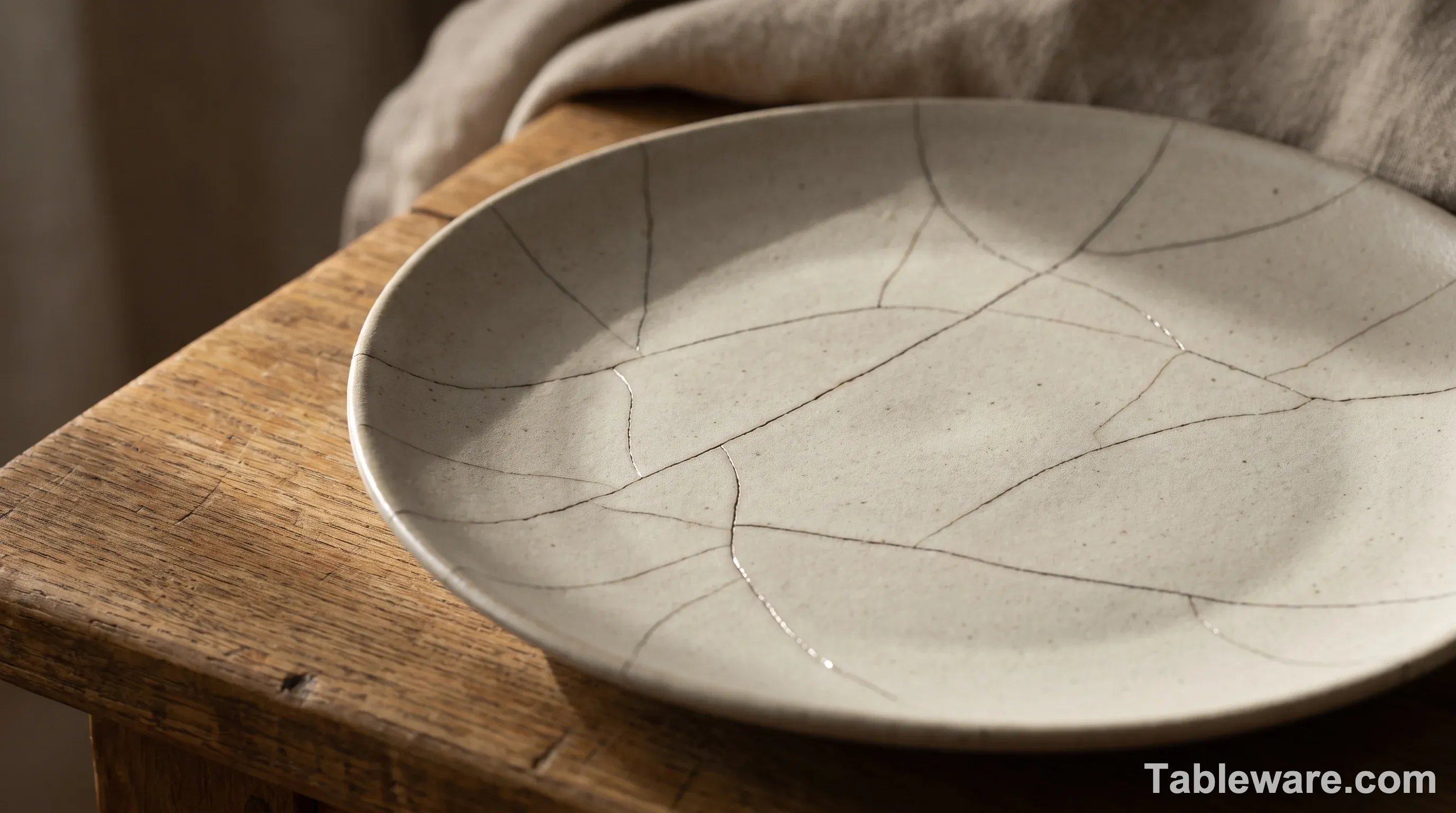
Fig 3. Stoneware (left) and porcelain (right) — the grain difference is what makes porcelain translucent in thin sections and stoneware the workhorse of functional dinnerware.
4. How to Spot a Trustworthy Maker (and the Etsy Red Flags That Save You Money)
The maker is the product. You're not buying a coffee mug — you're buying the specific combination of skill, equipment, and taste that this person brings to a piece of wet clay. Some makers are brilliant. Some are learning. Some are reselling factory seconds as handmade. You need to tell the difference. And honestly, most Etsy pottery quality issues trace back to a handful of telltale patterns — a 2-week-old shop with 400 listings, a wholesale section sitting next to the retail one, the same hero shot across dozens of products. We'll get to the red flags in a second.
Photo depth and consistency.
Real studios shoot their work over and over against the same backdrop with the same lighting. Listings will have a consistent color temperature, similar angles, and at least one "underside" shot that shows the foot ring, the maker's mark, and any incidental glaze drips. Resellers use stock photography or photos stolen from other shops. Reverse image search is your friend here — if a Google Lens search shows the same photo on three different shops, run.
Reviews that mention breakage, scale, or color shift.
A shop with 200 reviews that all say "gorgeous, fast shipping, well packed" is doing well. A shop with 50 reviews where 5 of them mention "color was a little different than the photo" or "smaller than I expected" is being honest. The honest shop is the one you want to buy from, because they'll tell you about the piece in the listing text.
Maker marks and signatures.
Most studio potters sign their work, either with a stamp on the foot or a signature under the glaze. If you flip a piece over and there's nothing — no mark, no stamp, no indication of who made it — that's a yellow flag. The best studios (Heath, East Fork, Jono Pandolfi) have a recognizable maker's mark that's also a small branding win for the customer.
Red flags to walk away from.
Etsy's "Handmade" item description with no process photos. A shop that's been open for 2 weeks with 400 listings. A listing where every piece is the same shape and color across dozens of photos (factory consistency, not studio consistency). Reviews that mention "shipping was slow but the seller was nice" 12 times in a row. The biggest red flag: a shop that has a "Wholesale" section in addition to retail, with the same product photos as the retail section.
5. Shipping, Breakage & Returns: What Happens If It Arrives in Pieces
This is the part nobody wants to talk about. Handmade pottery breaks. Not "might" — does. The pieces are thin-walled in many cases, fired at temperatures that make them brittle, and the only thing between your $300 dinnerware set and a tile floor is a corrugated cardboard box and a delivery driver who's having a bad day. Handmade ceramics shipping damage is the single most common reason a first-time buyer quits Etsy — more than price, more than quality disputes, more than lead times. So this section matters.
How good studios pack. The gold standard is double-boxing — a small inner box with the piece, foam or paper padding, then a larger outer box with at least 2 inches of clearance on every side. East Fork uses molded paper pulp inserts. Heath uses 200# test corrugated with custom-cut foam. The worst packers wrap a piece in one sheet of bubble wrap, put it in a box that's 1 inch too big, and call it a day. A listing that says "ships in 3-5 business days, carefully packaged" tells you nothing. A listing that says "double-boxed, foam-padded, insured" tells you everything.
Damage claims and buyer protection. Etsy's Purchase Protection covers orders that arrive damaged or don't arrive at all, up to $250 in most cases. Brand sites like East Fork and Heath have their own damage policies — typically a replacement for in-stock items or a refund for one-of-a-kind pieces. Direct-from-studio purchases have no protection layer, which is why you only buy from a studio you've either visited in person or have on the recommendation of a friend.
Made-to-order lead times. Real studio pottery takes time. A 4-8 week lead time is normal for made-to-order dinnerware. Jono Pandolfi quotes 6-10 weeks for restaurant orders. East Fork's "Seconds" shop ships in 1-2 weeks because it's overstock, and our head-to-head comparison of the three brand-direct studios walks through the quality and lead-time trade-offs. If a listing says "ready to ship" and the wait is 0-3 days, the piece is probably in a finished-goods warehouse, which usually means it's not one-of-a-kind and may be slip-cast instead of wheel-thrown. Both are fine, but you should know which you're getting.
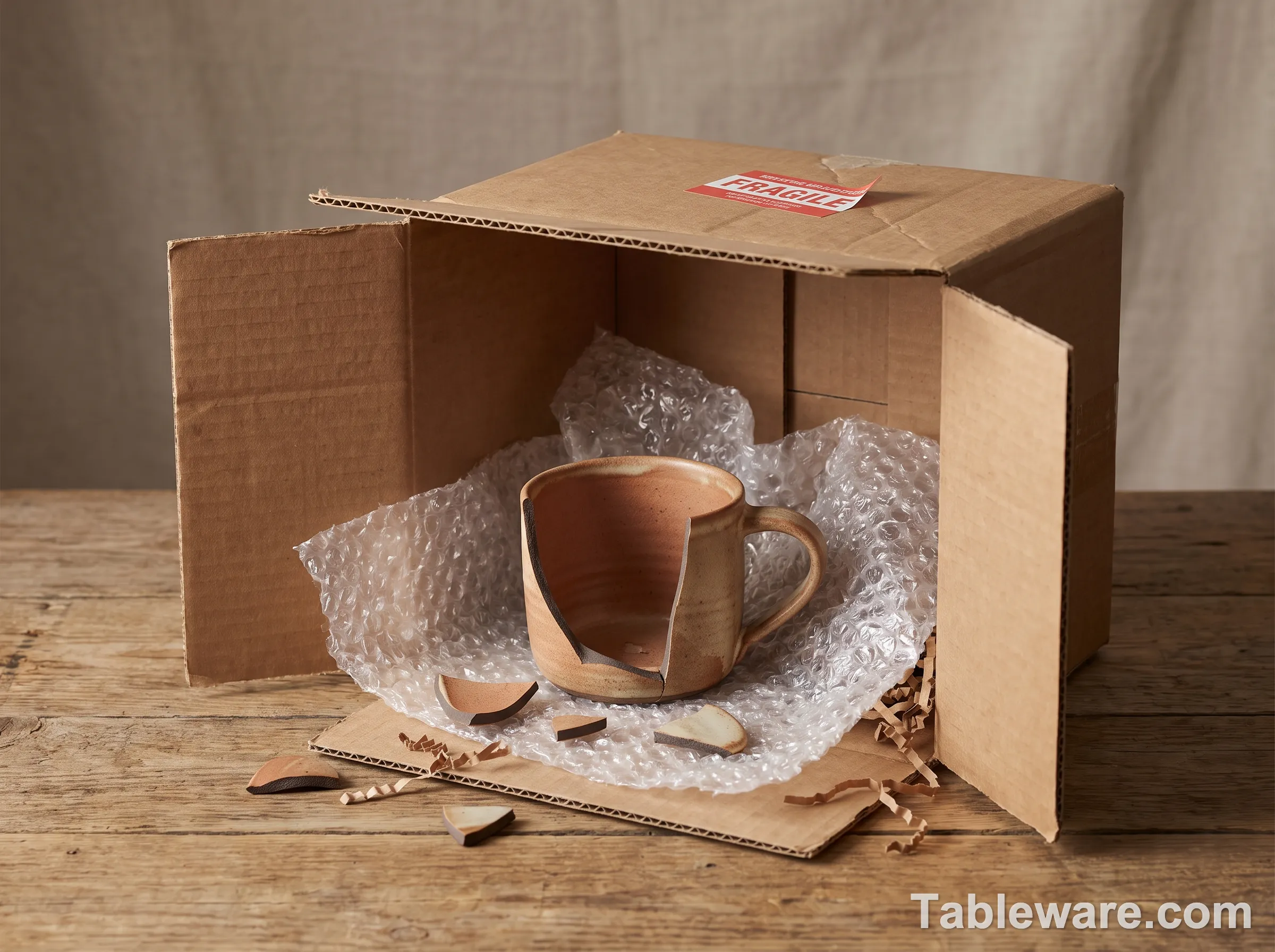
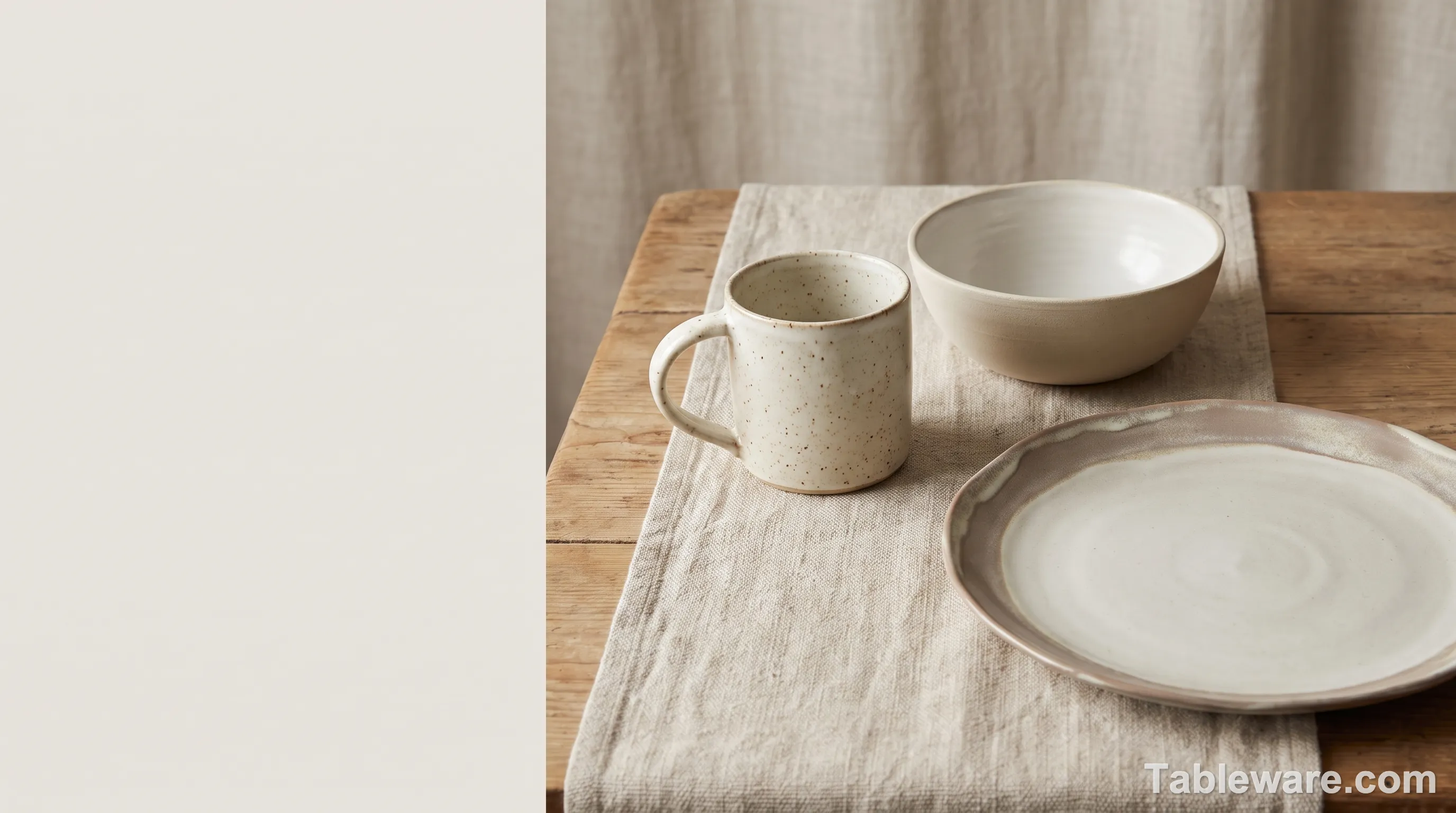
Fig 4. This is what bad packing looks like — single layer of bubble wrap, no double-box, no foam. If the listing doesn't describe the packing, assume this is what you'll get.
6. Care, Daily Use, and the Questions to Ask Before You Buy
The biggest mistake I see new buyers make is treating handmade pottery like mass-produced dinnerware. They put a stoneware mug in the microwave, run it through the dishwasher every night, and wonder why it crazed (those tiny cracks in the glaze) after a year.
Dishwasher, microwave, and the "food-safe" label.
Most stoneware and porcelain dinnerware from reputable makers is dishwasher safe, and most handmade dinnerware sets are dishwasher safe out of the box — but check the listing. Most is microwave safe, but a small number of glazes (especially those with metallic oxides or mother-of-pearl lusters) are not. The "food-safe" label is a US FDA thing — it means the glaze has been tested and won't leach harmful amounts of lead or cadmium under normal use. It does not mean the piece is indestructible. Hand washing will always extend the life of handmade dinnerware. The dishwasher is fine for everyday use, but if you want the piece to last 20 years, hand wash.
Thermal shock.
This is the silent killer. A hot mug from the microwave, set on a cold stone countertop or rinsed under cold water, can crack. A stoneware plate that goes from the oven (200°C) to a wet dish rack can shatter. The rule: don't subject handmade pottery to rapid temperature changes. Let it come to room temperature first.
Staining and patina. Handmade stoneware with a matte or satin glaze will develop a patina over time. Coffee will stain a cream-colored glaze. Curry will stain a white one. This is not damage — it's a feature. If you want pristine forever, buy porcelain with a glossy, vitrified glaze. If you want character, buy matte stoneware and lean in.
5 questions to DM the maker before you pay. These are the ones I always ask, in roughly this order:
- What clay body is this, and what temperature was it fired to?
- Is the glaze food-safe, dishwasher safe, microwave safe?
- If it breaks in shipping, what's your replacement or refund policy?
- Is this piece in stock, or made-to-order? If made-to-order, what's the lead time?
- Are there any pieces in your shop right now that you'd recommend over this one?
A good maker will answer all five within 24 hours, in a tone that sounds like a person, not a brand. A bad maker will ignore you, or send a one-line answer that doesn't actually answer the question.
7. Is Handmade Pottery Actually Worth the Price? The Honest Pros and Cons
Look, the marketing copy for handmade pottery is brutal. Every Etsy shop description has the words "artisanal," "one-of-a-kind," and "made with love." It's enough to make you cynical. So let me be honest: is handmade pottery worth it? Yes in some situations, no in others. Here's the framework.
What you actually pay for. A handmade stoneware dinner plate from a working studio costs roughly $30-60. A porcelain plate from a name-brand maker like Heath is $48-95. A wheel-thrown, hand-glazed mug is $25-45. A handmade 4-piece dinnerware setting (dinner plate, salad plate, bowl, mug) from a brand like East Fork runs $280-440 — and how to build a 4-piece dinnerware set over time is a separate decision if you don't want to drop four figures on day one. That same setting from a luxury brand like Jono Pandolfi or Match Pewter is $400-800. You're paying for the maker's time (a single bowl takes 30-60 minutes to throw, plus drying, trimming, glazing, and a 12-hour firing), the studio overhead (kiln electricity alone is $0.30-0.50 per firing hour for a small electric kiln), and the fact that there is exactly one of each piece in the world.
When handmade is the right call. If you use your dinnerware every day and you want pieces that develop character over time, handmade stoneware is one of the best values in home goods. A $45 set of East Fork mugs will outlast a $120 set of "ceramic" mugs from West Elm by a decade, and the East Fork ones will look better at year 10 than they did at year 1. If you collect art or design, handmade one-of-a-kind pieces are an accessible entry point — a $200 studio bowl is to decorative arts what a $200 print is to wall art.
When mass-produced is smarter. If you have kids under 10, a big dog, or a habit of putting dishes in the dishwasher without rinsing first, handmade porcelain is a bad bet. Buy Corelle Vitrelle (the triple-layered glass dinnerware that survived the 90s and is now cool again). Buy IKEA 365+. Buy the $40 16-piece set from Target Threshold. These are engineered for chaos. Handmade pottery is engineered for a slower, more careful life.
The framework that actually works. Spend more on the pieces you use every day (mugs, the dinner plate, the everyday bowl). Spend less on pieces that sit on a shelf or come out for parties. Skip handmade on anything you need to replace in a hurry. Buy handmade for the things you want to keep for 20 years.
8. Quick-Reference Checklist Before You Click Buy
Print this. Tape it to your monitor. Use it every time you order handmade pottery online.
The 7-item pre-checkout checklist:
- Clay body named? (Stoneware, porcelain, earthenware, raku.) If no, ask.
- Glaze food-safe and dishwasher safe? (Or are you OK with hand-wash only?)
- Dimensions and weight given? (Length, width, height, weight — and capacity in oz for vessels.)
- Process photos present? (Wedging, trimming, glazing, kiln loading — these in-progress shots should be there.)
- Reviews mention breakage, scale, or color? (Honest reviews > all-positive reviews.)
- Packing described? (Double-box, foam-padded, insured — not "carefully packaged.")
- Maker mark on the foot? (Signature, stamp, or logo — proof of who made it.)
If you can answer yes to at least 5 of those 7, buy with confidence. If you can answer yes to 3 or fewer, keep looking or DM the maker with the 5 questions from section 6.
FAQ
What if it arrives broken? Contact the maker within 48 hours with photos of the damage and the packing. Most will replace or refund. If you bought on Etsy, file a Purchase Protection claim. If you bought direct from a studio, you're dependent on their policy — which is why you ask in advance.
Can I return a piece I just don't like? Most handmade pottery is final sale. Etsy's "I changed my mind" return window is 30 days but many shops opt out. Brand sites like East Fork have a 30-day return window for unused pieces. Read the policy before you buy.
How long does handmade pottery last? A well-made stoneware or porcelain piece, used daily and hand-washed, will last 20+ years. A piece that goes through the dishwasher every day will last 5-10 years before the glaze shows wear. A piece in a china cabinet will last 50+ years.
Is handmade pottery food safe? Yes, if the maker says it is. The FDA regulates glazes in the US, and reputable makers use commercially tested, food-safe glazes fired to the right temperature. If the listing doesn't say "food safe," don't use it for food.
Why is handmade pottery so expensive? A single bowl takes 30-60 minutes to throw, 1-3 days to dry, 5-10 minutes to trim, 5-10 minutes to glaze, and 10-14 hours to fire. Multiply that by the cost of clay ($2-4 per pound), glaze ($20-50 per gallon, used across many firings), and kiln electricity ($3-6 per firing hour), and you have a piece that costs $15-25 in materials and labor before the maker pays themselves anything. The retail price reflects a tiny margin on top of that math, not the markup most people assume.
Now go buy something beautiful. And pack your expectations accordingly — both the pottery and the shipping.